Breckenridge summer bookings lag peers as lodging industry braces for competitive season
Despite strong market share, tourism officials warn of tightening conditions and affordability pressures


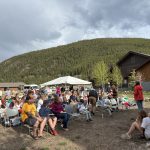
Photo by Tripp Fay/Tripp Fay Photography
As summer booking season begins to take shape, Breckenridge is among only a handful of mountain resort communities not currently outperforming last year’s pace — a signal tourism officials say points to a more competitive and uncertain season ahead.
Presenting lodging performance data to Breckenridge Town Council at a meeting Tuesday, May 12, Bill Wishowski, managing operations director at the Breckenridge Tourism Office, said the town’s summer outlook remains difficult to fully gauge because reservations typically come later than in competing resort destinations. Nevertheless, he said early indicators show reason for caution.
As of May 3, Wishowski said Breckenridge had secured about 33% of its historic summer guest nights on the books.
“Essentially that means there’s a lot of booking that’s (still) going to take place,” Wishowski said of the summer season. “This is very early, but it’s a good indication.”
Current summer bookings are down 2.4% year over year, making Breckenridge “one of the few” destinations in its competitive set not currently exceeding last year’s booking pace, Wishowski said. He compiled a dataset that includes over 2,700 individual housing units in Breckenridge, representing about 66% of licensed units in town. Wishowski then compared that dataset to similar communities: Steamboat Springs, Aspen, Vail, Park City, Utah, North Lake Tahoe, Calif. and Whistler — North America’s largest ski resort based in British Columbia, Canada.
“We’re one of the few (resort towns) that is not exceeding last year’s summer on the books,” Wishowski said of Breckenridge’s performance as of May.
Still, Wishowski cautioned against reading too much into the early numbers.
“Historically, Breck fills later than other destinations,” he said. “There’s a lot of Front Range market that comes up here that’s weather-dependent. The hotter it is in Denver, the better it is for us.”
The town will also have to recover from a significant loss in group business this summer. Wishowski said due to scheduling, Breckenridge lost the Colorado Municipal League conference booking that typically occurs in late June. Over a five-day period, guests in the group fill approximately 3,000 room nights.
“Trying to make that up is a challenge,” Wishowski said.
He added that group business inquiries — which many larger resorts rely on to fill rooms, especially in the summertime — had been strong earlier this year before softening recently.
“Until May, the group inquiries we were getting in our sales department were really solid, it was very positive,” Wishowski said. “May now has kind of softened and gotten a little quieter.”
For larger lodging properties, Wishowski said groups represent roughly 60% of summer guest nights and revenue, compared with around 40% during winter months.

Winter guest nights and revenue sliding
Concerns for the lodging industry this summer follow an already difficult winter and spring period.
Guest nights through March in Breckenridge were down 13% year over year, Wishowski reported. By April, guest nights had fallen 38% year over year.
Wishowski attributed much of the slowdown to weather patterns across the West. This year’s historically low snowpack contributed to a slight economic downturn across Breckenridge’s tourism industry.
“I’m sure we’re well aware of some of the conditions,” Wishowski said of broader tourism and environmental trends contributing to the market shifts. “Snow (is) a big factor throughout Colorado, if not the Mountain West, in having a big impact on guest nights.”
Wishowski also said that Breckenridge’s guest nights account for around half of all guest nights across Summit County. But he noted the average cost of hotel rooms in Breckenridge also outpaces the rest of the county. The average rate in Breckenridge is around $465 while the average rate across the county — including both Breckenridge and Keystone data — is closer to $395.
“We drive up that ADR number within the county, and it also shows just how much more affordable the rest of Summit County is here,” Wishowski said.
Revenue through April was down 27% year over year in Breckenridge, according to Wishowski.
Despite those declines, average daily rates largely held steady. Breckenridge lodgers increased ADR by less than 1% year over year — a feat Wishowski said reflects an increasingly competitive market.
“Properties were aggressive with their revenue management. They were not holding out rate,” Wishowski said. “In a time when expenses are going up and ADRs are not going down, lodgers are in a tight position.”
Breckenridge still leads in market share
While guest nights and revenues have dipped, Breckenridge lodgers continued outperforming many peer destinations when measured against market share.
Across the six surveyed resort communities, Wishowski said Breckenridge captured roughly 24% of actual annual market share over the past three years, while its estimated market-share potential remained around 20%.
“We are one destination that is overperforming based on this simple market-share formula,” Wishowski said. “That’s good news.”
The formula compares available lodging inventory with actual guest nights booked.
Breckenridge also accounted for more than half of all guest nights captured in all of Summit County, according to Wishowski’s data.
“I’m always impressed by the number of guest nights Breckenridge puts through,” Wishowski said.
Wishowski noted that Park City, despite having nearly 780 more units represented in its lodging database, still trails Breckenridge in annual guest nights. But he noted that market dynamics are shifting.
For example, he said, “Steamboat is in a position where they are capturing more market share.”
Summer projections suggest Breckenridge could lose less than 1% of market share this season, while Steamboat Springs and Park City will likely continue gaining ground.
“This would suggest that we are losing market share in the summertime,” Wishowski said, pointing to a chart that mapped out each resort town’s actual market share.
He also suggested broader affordability concerns may be driving some visitors elsewhere, whether it be for a more convenient location or for a cheaper stay.
“I would also suggest that given some of the ADRs and affordability within Breckenridge, we’re probably losing some business — and we have in the past — to hotels that are on the I-70 corridor.”
Mid-pack pricing with strong visitor satisfaction
Compared with other resort destinations, Breckenridge sits in the middle of the pack on average room pricing.
Average daily rates in Breckenridge sit around $465 — below Vail’s $980 and Steamboat’s $657, while slightly above North Lake Tahoe at $452 and Whistler at $450. Wishowski said he was most surprised that Whistler didn’t have a higher average rate than Breckenridge.
“With ADR numbers, Breckenridge is kind of in that mid-pack,” Wishowski said. “I think there’s a lot of concerns, and we even hear from visitors, ‘how affordable is Breck?'”
Revenue per available room was down across nearly every surveyed destination. However, Breckenridge continued outperforming countywide averages with an average revenue per available room of $213 compared with Summit County’s $163, according to Wishowski.
“We’re an economic engine in this county on multiple levels,” Wishowski said.
Tourism survey data from the Breckenridge Tourism Office showed visitors still report strong visitor experiences despite lingering concerns about cost. Around 95% of visitors rated their experience as highly welcoming. That figure mirrored responses from full-time residents.
Council member Dick Carleton said he was “amazed” by the town’s recent visitor satisfaction scores.
When visitors who gave Breckenridge an 8 or lower net promoter score were asked what would increase their likelihood of recommending the town, the most common responses concerned affordability and crowding. Parking complaints, Wishowski noted, appeared significantly less often among survey responses than in previous years.
Looking ahead, Wishowski said school calendars and shifting travel patterns may create additional pressure for both summer and winter season in the lodging industry.
By Jan. 4, 2027, Wishowski said just 28% of Colorado schools are projected to remain on break compared with 62% the prior year, creating a shorter holiday travel window. Historically, Breckenridge lodgers perform best during December and January. Similarly, other popular travel windows — around Thanksgiving, Easter and the first and last days of school — are also tightening for families with schoolchildren. With new scheduling challenges, group booking declines and slowing revenues, Wishowski said Breckenridge’s lodging industry is bracing for an extra-competitive summer. Without the surety of more snow next ski season, Wishowski said that makes the industry’s future growth more uncertain.
“Let’s start doing snow dances now,” Wishowski said about next season’s snow outlook.










Support Local Journalism
Support Local Journalism
As a Summit Daily News reader, you make our work possible.
Summit Daily is embarking on a multiyear project to digitize its archives going back to 1989 and make them available to the public in partnership with the Colorado Historic Newspapers Collection. The full project is expected to cost about $165,000. All donations made in 2023 will go directly toward this project.
Every contribution, no matter the size, will make a difference.