Trump administration releases $40 million for Colorado River District’s purchase of the historic Shoshone water rights
Colorado’s entire congressional delegation has been united in securing the funds, which have been frozen since the president’s first day in office

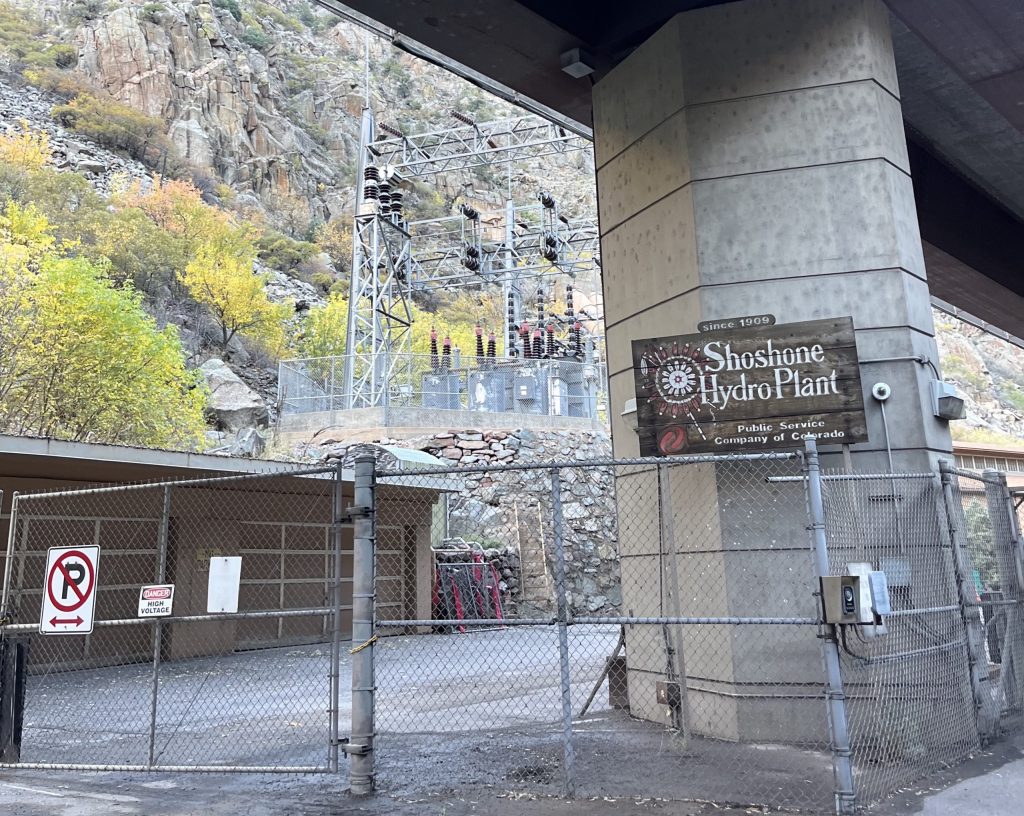
Ali Longwell/Summit Daily News
After nearly 17 months of being frozen, the U.S. Bureau of Reclamation has released the $40 million promised to the Colorado River District to aid in its acquisition of the Shoshone water rights.
With these dollars — awarded initially as part of the Biden administration’s Inflation Reduction Act and paused by President Donald Trump’s Day 1 order, “Unleashing American Energy” — the River District now has raised $97 million of the total $98.5 million needed to purchase the water rights from Xcel Energy. Other funding has come from the state legislature, its board and the various Western Slope municipalities and utilities it serves.
The Shoshone rights are the oldest and largest non-consumptive rights on the Colorado River. They are tied to the hydropower plant in Glenwood Canyon. In acquiring these rights, the River District has said its goal is to maintain the status quo on the river by allowing some water to remain in the river for environmental purposes, regardless of the power plant operations.
“This award is a major breakthrough in our coalition’s effort to permanently secure historic flows on the Colorado River,” said Andy Mueller, the River District’s general manager, in a statement Friday, May 22.
Colorado lawmakers and leaders joined the River District in celebrating the funding’s release, including Rep. Jeff Hurd, a Republican who represents the vast majority of the Western Slope in Colorado’s 3rd congressional district, and whose “unwavering advocacy,” Mueller attributed in securing the funding.
“This funding would not have been possible without the leadership of Representative Jeff Hurd,” Mueller said. “His unwavering advocacy within the administration helped secure this once-in-a-generation investment in a project that is vital to the prosperity of rural communities, farmers and ranchers on the Western Slope.”
In April, Hurd told the Aspen Times he had been working various angles to get the funding released, including raising his concerns directly with the president, the acting commissioner of the Bureau of Reclamation, the Secretary of the Interior and the undersecretary at the Department of the Interior.
In the statement on Friday, Hurd said the release of the $40 million was “a major step forward for Western Colorado and an important step toward protecting one of the most critical water resources in our region.”
“In the West, water issues require persistence, partnership and a willingness to bring people together around practical solutions,” Hurd said. “I worked closely with the Department of the Interior, local water leaders, and stakeholders across Colorado to help move this effort forward, and I appreciate everyone who stayed at the table to get this done.”
Mueller also expressed the district’s gratitude to Sen. Michael Bennet in helping appropriate the Inflation Reduction Act drought funding in the first place, to Sen. John Hickenlooper and Rep. Joe Neguse for fighting for the funding in Washington and to the Western Slope communities supporting the acquisition.
“Across the Western Slope, counties and cities, ditch companies and conservation leaders have led the way in demonstrating how uniting diverse voices around a common cause can create a powerful force for change,” Mueller said. “We are grateful for their trust and support and are proud to represent them.”
Following Friday’s announcement, the River District said the grant process will move into the contracting phase during which the district will work with the Bureau of Reclamation to finalize the terms of the award.
While the funding was frozen, the River District continued to press forward with the other steps required to purchase the water rights. In November, it entered into an instream flow agreement with the Colorado Water Conservation Board, which will ensure that flows tied to the water rights will remain in the Colorado River for environmental benefits regardless of the hydroelectric plant’s future.
The River District filed a joint application in water court with the conservation board and Xcel Energy in December. The water court will make the final determination on the acquisition, including rulings on some of the contested issues surrounding the district’s acquisition of the water rights, such as how much water has historically been granted.
After a water court decree, the district will need funding and approval from the Colorado Public Utilities Commission to complete the transaction.
“For more than a century, the Shoshone Water Rights have helped keep water flowing through our state’s namesake river,” Bennet said in a statement. “These senior water rights are a lifeline for Colorado — providing certainty for farmers and ranchers, sustaining outdoor recreation, protecting wildlife habitat and helping stabilize flows when the Colorado River runs low.”
The $40 million award for Shoshone was part of $388.3 million in awards from the Inflation Reduction Act to projects in Colorado River’s Upper Basin to mitigate the impacts of drought. A total of $152 million was awarded to 17 Western Slope projects.
While the grants were announced in the final days of President Joe Biden’s term and frozen days later when Trump took office, the awards have slowly trickled through to Colorado. In June 2025, the Bureau of Reclamation released funds for two of the projects in Palisade’s Orchard Mesa Irrigation District. On Tuesday, May 12, it was announced that $47.7 million in funding for four more Colorado projects was released. Nine other drought projects remain unfunded in Colorado from the original award.
The goal of securing the funding united Colorado’s entire congressional delegation. In August, they all signed a letter pushing for the remaining funds to be released.
In the April interview, Hurd said the funds were frozen due to both “bureaucratic reasons” and “politics.”
“There is broad recognition that water and water infrastructure and drought mitigation are not optional in the West, and these sorts of projects — for example, the Shoshone water right, and these other projects — they are practical,” he said. “They’re targeted and they’re already vetted. So the case for moving forward on them is strong, and I’m gonna keep pushing until we see progress.”





Support Local Journalism
Support Local Journalism
As a Summit Daily News reader, you make our work possible.
Summit Daily is embarking on a multiyear project to digitize its archives going back to 1989 and make them available to the public in partnership with the Colorado Historic Newspapers Collection. The full project is expected to cost about $165,000. All donations made in 2023 will go directly toward this project.
Every contribution, no matter the size, will make a difference.