Summit County human services shares local impacts of ‘One Big Beautiful Bill Act’ on food assistance, healthcare

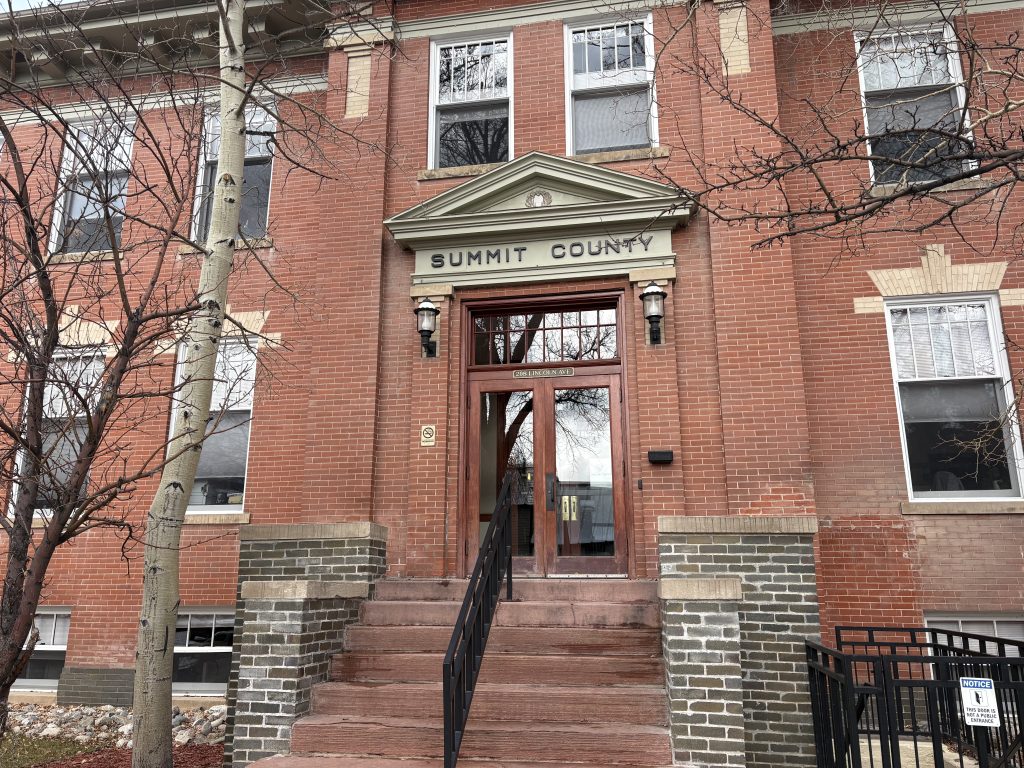
Kyle McCabe/Summit Daily News
The Summit County Department of Human Services gave the county commissioners an update on changes to its administration of programs like Medicaid brought on by federal legislation.
The county budgeted for more human services staff in 2026 because of the sprawling tax and spending law passed last summer by congressional Republicans, which President Donald Trump coined the One Big Beautiful Bill Act. Human services director Joanne Sprouse told the board May 12 about ways the bill is affecting administration of Medicaid and the Supplemental Nutrition Assistance Program, or SNAP, as well as a state-level cost-sharing plan working its way through the legislature.
Sprouse first gave an overview of effects the bill, also known as H.R. 1, will have on SNAP. The biggest change, she said, is to work requirements. The bill expands the pool of recipients who have work requirements, now including parents with dependents over 14, those experiencing homelessness, those aged 18-64 and veterans, among others.
“We have not seen a lot of impacts so far because this is enforced at renewal or application,” Sprouse said.
The work requirement has many exceptions, Sprouse said, so it is one of several topics for which county human services workers have been receiving training.
Other changes to SNAP Sprouse mentioned included ones to the Standard Utility Allowance, which she said used to provide many SNAP recipients with a “boost,” but that extra SNAP benefit will now be limited to elderly recipients. The bill changed immigrant eligibility as well, removing eligibility for groups like refugees, those seeking asylum and human trafficking victims, she said.
H.R. 1 also brings changes to Medicaid, and Sprouse highlighted ones that increase eligibility checks and the frequency of renewals. She said the bill requires more frequent address checks, to be sure one person is not registered in multiple states, as well as more frequent reports about the removal of deceased individuals.
Sprouse called one change, which reduces the retroactive Medicaid coverage window from three months to one, a “bummer” because people without coverage sometimes get injured and are not able to get coverage for a while.
She said the bill also reduces the revenue cap for provider revenue fees, which is money the state collects from providers to help fund Medicaid. Sprouse said she thinks the change could have an especially negative effect on behavioral healthcare access in Colorado.
H.R. 1 introduces payment error rate penalties to both SNAP and Medicaid. Although they work slightly differently, with both programs, the funds the state receives for the social service decreases as the statewide error rate increases.
In a staff memo, Sprouse wrote that workgroups are focused on addressing the key causes of errors in eligibility processing for both programs, and resources and tools to lower the statewide error rates are being developed. She said most issues come from applicant, administrative or technological errors, not from fraud.
“The key takeaway, a lot of them are unintentional,” Sprouse said. “It’s not people threatening the system necessarily, but it’s just that the (benefit) wasn’t calculated correctly.”
Sprouse also discussed a state-level plan to share costs among counties, which has developed from a proposal to move the state from a state-supervised, county-administered system human services system to a regional one. The current plan would instead create “cohorts,” Sprouse said, and has more support from counties around the state.
The plan would create no more than 12 groups of counties that would work together to share work and costs, Sprouse said. She added that the plan, if approved, would roll out in 2028.
Commissioner Tamara Pogue, who is part of a state-level workgroup focused on the cohort plan, said it establishes a “process” that will help prepare counties to share services in the future.
“This is how we’re gonna, in the next few years figure out what this system is gonna look like,” Pogue said.
Sprouse said the previous plan would designate one county per “district” as a “hub,” but under the current plan, no county is over another financially.






Support Local Journalism
Support Local Journalism
As a Summit Daily News reader, you make our work possible.
Summit Daily is embarking on a multiyear project to digitize its archives going back to 1989 and make them available to the public in partnership with the Colorado Historic Newspapers Collection. The full project is expected to cost about $165,000. All donations made in 2023 will go directly toward this project.
Every contribution, no matter the size, will make a difference.