Ask Eartha: Are home solar panels affordable?
Ask Eartha
Dear Eartha, I wanted to install solar on my house, but I heard there was no more tax credit. What does that mean for affordability of solar panels?
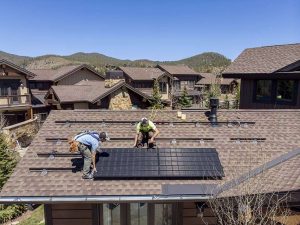
If you’ve been considering solar but assumed the opportunity disappeared with the federal incentive, don’t write it off just yet. For many homeowners, solar can still be a great investment. While the loss of the federal tax credit is unfortunate, thanks to new local discounts and long-term energy savings, many residents are still finding that solar makes financial and environmental sense.
What federal tax credit?
For years, homeowners installing solar could claim a federal tax credit worth 30% of the total installation cost. This credit helped millions of households across the country make the switch to clean energy by significantly lowering the cost. But at the beginning of 2026, the solar tax credit was eliminated for new residential installations (business owners take note: the commercial tax credit is still available).
The good news for homeowners? There are other options.
Why solar is still worth considering?
Even without the federal incentive, solar offers several long-term benefits:
- Utility rates and savings: Installing solar allows homeowners to generate their own power and reduce their electricity bills. And those savings add up over the life of the system. Unfortunately, electricity costs rarely go down. In fact, Xcel has proposed a rate increase that could raise residential electric bills by nearly 10% later this year. Instead of worrying about future utility rate increases, solar helps stabilize energy expenses over the long term, especially when paired with battery storage.
- Increased home value: Studies continue to show that homes with solar systems often sell for more, especially in environmentally conscious communities like Summit County.
- Environmental benefits: For some residents, going solar isn’t just about savings — it’s about reducing emissions and supporting a cleaner mountain community. Summit County’s sunny climate and high elevation make it an excellent place for solar production, even during winter months.
Save with Solarize Summit
While the federal credit is gone, the High Country Conservation Center’s Solarize Summit program still helps homeowners simplify the process by connecting them with a vetted installer and providing access to substantial upfront savings through new discounts. In some cases, homeowners can get up to 25% off installation costs — savings that come close to the former federal tax credit. Unlike a tax credit, these discounts are applied upfront, lowering your cost immediately rather than having to wait for next tax season.
But don’t delay. Solarize Summit is a first-come, first-served program with limited spots available. Starting the conversation now gives homeowners time to schedule a free solar assessment, review a custom quote, and determine whether solar makes sense for their home and budget — all before snow starts to fall…unless it’s still Mayuary.
But does solar really work in the mountains?
Absolutely. Solar panels generate electricity from sunlight, not heat, and Summit County averages approximately 245 sunny days a year. Our community sits at a high elevation with strong sun exposure and cooler temperatures, making solar panels highly efficient.
Snow can temporarily cover panels after a storm, but it typically slides off quickly, especially on pitched roofs. And thanks to Colorado’s abundant sunshine, panels can still produce energy throughout the winter.
Banking excess kilowatt hours
Batteries allow homeowners to store excess solar energy generated during the day and use it later in the evening or during peak demand periods when electricity is more expensive. As electricity prices continue to rise, more homeowners are choosing to pair solar with batteries to increase savings and gain greater control over how and when they use their carbon-free energy.
Even better, Solarize Summit participants may qualify for additional incentives on battery storage systems, helping reduce the upfront cost.
The sun hasn’t set on solar energy
The end of the 30% federal tax credit marks a major shift for residential solar, but thanks to local programs, upfront discounts, and long-term energy benefits, solar remains a great option for many homeowners.
The economics may look a little different than they did a year ago — but the sun is still shining, electric bills are still arriving every month, and clean energy continues to be one of the best investments many homeowners can make for their homes, wallets, and the environment.
Ask Eartha Steward is written by the staff at the High Country Conservation Center, a nonprofit dedicated to waste reduction and resource conservation. Submit questions to Eartha at info@highcountryconservation.org.










Support Local Journalism
Support Local Journalism
As a Summit Daily News reader, you make our work possible.
Summit Daily is embarking on a multiyear project to digitize its archives going back to 1989 and make them available to the public in partnership with the Colorado Historic Newspapers Collection. The full project is expected to cost about $165,000. All donations made in 2023 will go directly toward this project.
Every contribution, no matter the size, will make a difference.