Snowboarding culture is elusive, but the numbers are solid
ALL |
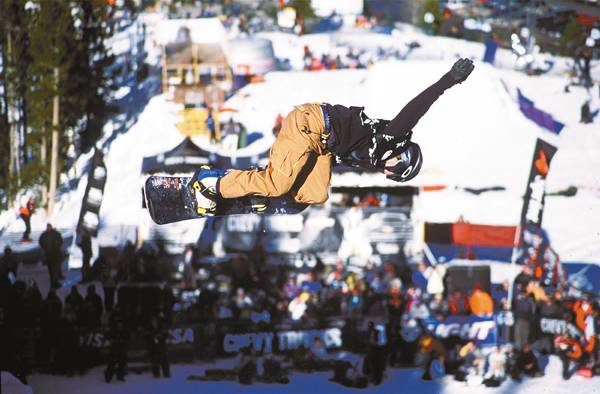
It would be a waste of time to guess where snowboarding’s culture is right now or where it might head in the future.|Summit Daily file photo| |
That part of the sport is constantly changing, and as soon it becomes mainstream, it’s dead and gone.
Besides, each ski area and region has its own slang and fashion, so it’s best not to generalize about snowboarder style or lingo.
But there are some quantitative trends that can be more easily defined.
First of all, the myth that boarders are mostly boys and young men is close to the truth.
As snowboarding has become more mainstream, its demographics have remained a young (average age 22), and male-dominated (67 percent) sport compared to skiing (60 percent male).
Although the percentage of women participating in the sport has steadily increased in the past seven years, the median age of a boarder has only increased by a year.
In the same time period, skiing’s median age increased from 34 to 40 years old. (National Ski Areas Association survey 2002-03, nsaa.org)
The snow sport participant’s age has become an important factor to mountain resorts, because the future customers will not be the baby boomers who grew up with and embraced the ski industry.
The boomers still have VIP status, but fewer of them are still actively skiing because of the natural aches and pains associated with aging.
Skiing (or any downhill sport done with gusto) is not exactly gentle on the knees and back.
Older folks have more money and options for vacations. They can scuba dive, golf, take a cruise to Alaska or visit Disneyland with the grandchildren.
Although there are some exceptionally healthy seniors who rule the slopes, most seniors experience enough daily pain to spend their money on less risky sports.
Even the most boarder-hating types will admit that snowboarding saved the ski industry.
At a time when baby boomers were frequenting the slopes less and their children did not seem as thrilled with skiing, snowboarding grabbed the youth market’s need for a snow sport that was cooler than skiing, bursting with rebellion and hated by parents (a key ingredient to success).
When snowboarding began to take off, some resorts embraced it, creating terrain parks and halfpipes, and sponsoring competitions.
Breckenridge and Copper Mountain are good examples of areas that had no doubt from the start that snowboarders were customers worthy of respect.
They put a lot of priority and manpower into their parks and pipes, and allocated enough manmade snow to take their park features to an art form.
Breckenridge has hosted the Vans Triple Crown of Snowboarding, the first major world competition of the season, for the last seven years.
By mid-December each year, Breckenridge has been ready for the best riders in the world to be filmed going huge out of the superpipe or down rails with the word “BRECKENRIDGE” plastered all over the background.
The resulting international television exposure has branded the resort as a mecca for snowboarding.
Aspen has since grabbed the Winter X Games.
Breckenridge’s terrain park has acquired a well-earned reputation as one of the best in the world.
The big guys (and gals) go there to go big.
Breckenridge’s worst problems have been inconvenient parking, lift lines and overcrowding on the slopes.
Too many customers?
Not the hugest bummer a mountain resort could endure during an economic downturn.
Copper Mountain has also bent over backward for boarders by replacing the aging B lift with a high-speed six-pack that drops off riders and skiers at a higher location on the mountain, reducing the amount of traversing needed to be endured by riders to access other portions of the mountain.
Like many of the other snowboard-friendly resorts, Copper installed tool stations and replaced ropes with rails in the liftline to make it easier on the pole-less crowd.
Other resorts have missed the boat, clinging to the baby boomers clientele by banning boarders or, at least, not welcoming them by limiting their spending on terrain parks.
Afraid of offending their old-school customers, these resorts starting losing them anyway because so many families and groups of friends included boarders (and pinheads and mini-skiers).
Many skiers were slapping on twin tip skis and venturing into the terrain parks.
Freeskiers were also demanding the best jumps, rails and grooming. The last nail in the snowboard-unfriendly coffin was that snowboarding was growing while skiing had remained flat.
Skier visits have stayed at around 40 million per year for the past five years, while boarder visits have jumped from 12.1 to 17.1 million. The boarder crowd was beginning to look a little more savory.
Colorado was already sliding downhill with out-of-state visits, but the 9-11 terrorist attacks were nearly a fatal blow.
Add a few years of below-average snowfall, one of which was a severe drought, and an increase in skier visits to Utah and Canada (with a favorable exchange rate for Americans), and there was a recipe for disaster for Colorado ski areas.
Buddy Passes inadvertently came to the rescue in the fall of 1998. Winter Park started it all, and Copper Mountain and Vail Resorts soon followed suit.
For a few hundred bucks, a skier or boarder could enjoy a season pass to world-class resorts – a luxury not seen in the ski industry since the 1960s.
The break in season pass prices encouraged skiers who had put away their equipment to try it again and go up to the mountains more often. It also encouraged many to ski and snowboard for the first time.
Colorado had the lowest lift ticket yield in the nation, but the resorts offering Buddy Passes saw their local visits climb, and this lessened the sting of out-of-state visits falling off.
There were disadvantages to the Buddy Passes. The resorts offering them became the “blue light specials” of the Interstate 70 corridor, and their town streets were snarled with Front Range visitors on winter weekends, each in their own little vehicle.
It made their resorts less appealing to destination skiers and boarders by packing the slopes and liftlines with crowds, but nobody could argue that those crowds were keeping the ski towns alive.
Some towns that did not offer Buddy Pass pricing, like Crested Butte and Steamboat Springs, teetered on the verge of bankruptcy, while Aspen and Telluride have seen substantial decreases in skier visits and town sales tax revenue in the past five years.
It was a combination of factors besides Buddy Passes: remote location, reliance on wealthy out-of-state destination skiers, poor snowpack, an ailing economy, more competition in the recreation industry – you name it – even a plague of grasshoppers in Steamboat during the summer of the drought.
But because of these hard times, mountain resorts have been forced out of their complacency and into some serious self-analysis.
Buddy Passes have been able to temporarily seal Colorado skiing industry’s leak and they have given resorts time to study their next moves before they miss the boat entirely.
But how do resorts broaden the appeal of and markets for snow sports and plan for the future?
Can they learn to speak dude fluently enough to attract the ever-increasing number of youngsters fascinated with freestyle snow sports?
Cindy Kleh lives in Keystone. She is an avid snowboarder, author of snowboarding books and a freelance writer.





Support Local Journalism
Support Local Journalism
As a Summit Daily News reader, you make our work possible.
Summit Daily is embarking on a multiyear project to digitize its archives going back to 1989 and make them available to the public in partnership with the Colorado Historic Newspapers Collection. The full project is expected to cost about $165,000. All donations made in 2023 will go directly toward this project.
Every contribution, no matter the size, will make a difference.