With larger homes replacing more-modest ones in Breckenridge, the town is considering new tools to help the workforce

Kit Geary Follow

Tripp Fay/Summit Daily News archive
Breckenridge officials are looking to introduce a mechanism to ensure affordable workforce housing remains in the community amid residents’ concerns that larger and larger homes are making neighborhoods less affordable.
Council members brought the worries to the attention of town staffers a handful of times at a Tuesday, June 11, Town Council meeting.
Council member Dick Carleton said residents have approached him with concerns over the number of single-family homes being replaced with larger ones, a concept known as “scraping.”
“You look at neighborhoods, like the Weisshorn, and the number of houses that are being scraped right now… it’s astonishing,” Carleton said.
While reviewing recent Planning Commission decisions, council member Steve Gerard pointed out that two of the commission’s recent agenda items included two fairly substantial scrapes.
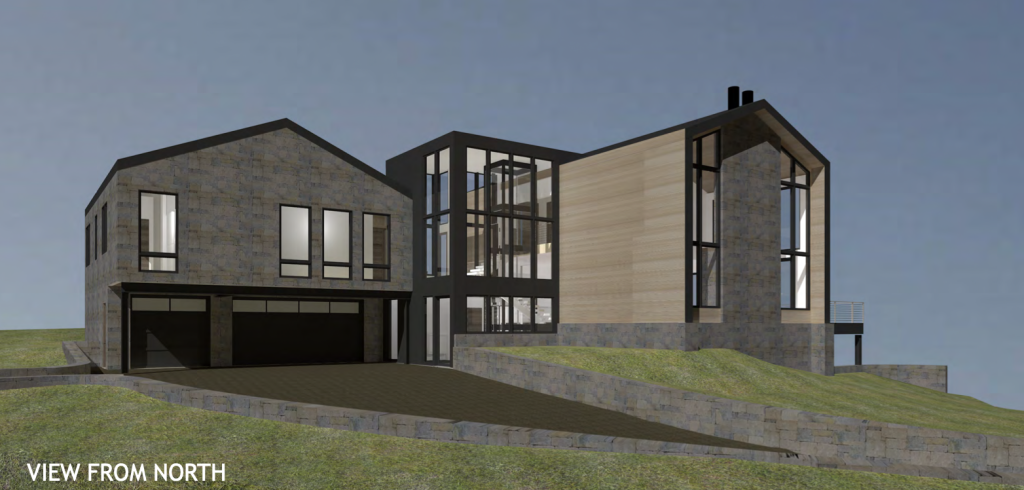
One proposal involves demolishing a 762-square-foot, single-family cabin on Morning Star Drive to make room for a new 3,951-square-foot, single-family home with four bedrooms and four and a half bathrooms. The other includes demolishing a 3,896-square-foot, single-family home on Wellington Road and putting in a 7,251- square- foot, single- family home with five bedrooms, six and a half bathrooms, and a three-car garage.
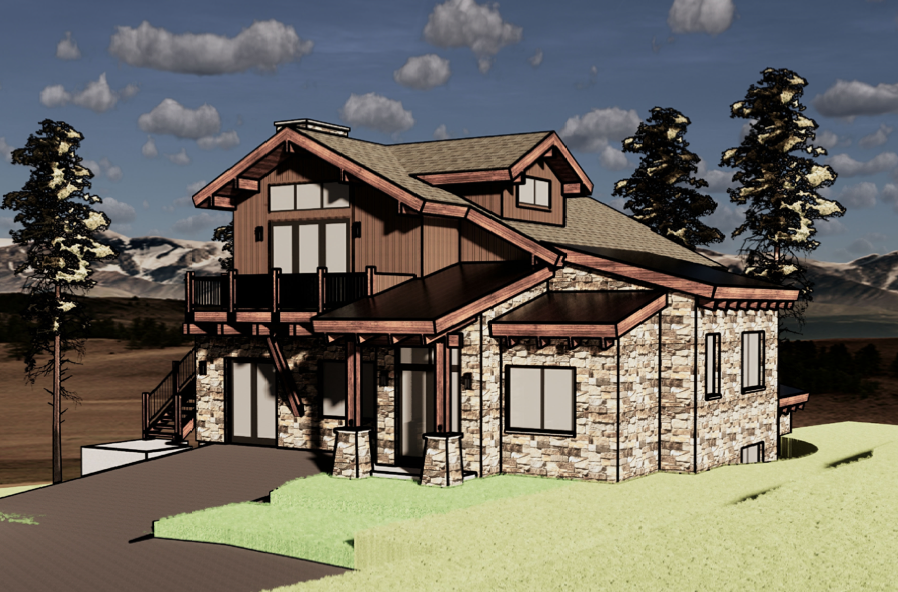
The Planning Commission gave both proposals approval.
“It’s also happening in Aspen, where a piece of land becomes a much more upscale property,” Gerard said. “I think we all need to keep an eye on that trend.”
In light of the concerns being raised about redevelopment, some council members said they appreciated a proposal brought forth by town staffers that would introduce a new tool to ensure workforce housing remains in the community.
Staffers introduced the council to the concept of inclusionary zoning, a mechanism that allows for a “reasonable” percentage of new market- rate units to be developed into affordable units for low-, moderate- and middle-income residents.
Other mountain communities like Telluride and Aspen have begun to use inclusionary zoning as well as Front Range communities like Denver and Littleton.
Community director Mark Truckey said, thanks to new legislation passed at the state level, jurisdictions can now require workforce housing from new residentials developments.
Previously jurisdictions could only require workforce housing with commercial developments.
Truckey said with Breckenridge being 93% built out, it’s unlikely the town will not see much more residential development but noted ” there’s still that 7%. “
“You wouldn’t see this associated with a single- family lot … but a new subdivision, or like a new big condo project is something that we could make it a policy on,” Truckey said.
“It’s not likely to yield many units, but it’s a tool in the toolbox,” he added.
Truckey said that the requirement wouldn’t necessarily mean that developers have to provide deed- restricted units. They could instead pay a fee-in-lieu or do a land dedication. He added that there is a policy in place on the county level, through the 5A ballot measure, that requires an impact fee for development. He said it’s $2 a square foot for commercial development and can be anywhere from $0 to $2 for residential development.
Council member Jay Beckerman questioned staff members whether other communities that require workforce housing with residential developments also use a similar impact- fee mechanism.
“I would just be interested to see that just so we’re comparing apples to apples,” Beckerman said.
Staffers responded that they weren’t sure.
Some council members found a lot of value in the proposal.
Referencing comments made earlier in the meeting about scraping smaller homes for larger homes, Carleton said, “I think this is exactly what we’ll need to do for zoning.”
Others were wary of introducing something like inclusionary zoning.
Council member Todd Rankin, a career broker, said the town needed to decide how it wants to preserve the character of the town and how it wants to preserve affordable housing. He said he felt this proposed policy looked to address both and said “it doesn’t necessarily solve either in my mind.”
Mayor Kelly Owens closed the discussion by directing staffers to look more into inclusionary zoning, its impacts and how, and if, it could be applied to redevelopment, based on council’s sentiments.
Staffers said they will come back with more information at a later meeting.




Support Local Journalism
Support Local Journalism
As a Summit Daily News reader, you make our work possible.
Summit Daily is embarking on a multiyear project to digitize its archives going back to 1989 and make them available to the public in partnership with the Colorado Historic Newspapers Collection. The full project is expected to cost about $165,000. All donations made in 2023 will go directly toward this project.
Every contribution, no matter the size, will make a difference.