Get Wild: What is rewilding?
Get Wild
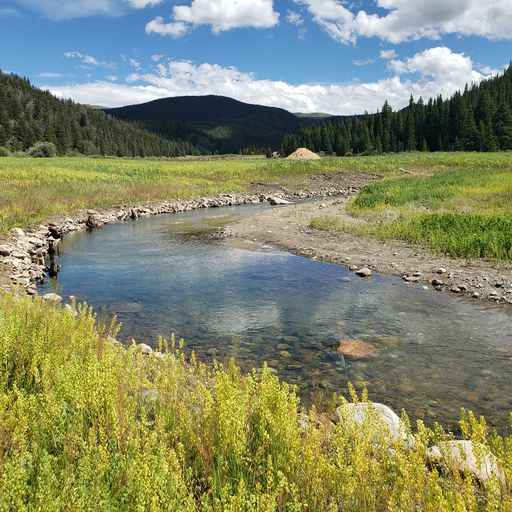
Summit County Open Space/Courtesy photo
You may have heard the term rewilding recently and wondered just what exactly is it? Is it the same as conservation?
Rewilding is, in part, an effort to reestablish vital ecological processes by restoring key native species. That sentence is packed with meaningful concepts, including “key native species.” Obviously, the species we are restoring should be native. We are all familiar with the problems associated with invasive species, some of which were introduced as ornamentals, for ground cover, etc.
But it goes deeper than that. It touches on the concept of keystone species. Keystone species are those that have a disproportionally large impact on their ecosystem relative to abundance. They often provide shelter and habitat for other species, for example coral. Or, if they are predators, they help maintain the health and population size of their prey species, by preying primarily on sick or weak animals.
How does rewilding differ from conservation? They are two sides of the same coin. Conservation is focused on preserving what is already there. This is very important. No one wants to see our environment degraded. For example, most people would agree that we should do whatever we can to conserve our songbird populations, which have been dwindling for years. This can include relatively simple measures like putting reflective decals on large windows, downcasting outdoor lights and keeping house cats indoors. House cats (which I love) are a significant cause of songbird mortality.
But rewilding goes one step further than conservation. Rewilding is an attempt to restore what has been lost, rather than simply protecting what is there. Obviously, we are not going to bring back species that are already extinct, a la “Jurassic Park.” But there are many examples of species that might be extinct in one place, but can be reintroduced from other populations. There are also many environments that have been degraded but can be restored to their previous glory through careful management. In some cases, environments are restored simply through benign neglect.
We are all familiar with some of the well-known successes in rewilding, such as the recovery of bald eagles and California condors. These are wonderful and important. But it is also important to think of rewilding in a larger context, the ecosystem. There are small, humble species whose populations have also recovered. These are just as important ecologically, even though their pictures may not show up on next year’s calendar. One example is the small greater Bermuda snail, which was thought to be extinct. A small population was discovered and biologists bred this population and reintroduced them. They are now no longer in danger of extinction.
In some cases entire ecosystems have been rewilded. An example of these are wetlands. They have been restored in several places in Colorado, often by reintroducing beavers. Beavers are an important keystone species which were driven almost to extinction.
It is also important to remember the importance of plants and mushrooms in restoration efforts. Mushrooms are important to soil health. And plants obviously provide both food and cover for animals. A local rewilding effort of this sort is the restoration of the Swan River watershed by Summit County Open Space and Trails.
Earth Day is on Wednesday, April 22. The Headwaters Group of the Sierra Club is sponsoring an Earth Day fair. We will have more than a dozen groups with information about their work, light snacks, the movie “The Rewilders” and a talk about rewilding. It will be at Colorado Mountain College, Breckenridge, from 3:30 to 6:15 p.m. It is free of charge. Please join us.
Frank Lilly is chair of the Headwaters Group, Sierra Club and a member of the Eagle Summit Wilderness Alliance.




Support Local Journalism
Support Local Journalism
As a Summit Daily News reader, you make our work possible.
Summit Daily is embarking on a multiyear project to digitize its archives going back to 1989 and make them available to the public in partnership with the Colorado Historic Newspapers Collection. The full project is expected to cost about $165,000. All donations made in 2023 will go directly toward this project.
Every contribution, no matter the size, will make a difference.