Breckenridge approves moratorium on exterior wildfire suppression systems
Town officials say temporary pause will allow time to study emerging technologies and develop permitting requirements

Kyle McCabe/Summit Daily News
Breckenridge officials have pressed pause on a new generation of exterior wildfire suppression systems, approving a six-month moratorium to determine how the emerging technologies could affect the town’s water systems, building codes and wildfire response.
A unanimous vote from Breckenridge Town Council members Tuesday, July 28, temporarily prohibits any installation of exterior fire suppression systems on residential and commercial properties served by the town’s water utility. Over the next six months, town staff and local fire officials will continue studying the technology and draft regulations governing its future use.
“This moratorium will help us understand these systems and hopefully get additional data to support these systems in the future,” said Jay Nelson, chief executive officer and fire marshal for the Red, White & Blue Fire Protection District. “It just does not exist right now.”
The proposal largely grew out of discussions with Defense Delivered, a Summit County-based company whose automated exterior wildfire suppression systems use satellite wildfire alerts, thermal cameras and smartphone controls to help protect homes from approaching fires. While officials at the council meeting praised the company’s innovation, many said the technology exposed gaps in local building and water regulations that extend beyond a single manufacturer.
“It’s an amazing technology,” said Phil Sweat, deputy building official. “It really lends to our core values of innovation and community, but on the flip side of that, we have to look at stewardship and protecting our natural resources, which is water.”
Sweat said the moratorium doesn’t aim to discourage creative new inventions for wildfire safety. Instead, he said the temporary pause will afford Breckenridge time to establish permitting requirements for new systems like Defense Delivered that currently lack nationally recognized testing standards.
“The codes, the standards, NFPA (National Fire Protection Association), the home insurance groups, they haven’t caught up to these systems,” said Nelson.
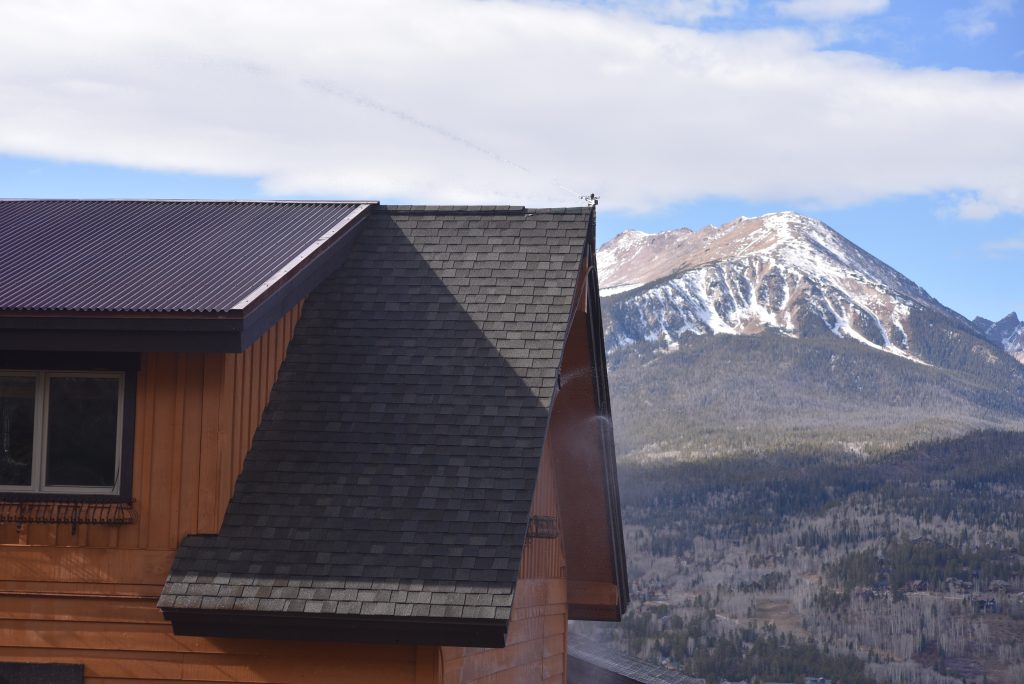
In recent years, exterior wildfire suppression systems have drawn more interest as homeowners look for additional ways to protect their properties from increasingly destructive wildfires. While designs vary, the systems typically use sprinklers mounted along rooflines and other vulnerable areas to wet a structure before an approaching wildfire arrives.
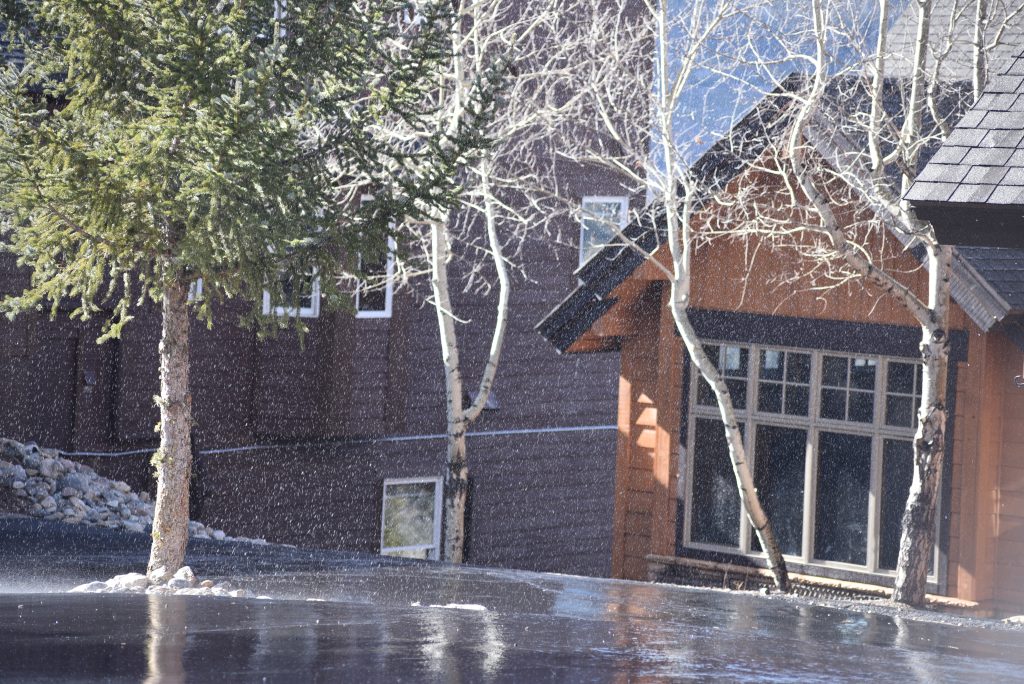
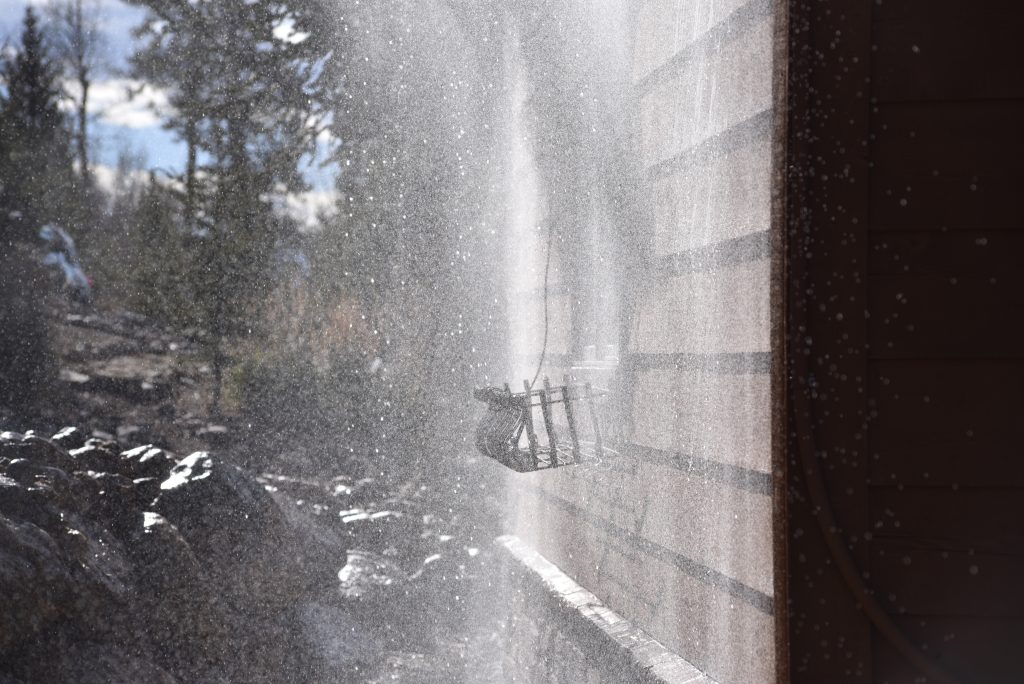
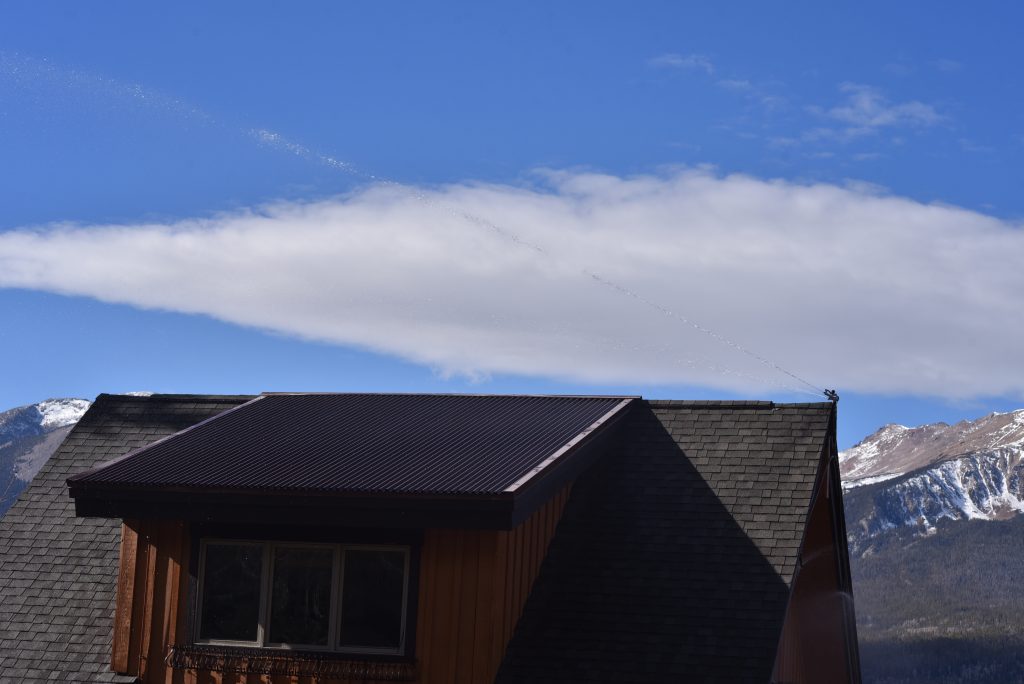
Asked by council members, Nelson said he’s only aware of one system installed in the county at a Hamilton Creek home in Silverthorne. That home belongs to Dustin Dolamore, founder of Defense Delivered. Summit Daily News reporting from November 2025 states that the house next door has also installed a Defense Delivered system. Pictures show the exterior sprinkler system when activated.
Officials say standards haven’t kept pace
Public Works Director James Phelps said town staff and wildfire experts don’t yet have enough information to assess and potentially regulate this new wave of fire suppression systems.
“We just haven’t felt like we have the adequate information necessary to properly evaluate this,” Phelps said.
Nelson noted nationally accredited fire associations govern traditional fire sprinkler systems. Those regulations help local building and fire officials write municipal codes that uphold those same national protections. Exterior wildfire suppression systems, however, have not yet been tested or certified under similar standards, Nelson said.
“We don’t have anything to understand these systems, and we don’t know how much water these systems put out gallons per minute-wise,” he said. “We don’t understand the true nature of how these protect homes”
Sweat said those benchmarks are important because manufacturers now offer water-, foam- and gel-based systems with different activation methods and designs.
“We have to be really thoughtful going forward so that we cover all these emerging technologies,” Sweat said.
Council member Dick Carleton added he’d like to ensure any future town code amendments ensure all those effluents meet environmental safety criteria.
Nelson said organizations like the Insurance Institute for Business and Home Safety continue to recommend home hardening and defensible space as the most effective ways to reduce wildfire risk.
Public water supply a chief concern
Much of Tuesday’s discussion focused on potential impacts to Breckenridge’s municipal water system.
The town’s public water utility was designed to provide drinking water, sanitation and water for conventional structure fires. Council members and other officials cited concerns of potentially adding private wildfire defense systems that could operate simultaneously during a large wildfire and threaten planning by fire experts during a crisis. Officials said widespread use of these new systems could reduce water pressure, slow storage tank refill rates or affect water availability elsewhere in the system. Many referenced ongoing drought conditions and countywide mandates to curb water use.
Chief Building Official Rick Fout said staff met with Defense Delivered founder Dustin Dolamore and believes he “has the best intentions.” But Fout flagged issues with the technology allowing homeowners to manually activate sprinklers from a smartphone, which may conflict with water distribution plans from the local fire command.
“One of the whistles and bells is that the homeowner can remotely trigger (the defense system),” Fout said. “They can push dispense, dispense, dispense over and over.”
Red, White & Blue Fire Chief Drew Hoehn said the concern doesn’t lie with just one or two homes but the possibility of “normalization” or widespread adoption of these new technologies across a neighborhood.
Carleton asked how concentrated use of the sprinkler systems could affect water distribution elsewhere in town during a wildfire.
“I think one of my bigger concerns is the ability to override,” Hoehn replied.
For example, he said, when fire officials make decisions to protect or save certain structures during a wildfire, they have to allocate water strategically. If a homeowner had the ability to remotely activate municipal water at their property, that could potentially detract from resources needed at a different structure.
Town Attorney Kelly Ambrose added that the moratorium also gives staff time to establish rules for whether exterior sprinkler systems can connect to the town’s water supply.
“Without any regulations in our code around this, we can’t really properly protect our public water system from having unauthorized connections,” Ambrose said.
Regulations down the pike
Sweat said town staff expect to return with proposed code amendments establishing a permitting process for exterior wildfire mitigation systems that will likely require site plans, equipment specifications, plumbing and electrical permits, environmental safety certifications and more.
During public comment, Dolamore addressed the council, introducing himself as a Summit County native and Snowy Peaks graduate.
“I’m not really here to disagree with the experts today,” Dolamore said. “In fact, I think the moratorium will probably lead to a much better product on my end as well.”
Though he didn’t protest the six-month installation pause, Dolamore suggested the town also consider applying similar standards to in-ground irrigation systems.
“If we are placing a moratorium on exterior wildfire sprinkler systems, perhaps something should be extended to standard irrigation systems that can be used in the same way,” Dolamore said.







Support Local Journalism
Support Local Journalism
As a Summit Daily News reader, you make our work possible.
Summit Daily is embarking on a multiyear project to digitize its archives going back to 1989 and make them available to the public in partnership with the Colorado Historic Newspapers Collection. The full project is expected to cost about $165,000. All donations made in 2023 will go directly toward this project.
Every contribution, no matter the size, will make a difference.