Unique ways drones have helped in crises, rescues and investigations in Colorado mountain communities like Summit County

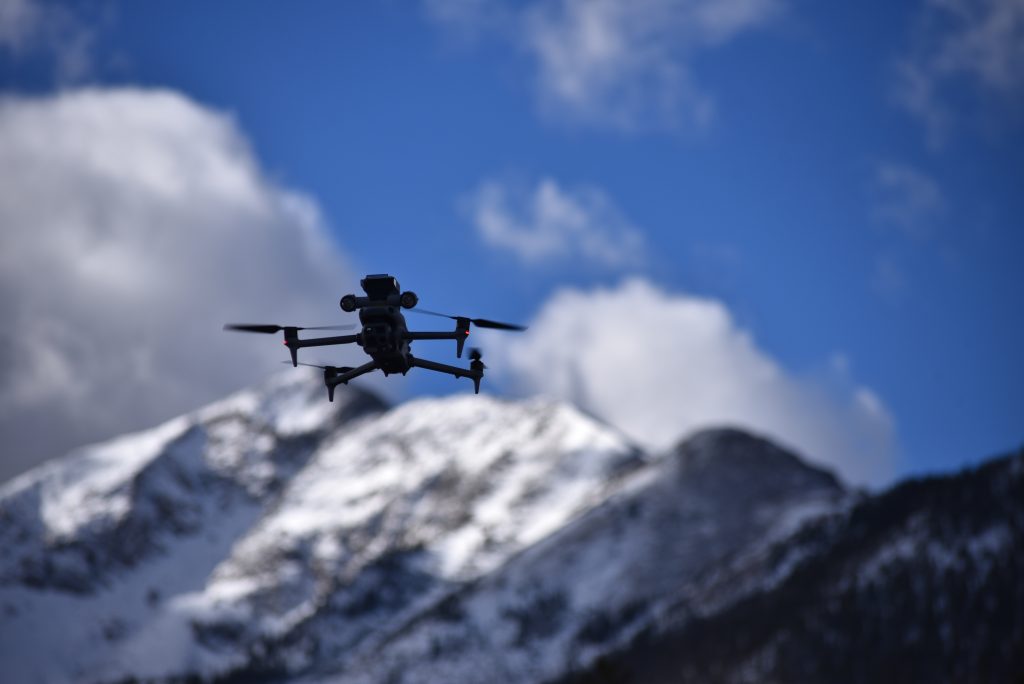
Kyle McCabe/Summit Daily News
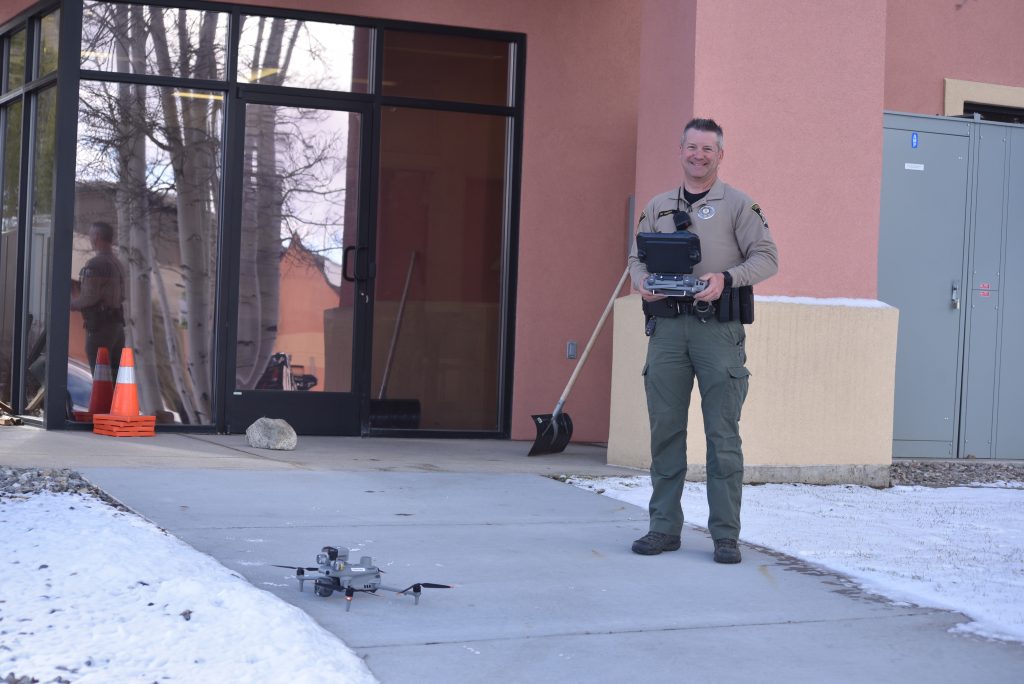
By the time the Summit County Sheriff’s Office started its drone program in 2018, technician SJ Hamit had owned his own unmanned aircraft for four years.
Hamit joined the Sheriff’s Office’s special operations unit in 2016 and started pushing for the office to get a drone. Now, the four members of the special operations unit pilot the office’s five drones, which Hamit said makes sense because the unit deals with responsibilities of the office outside of detention and patrol.
“I kind of think of the three times that we fly are search and rescues, fire stuff and then law enforcement stuff,” Hamit said. “Your average patrol guy, if he had one, he’s not going to fly on search and rescues … or the fire response.”
Drone use cases
The Sheriff’s Office always has one special operations member on call in case a “big event” happens that could use a drone. Lt. Mike Schilling said big events could include law enforcement calls where a suspect runs from deputies or barricades themselves in a home.
“We can use the drone to get a higher level view of the scene and what’s going on, if circumstances warrant,” Schilling said. “We can bring the drone down to window level (and) get a look inside the house.”
Schilling said another law enforcement use for drones is with missing people, like young children or senior citizens that wander off. Those situations are especially dangerous in Summit County because of how cold it gets, he said, especially at night in the winter. Pilots often use the drones’ thermal cameras in those situations, Schilling said.
“We can actually fly over a wooded area and see if there’s heat there,” Schilling said. “It can help to find a person.”
Hamit said the Sheriff’s Office has used drones to document scenes, like after climbing fatalities. He said people often first think of law enforcement uses for drones before search and rescue or fire uses, but he said that category is probably the least common.
Schilling said the special operations drone pilots are often the first to deploy to reports of smoke. He said they drive their trucks and sometimes all-terrain vehicles to get close to the smoke before sending up their drones to get a view of the fire and help direct other responders. Hamit said sometimes responding to smoke with a drone just involves figuring out what it is.
“A lot of times we’ll fly it, we’ll see the smoke, and then we’ll determine it’s a camper — an attended campfire — which is fully legal,” Hamit said.
The Sheriff’s Office drone program assisted firefighters when they responded to a smoking log in Dillon Valley. Hamit said the drone helped firefighters be sure they had the perimeter secured. He said the Sheriff’s Office has also used the drones to help the fire department monitor controlled burns.
“When there’s a fire, they’re (too) busy doing firefighter things to fly around,” Hamit said.
On some search-and-rescue calls, Hamit said the drone pilots use the built-in speaker to communicate with people that might be in trouble. A hiker reported seeing a man on Quandary Peak with a broken arm, so Hamit said he flew his drone up along the trail and found the man.
Hamit said the man had his arm in a sling but was making progress down the mountain. Hamit used the speaker to ask if the man needed help, telling him to give a thumbs up for yes or a thumbs down for no, and the man gave a thumbs down.
“I’m like, ‘that doesn’t seem right,’ so I actually gave him my phone number,” Hamit said. “He called me, and his first question was, ‘How much is it going to cost?'”
After Hamit told the man that search-and-rescue services in Colorado are free to the people receiving the help, the man asked for help.
Hamit said deputies also received assistance from the drone program while responding to a mental health crisis. Deputies received a report that a man had driven his truck partway into a pond. The reporting party believed the man might have been suicidal or homicidal, Schilling said, so the deputies could not safely approach the truck.
“I was able to fly right up to his windshield and try and make contact, see what was actually going on,” Hamit said.
Deputies’ investigation determined the man was not a danger to himself or anyone else, Schilling said. The deputies let the landowner know what was going on and spoke with the man’s family to get a backstory for his situation.
“We gave this guy the time and the space he needed to kind of work through what he was going through on his own,” Schilling said. “In the end, he reached back out to us. We were able to help him tow his car out.”
In early November, the Sheriff’s Office received a report that a paddleboarder seemed to be in distress on the Dillon Reservoir late enough in the day that it was getting dark. The Sheriff’s Office had taken their boats off the lake for the season, Hamit said, so he flew his drone over to the person.
“I literally just flew over to him, asked if he needed help,” Hamit said. “He was OK. He gave me a thumbs up, and it was done.”
The Sheriff’s Office’s drone usage is not limited to law enforcement, fire and search and rescue. Hamit said they used a drone when a tree about 2.5 feet in diameter fell across the Blue River at the start of rafting season.
“This just helped us locate it, document exactly what it looks like and come up with a plan on how to get that out of there,” Hamit said.
Drone specifications
Hamit said the four members of the special operations unit each have a small drone they keep with them, and the team shares a larger drone. The small drones have wide-angle, regular and zoom cameras, a thermal camera, lights and a laser range finder. They also have software that can detect and track people and vehicles.
The pilots have to get licenses from the Federal Aviation Administration to fly the drones, Hamit said. The FAA test focuses on rules, like where and when they can fly drones, but it does not teach pilots how to fly. Instead, the Sheriff’s Office does in-house pilot training.
“These things are relatively easy to fly, as far as just taking off and flying around a little bit,” Hamit said. “It’s a lot of the built-in software that’s more complicated.”
-
SJ Hamit, a technician with the Summit County Sheriff’s Office, shows some of the capabilities of his unmanned aircraft Nov. 19. The drone can zoom up to 50x, detect and track people and vehicles, show a thermal view.
Kyle McCabe/Summit Daily News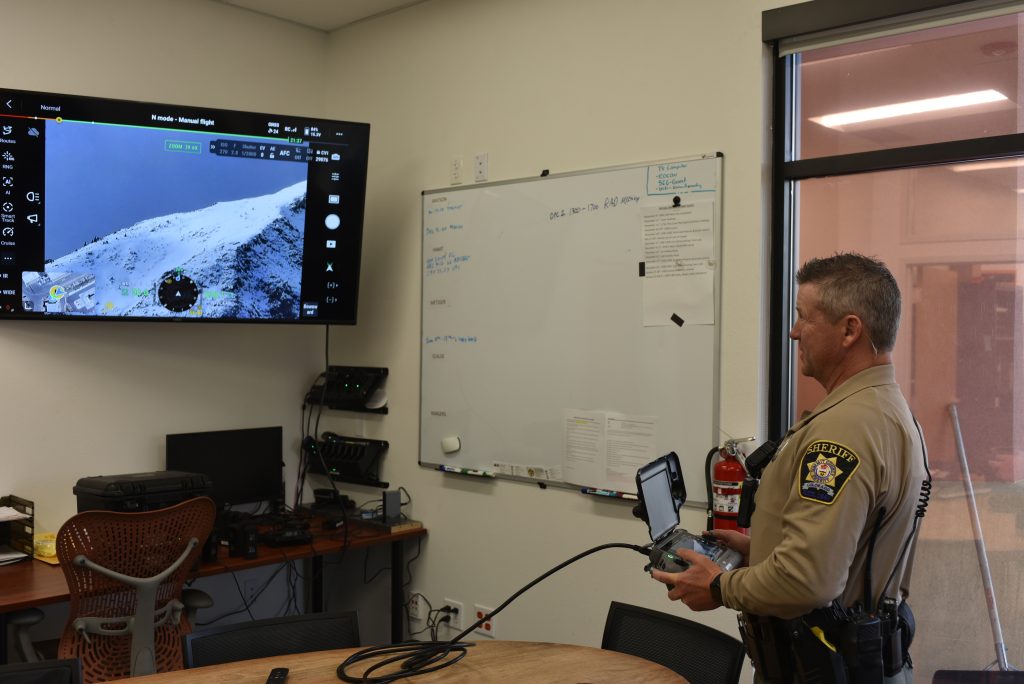
-
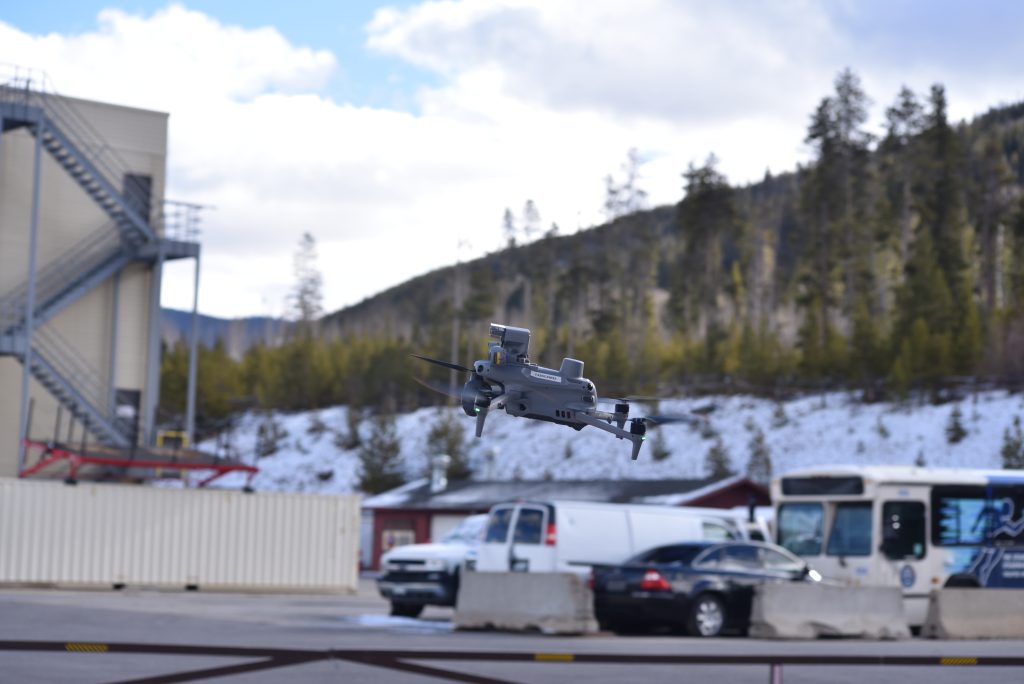
A Summit County Sheriff’s Office drone hovers above the ground Nov. 19. The office’s drones have lights, speakers, three cameras for different zoom distances, thermal cameras and laser range finders.
Kyle McCabe/Summit Daily News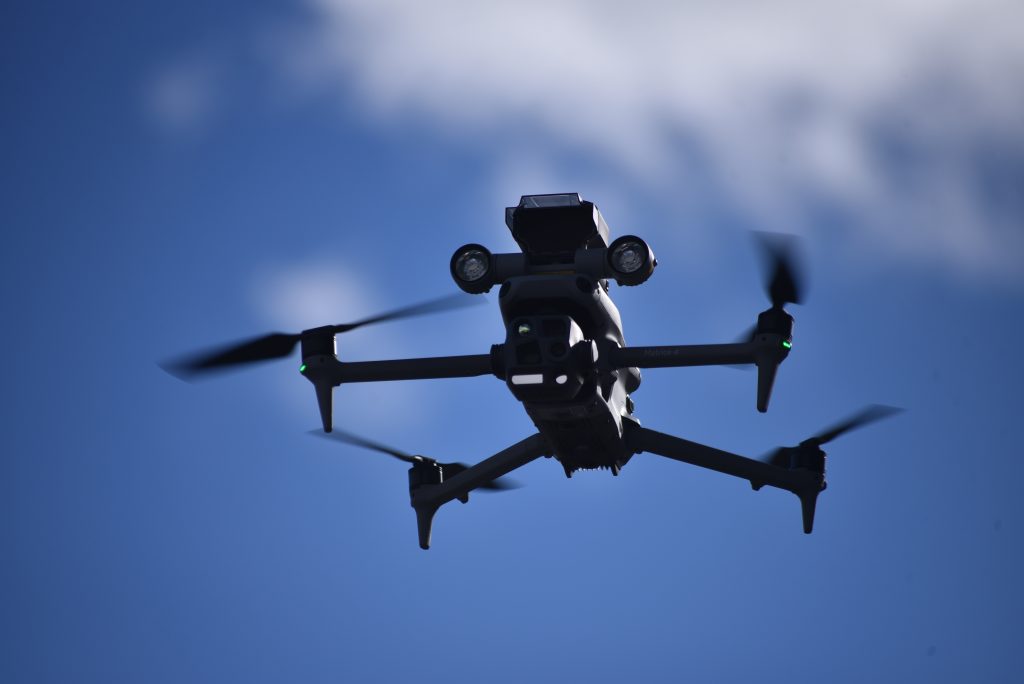
-
A Summit County Sheriff’s Office drone hovers above the ground Nov. 19. The office’s drones have lights, speakers, three cameras for different zoom distances, thermal cameras and laser range finders.
Kyle McCabe/Summit Daily News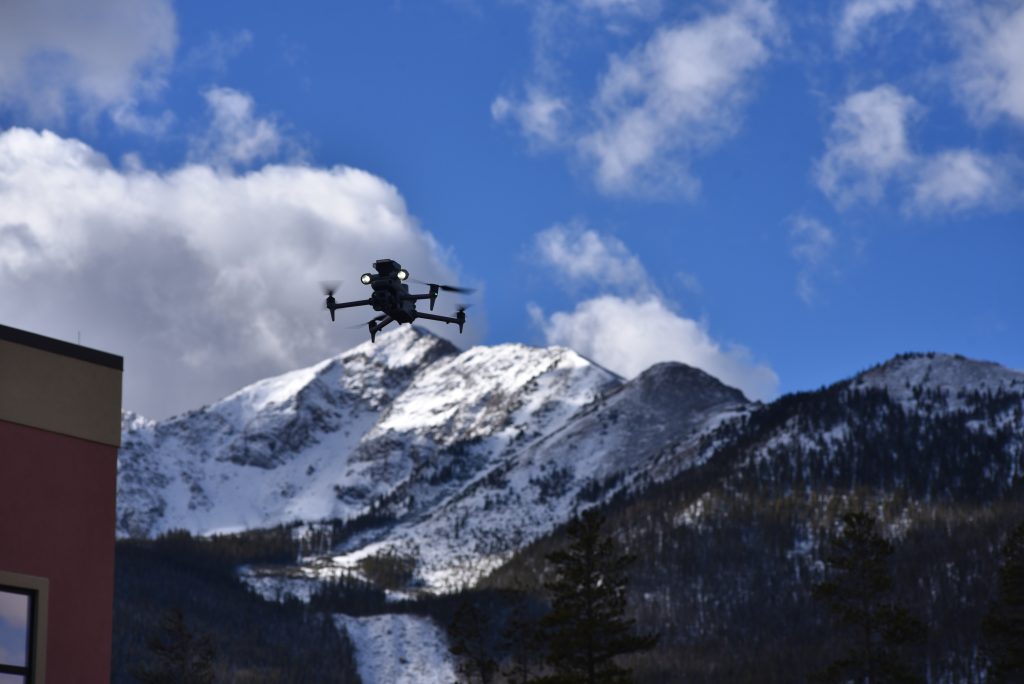
The large drone can carry some weight and deliver items to people in need, Hamit said. It could drop a first aid kit or a tourniquet to someone who fell while hiking, he said, or deliver snowshoes to someone postholing, or sinking into the snow past the knees, to the point where it becomes difficult to move.
Schilling said that, while the larger drone can carry items, people should not count on that happening. Hamit said that if someone needed an automated external defibrillator, for example, the Sheriff’s Office would not be able to get its large drone from where it is stored and deploy it fast enough.


Support Local Journalism
Support Local Journalism
As a Summit Daily News reader, you make our work possible.
Summit Daily is embarking on a multiyear project to digitize its archives going back to 1989 and make them available to the public in partnership with the Colorado Historic Newspapers Collection. The full project is expected to cost about $165,000. All donations made in 2023 will go directly toward this project.
Every contribution, no matter the size, will make a difference.