Quick responses help save Colorado mountain communities from wildfires amid this summer’s historic drought
Near Leadville, firefighters held the Willow Fire at bay as Western Slope mountain communities also were quick to chase down wildfires that sparked
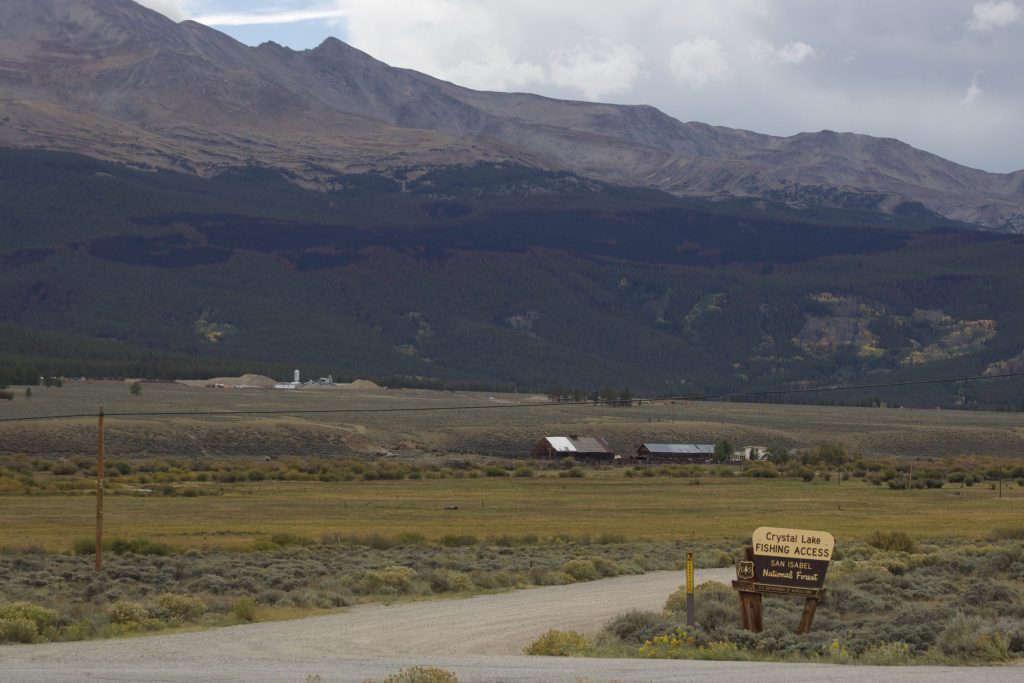
Ryan Spencer/The Aspen Times
Colorado has experienced an intense wildfire season marked by extreme drought and record-breaking heat.
But Gov. Jared Polis said in an interview this week that “it could have been a lot worse, if not for the early effort of firefighters, pulling in resources to go after small fires before they became large.”
Visiting Leadville on Monday, Polis met with the first responders and community members who were on the front lines of the Willow Fire, a fire that burned out-of-control outside the small mountain town for much of the summer.
On the back of a winter with a historically low snowpack, the Willow Fire burned in densely forested terrain at 10,000-feet just miles outside the popular tourist town.
The Willow Fire scorched more than 7,500 acres, but is now 80% contained. Officials don’t expect it to threaten Leadville or infrastructure in the area, though it will continue to burn into the winter.
Gathered around a long table at the Lake County Fire Station II, Polis peppered local officials with questions about the response to the fire and what it will take for the tourist-based economy to recover.
“Part of our success with this fire was the quick response,” Lake County Sheriff Heath Speckman told the governor.
Emergency officials were able to evacuate about 800 people from their homes and dozens of people off of backcountry trails near Mount Elbert, Colorado’s tallest peak, and the Continental Divide Trail, Speckman said.
Lake County Emergency Management Director Dan Campbell said the response to the Willow Fire was swift and began at the local level but quickly grew to involve the state and federal governments. A series of complex incident management teams deployed by the National Interagency Fire Center oversaw the wildfire in coordination with local leaders.
“I don’t know that it could have gone much better,” Campbell said. “It was an amazing response all the way around from all agencies.”
U.S. Forest Service Leadville District Ranger Patrick Mercer described how firefighters took a “full suppression strategy,” aiming to put the blaze out as quickly and safely as possible. Due to the number of wildfires going on across the country, he said there were fewer federal resources — such as elite interagency hotshot crews — than on past fires, such as the Interlaken Fire that burned about 700 acres near Twin Lakes in 2024.
“The demand for those crews was really high, and so we got a couple at a time. At one point in time, we had maybe three to four at most,” Mercer said. “By way of comparison, on the Interlaken Fire, if you remember that one, at one point in time we had close to 10 interagency hot-shot crews on a much smaller fire.”
Ben Cairns, the dean of Colorado Mountain College’s Leadville campus and a member of the Leadville-Lake County Economic Development Corporation, said the Willow Fire had a dramatic impact on local businesses.
“Our business community was already holding on for dear life — and then July came, and they didn’t have July,” Cairns said, estimating that many Leadville businesses saw revenues dip by about 60% that month as a result of the wildfire.
As the Willow Fire has settled down into the fall, he estimated that business has rebounded to about 90% of normal, but noted that summer is Leadville’s busiest season.
Mountain towns escaped the worst

While the Willow Fire burned just east of the Continental Divide, wildfire officials in nearby ski resort communities on the Western Slope watched with concern as they also faced record-dry conditions.
Eagle County Emergency Management Director Birch Barron noted that this was the hottest and driest summer he’s ever seen in Colorado. But he said it’s not just luck that mountain communities were able to stop wildfires from growing into destructive blazes that destroyed homes and wrecked communities.
“I do think there’s this false impression that the wildfire season wasn’t as bad as people said it was going to be or that somehow we just got lucky,” Barron said. “We really did see fires starting and growing quickly earlier in the summer. Our ability to get on those quickly kept those small.”
From local fire districts up to the state level, Barron said Colorado and its mountain communities have spent years building out their wildfire programs and developing mutual aid response plans to be able to respond quickly to wildfires.
Steamboat Deputy Fire Chief Ian Satterfield noted that there were two “substantial” fires in Routt County early in the summer: the Fish Hook and Green Ridge fires, which were both reported the same day in July.
Either of those fires — as well as others on the Western Slope — could have exploded into a larger incident, but Satterfield said firefighters were able to keep those wildfires small by responding quickly.
“On the preparation side of it, we were well organized so that if something occurred, we were able to get after it fast,” he said. “That’s the thing that we’ve learned is getting on these fires quickly and getting a wrap on them before they can get established is key.”
Satterfield said that the public education campaigns about the extreme fire danger and Stage 2 fire restrictions in place across mountain communities also appeared to be successful this summer. He said throughout the summer “we had very few human-caused starts.”
Barron said that members of the public appeared to respond to the campfire bans and other restrictions. He noted that there were also fewer roadside wildfires off Interstate 70 between Dotesero and Eagle, after the Colorado Department of Transportation did wildfire mitigation work there and upped education to remind drivers not to drag chains that can spark on the highway.
“We certainly had a bit of luck involved,” Barron said. “But I just want to really give a ton of credit to the community for taking the fire danger seriously and keeping us from having to respond to a lot of human-caused starts as well as all the partners that have been involved in making sure we have a really robust and rapid local wildfire response.”







Support Local Journalism
Support Local Journalism
As a Summit Daily News reader, you make our work possible.
Summit Daily is embarking on a multiyear project to digitize its archives going back to 1989 and make them available to the public in partnership with the Colorado Historic Newspapers Collection. The full project is expected to cost about $165,000. All donations made in 2023 will go directly toward this project.
Every contribution, no matter the size, will make a difference.