Could federal changes, bills impact Colorado’s gray wolf recovery?
As the Interior Secretary warns the feds may get involved with Colorado’s wolf program, efforts to federally delist the species are underway. Here’s what that could mean.

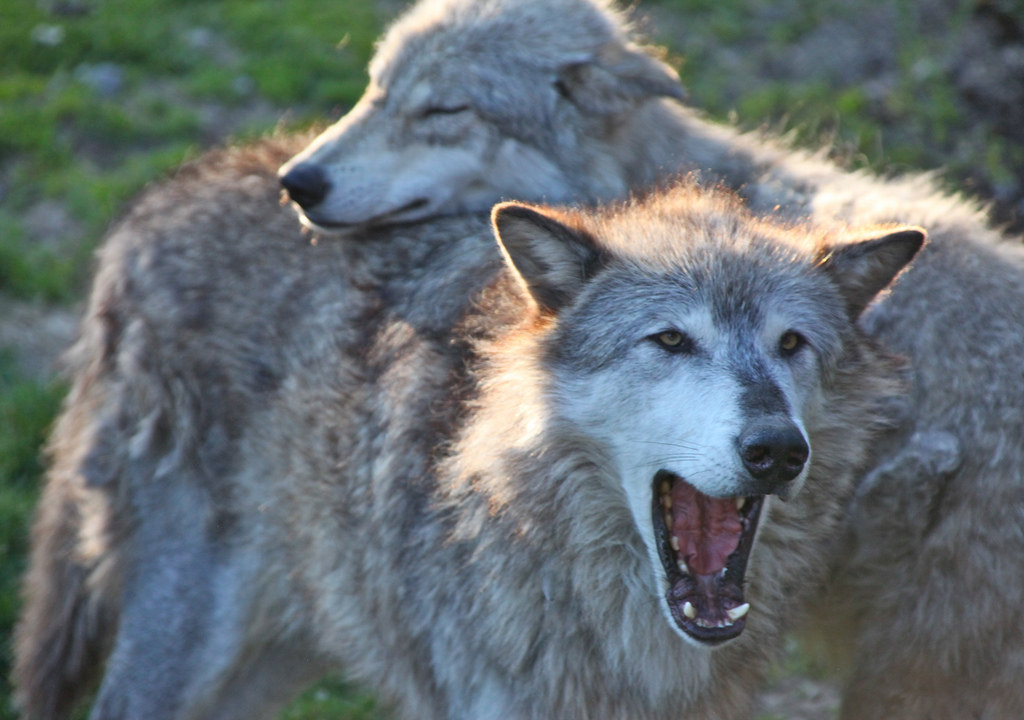
U.S. FIsh and Wildlife Service
U.S. Department of the Interior Secretary Doug Burgum recently issued a warning to Colorado as the state continues the voter-mandated reintroduction of gray wolves.
On Dec. 18, Burgum posted on X, “This is a warning: if Colorado does not get control of the wolves immediately, we will!”
The Secretary of the Interior’s post said that the state was “prioritizing WOLVES over American ranchers,” claiming it released 15 wolves in January with “no warning” and “recently RE-RELEASED a wolf from a pack known to kill livestock,” referring to Colorado Parks and Wildlife’s Dec. 11 release of a gray wolf in Grand County after it was returned to the state by New Mexico wildlife officials.
The social media post came just hours after the U.S. House of Representatives passed a bill to delist gray wolves from the federal Endangered Species Act. Rep. Lauren Boebert, a Republican representing Colorado’s 4th Congressional District on the eastern plains, said the act “returns the issue of wolf management to the states and tribal wildlife agencies” in a speech before the chamber’s vote.
“It’s time for the federal government to get out of the way and allow the state and tribal wildlife agencies to manage this species,” Boebert said.
The bill — co-sponsored by Boebert and Rep. Tom Tifffancy, R-Wis., and titled the “Pet and Livestock Protection Act” — still faces a Senate vote before it heads to the president’s desk.
“Colorado is at the center of our nation for wolf battles,” Boebert said.
Would Colorado be impacted by a federal wolf delisting?
Colorado began efforts to reintroduce gray wolves in December 2023. Colorado Parks and Wildlife is the first state agency to lead the reintroduction of wolves in its state, with the U.S. Fish and Wildlife Service leading previous efforts, including in Yellowstone National Park and Idaho.
Gray wolves were first listed as endangered in the United States and Mexico under the Endangered Species Act in 1978. The only exception is in Minnesota, where gray wolves were, and still are, considered a threatened species, which is a step below endangered. Today, gray wolves are listed as an endangered species under the federal act in 44 states, including Colorado. The species is also listed as state endangered in Colorado.
Efforts to delist the species have been ongoing throughout the past three presidential administrations. When Parks and Wildlife finalized its wolf management plan in May 2023, it contemplated how the legal status of wolves could impact the recovery program.
“Because of the uncertainty about the federal status of wolves, close coordination with (U.S. Fish and Wildlife Service) has occurred throughout the Plan development process and will necessarily continue through the implementation stages,” the plan states.
To ward against the federal uncertainty, Colorado also received a special rule, called the 10(j) rule, from the federal wildlife agency, which marks the state’s wolf population as nonessential and “experimental.” The rule grants the ability to kill wolves in Colorado under strict circumstances — including allowing the shooting of a wolf caught in the act of attacking livestock — something that wolves’ federal endangered protection would gird against.
If Boebert’s bill delisting the species were to pass, this 10(j) rule would be “moot,” but Colorado’s management of gray wolves would remain with the state and under the direction of its wolf plan, according to a previous statement from Travis Duncan, public information officer with Colorado Parks and Wildlife.
However, the bill could end the back-and-forth debate over what protections gray wolves warrant. It includes a provision that would block courts from reviewing the delisting.
Court review has blocked the federal government from delisting gray wolves as recently as 2022, when a federal district court in California overturned a 2020 rule from the Fish and Wildlife Service to delist gray wolves. The Biden administration appealed this decision in April 2022, seeking to again delist gray wolves in the lower 48 states.
Bill to delist wolves raises support, concerns in Colorado
Following the House vote, wildlife advocacy groups and supporters have warned that it poses a dangerous threat to wolves’ survival.
In a Dec. 18 Facebook post, Colorado’s First Gentleman Marlon Reis, an animal rights advocate and proponent of Colorado’s wolf reintroduction, wrote that the last delisting of gray wolves, which lasted one year until it was overturned by the California federal judge, ” gave us all the clarity we need to know that delisting only leads to widespread killing.”
Reis referred to several state laws that were passed during that time in Idaho, Montana and Wisconsin, which authorized hunting of wolves in some capacity.
“America has, for more than 40 years, protected Gray Wolves as an Endangered Species, and we must continue to do so, not only because science tells us so, but because it is clear that anti-wolf sentiment is alive and well in all of the States where Gray Wolves currently live,” Reis wrote.
The bill passed by seven votes, with representatives mostly falling along party lines. Colorado’s representatives, however, did vote with their parties.
Rep. Jeff Hurd, a Republican representing Colorado’s 3rd district and the Western Slope, applauded the bill as a way of ” restoring balance, protecting livestock and livelihoods, and trusting states to manage wildlife responsibly,” in an emailed statement.
“Colorado’s rural communities should not be collateral damage from one-size-fits-all policies driven by activists who will never bear the costs,” Hurd stated. “This legislation puts science, local knowledge, and common sense back at the center of wildlife management.”
Hurd — who said earlier this year he was seeking federal solutions to challenges with wolves in his district — also expressed gratitude for Burgum’s recent post. In his own post, Hurd thanked Burgum ” for highlighting that Colorado Parks and Wildlife continues to disregard key commitments in the 2023 Colorado Wolf Restoration and Management Plan—especially when it comes to wolves known to have harmed or killed livestock.”
Burgum’s warning of federal action in Colorado also came two months after the U.S. Fish and Wildlife Service — which falls under the Interior Department — stepped in to prevent Colorado from sourcing wolves from British Columbia for a second year.
In October, the newly-appointed Fish and Wildlife Service Director Brian Nesvik told then-Parks and Wildlife Director Jeff Davis in a letter that Colorado could only source wolves from northern Rockies states where gray wolves are not listed as endangered. This includes Idaho, Montana, Wyoming, and portions of Oregon, Washington, and Utah. Nesvik argued that it violated the 10(j) agreement.
While Parks and Wildlife disagrees with the federal agency’s interpretation of the agreement, it is working to comply with its new direction.
National Wolf Recovery Plan Halted
After the U.S. Fish and Wildlife Service under President Joe Biden sought to delist gray wolves from the Endangered Species Act through its 2022 appeal, it also began crafting a nationwide gray wolf recovery plan in 2024. In its February 2024 announcement of the plan, the agency said the plan would address courts’ concerns that the agency doesn’t have a plan to sustain gray wolves without the current protections.
In November, the Trump administration declared it was no longer working on the plan, claiming that recovery plans would not promote conservation of gray wolves because it is no longer appropriate for them to be listed as endangered. This action is being challenged by The Center for Biological Diversity, who claim science and law demand a comprehensive plan for wolf recovery. The nonprofit plans to file the lawsuit in February.
Impacts to Colorado’s program from a nationwide recovery plan would be “entirely dependent” on what it entailed and the recovery goals it outlined, according to Luke Perkins, public information officer for Parks and Wildlife.










Support Local Journalism
Support Local Journalism
As a Summit Daily News reader, you make our work possible.
Summit Daily is embarking on a multiyear project to digitize its archives going back to 1989 and make them available to the public in partnership with the Colorado Historic Newspapers Collection. The full project is expected to cost about $165,000. All donations made in 2023 will go directly toward this project.
Every contribution, no matter the size, will make a difference.