Stolen: Mountain streams and drinking water
ALL |
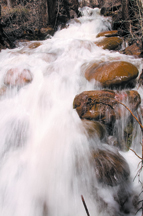
You are hiking up McCollough’s Gulch, one of my favorite hikes, and you sit down at the edge of one of those wonderful waterfalls. Can you dip your water bottle in and refill it and safely drink? The water looks crystal clear and oh so cool and refreshing.
Think again! Where does that water come from, or pass by, or what has washed into it with the last snow melt, or last rain storm? You will probably be drinking feces and the microorganisms associated. No matter how remote you feel you are, someone or some creature has been there before you and laid its “load” on the ground nearby. What about contaminants from mining? There are some toxic heavy metals washed into the water from extensive past mining in our area. If you are at the source of a mountain spring, the water may be OK. Established campsites are often located near a spring which may, or may not be, OK to drink from. I have always filtered or boiled my drinking water on backpack trips. For sure, you certainly wouldn’t want to drink water near or below a cow pasture.
We are use to turning on the tap and drinking the water that comes from it. Some people don’t even trust the tap water and filter it, but tap water has been treated to destroy disease-causing organisms. This water is also frequently tested to insure it meets safe drinking standards. Bottled water often advertises that it comes from “mountain springs.” That crystal-clear mountain stream may seem clean enough to the eye, but invisible microorganisms are thriving in it by the millions. Actually, most of them are normal aquatic bacteria, part of the food chain, but dangerous ones come from fecal contamination.
Even at established campsites, the only available water supply, often a natural spring, might have had someone who had washed their dishes in it! Who knows what else they may have done nearby. Historically, wastes and human fecal contamination of water supplies has resulted in large epidemics of cholera and other diseases that have ended the lives of millions. We are unlikely to have cholera in our mountain water unless brought in by some carrier, but it might contain bacteria such as E. coli and Salmonella commonly found in feces. It could also contain protozoa such as Giarda, Cryptosporidium, Toxoplasma gondii, Amoebae, and helminths such as: nematodes, pinworms and hookworms. Symptoms of these fecal/oral diseases are most commonly diarrhea, which can lead to dehydration.
Over the past 20 years, an emphasis has been placed on Giardia as the major harmful water microbial contaminant in wilderness areas. Although certain mammals such as beavers have been attributed as natural reservoirs of the parasite, some sources claim the seriousness of exposure in the wilderness to Giardia has been overemphasized, and more harm may come from bacteria. Portable water filters remove Giardia and other protozoal organisms, but become easily clogged with sediment, and may become ineffective on extended trips.
Water filters vary a great deal in the types and amount of organisms they are able to filter, and that’s when the water filters are functioning properly and users correctly operate and maintain them. It’s debatable whether backcountry users need a filter that removes viruses. For many years, common wilderness wisdom was that viruses were more likely to be a problem in less-developed countries than in the United States. However, people have contracted the Norwalk virus from surface water in the United States. You’re most at risk if you’re camping in a national park or a popular area. Filtering water is a chore: The daily pumping required to keep a group of campers watered can be tedious. A few tips can make it easier: Choose the cleanest water possible – from a spring rather than a stream, from a stream rather than a lake, from a lake rather than a beaver pond. Pre-filter water that is cloudy or visibly dirty. You might run it through a bandanna, and then let it settle for a while. The less sediment your filter has to handle, the longer it will last without clogging.
Various chemicals used to treat water lack the ability to destroy 100 percent of disease-causing organisms in water. Iodine is a longtime hiker favorite and, according to the Centers for Disease Control and Prevention (CDC), is more effective in a wider variety of circumstances than chlorine, whose effectiveness depends on conditions that are hard to control in the backcountry. While effective against Giardia, iodine does not kill Cryptosporidium. This parasite is most commonly found in waters polluted with sewage or animal waste, especially from farms and feedlots. Iodine can require up to an hour to kill the germs, especially if the water is cold, and iodinated water has an unpleasant taste.
The best way to make water safe for consumption and destroy 100 percent of disease-causing organisms is boiling. Water does do not even have to reach the boiling point (about 212° F or 100° C at sea level) to be rendered safe to drink; once the water temperature reaches 185° F (85° C) nearly all disease-causing organisms have been destroyed. The only reason you typically get water up to the boiling point is you probably do not have a thermometer handy to measure the water temperature. Boiling is proof positive the water is hot enough to make it safe to drink. The boiling point of water even on Mount Everest is still high enough to destroy all disease-causing organisms.
So to be safe, consider water from any outdoor source contaminated with disease-causing organisms. The sad truth is most backcountry water is no longer safe to drink. Blame it on pesticides, fertilizers or chemicals from old mines – or on the cute marmot who just stopped to do his business on a patch of snow melting into a stream, on a migrating flocks of birds, or your fellow hiker who did not dig a hole and bury it well away from a water source. On a short day-hike, you may be able to carry enough tap water so that you don’t have to worry about what might be lurking in a stream. On a longer hike or a backpack, you’ll need to refill those bottles – and that means treating your water, no matter how clear and refreshing it looks.






Support Local Journalism
Support Local Journalism
As a Summit Daily News reader, you make our work possible.
Summit Daily is embarking on a multiyear project to digitize its archives going back to 1989 and make them available to the public in partnership with the Colorado Historic Newspapers Collection. The full project is expected to cost about $165,000. All donations made in 2023 will go directly toward this project.
Every contribution, no matter the size, will make a difference.