Summit County’s wages lag behind other High Country resort communities, federal data shows
Hospitality industry pay impacts average wages in Western Slope counties that largely rely on tourism

Kit Geary Follow
Tripp Fay/Summit Daily News archive
Recent data from the U.S. Bureau of Economic Analysis shows the average worker in Summit and Grand counties make less than those in comparable Colorado resort communities.
Northwest Colorado Council of Governments, an association of county and municipal governments that collaborates on mutual interests and benefits for the region, gave its quarterly update in June based off the newest set of federal wage data for the fourth quarter of 2023.
Out of the Western Slope resort counties included in the data, Piktin led the pack with an average wage of $84,396, which is anywhere from $17,000 to $33,000 more than other Colorado resort counties that were analyzed and over $5,600 more than the state’s average wage.
Coming in behind Pitkin was Eagle County with an average wage of $67,080, Routt County with an average wage of $60,268, Summit County with an average wage of $56,940 and Grand County with an average wage of $50,648.
Christy Gonzales with the Colorado Rural Workforce Consortium said that while the economies in these five counties are all driven by tourism, those counties with increased diversification of industries saw higher average wages.
“Pitkin County and Routt County have a more diversified economy compared to Summit County because (they) have a higher concentration of industries like finance, real estate and professional services,” Gonzales said.
Northwest Colorado Council of Governments Economic Development Director Rachel Tuyn said the accommodation and food service industries have some of the most significant effects on average wages across the region.
For these rural resort communities, the accommodation and food service industries make up anywhere from 16% to 32% of the workforce, making them the most popular industries in all five counties.
-
This graphic demonstrates the workforce layout of Summit, Grand, Routt, Eagle, Pitkin and Jackson counties combined based on data from quarter four of 2023, which was gathered by The U.S. Bureau of Economic Analysis.
Northwest Colorado Council of Governments/ Courtesy illustration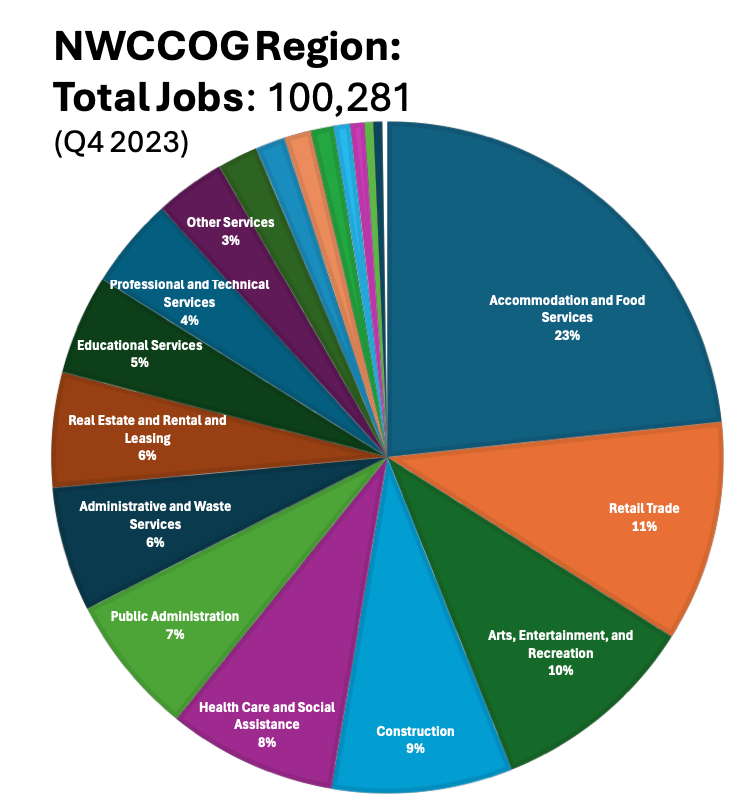
-
This graphic demonstrates the workforce layout of Grand County based on data from quarter four of 2023, which was gathered by The U.S. Bureau of Economic Analysis.
Northwest Colorado Council of Governments/ Courtesy illustration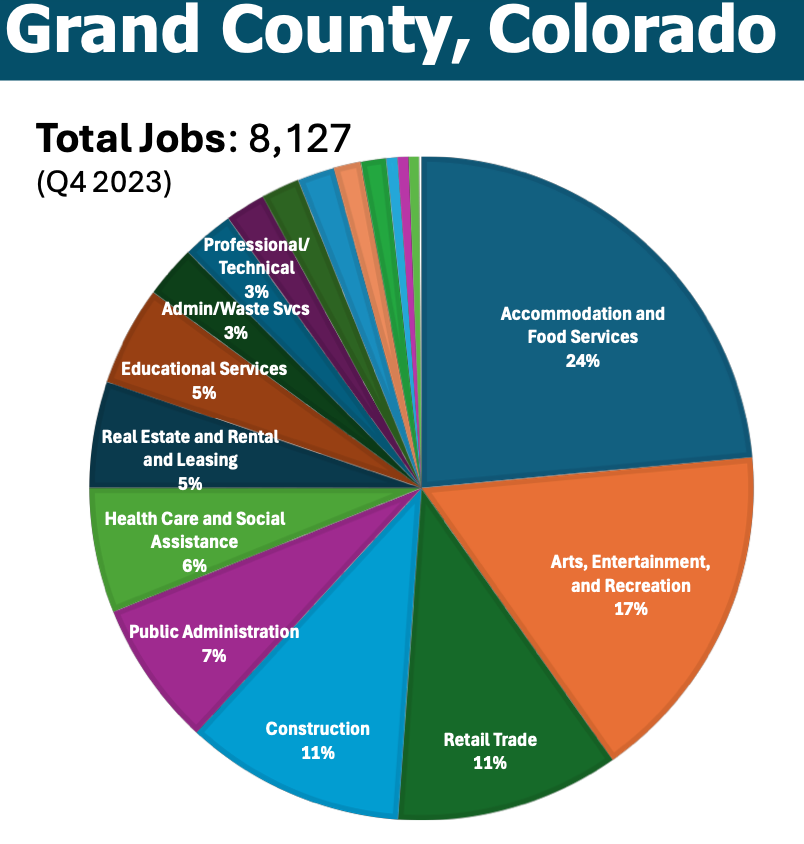
-
This graphic demonstrates the workforce layout of Eagle County based on data from quarter four of 2023, which was gathered by The U.S. Bureau of Economic Analysis.
Northwest Colorado Council of Governments/ Courtesy illustration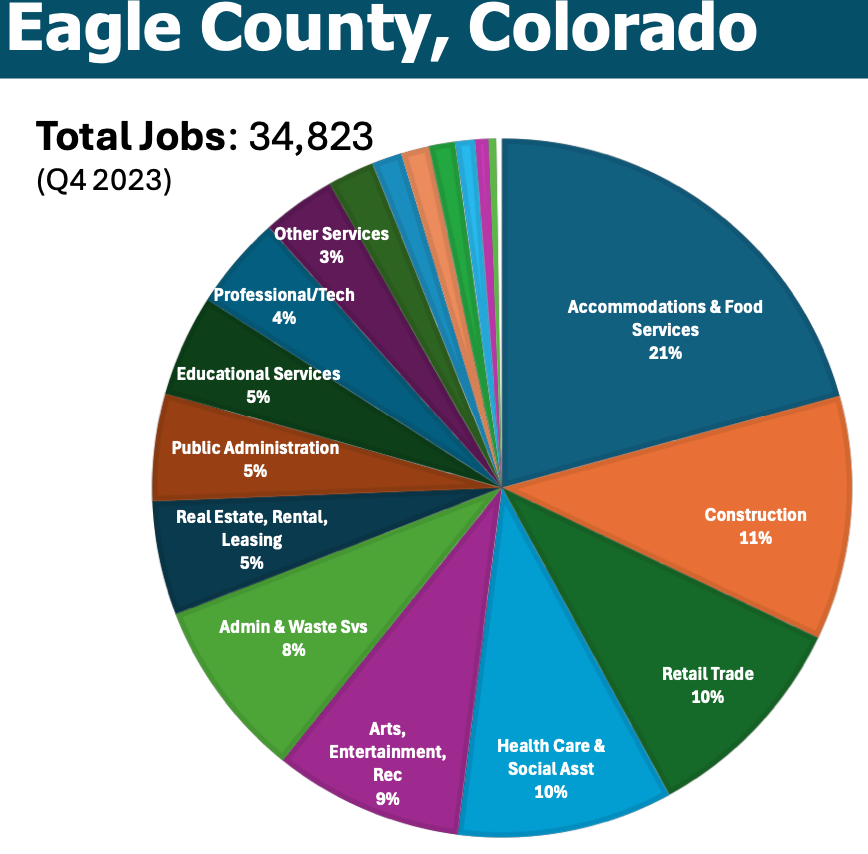
-
-
This graphic demonstrates the workforce layout of Routt County based on data from quarter four of 2023, which was gathered by The U.S. Bureau of Economic Analysis.
Northwest Colorado Council of Governments/ Courtesy illustration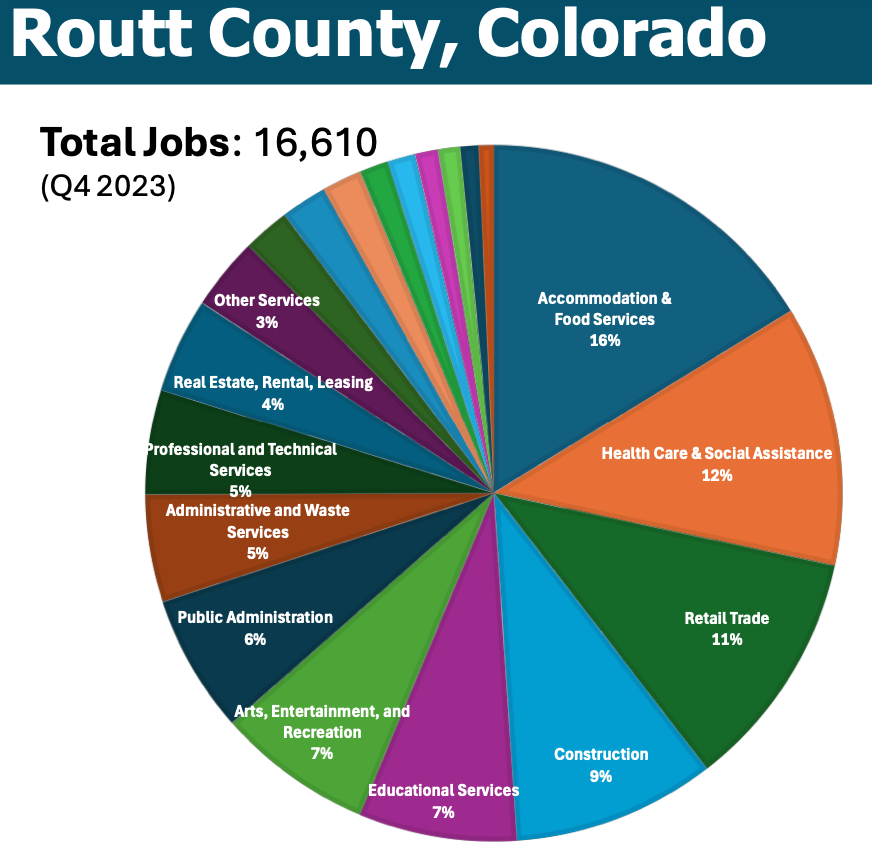
-
This graphic demonstrates the workforce layout of Summit County based on data from quarter four of 2023, which was gathered by The U.S. Bureau of Economic Analysis.
Northwest Colorado Council of Governments/ Courtesy illustration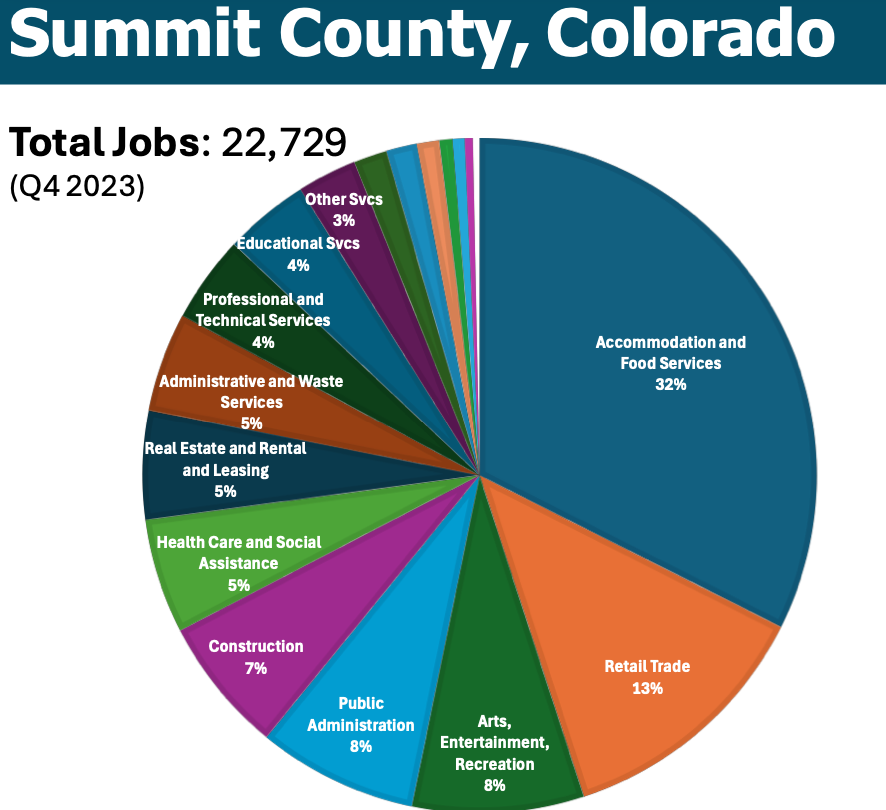
-
This graphic demonstrates the workforce layout of Pitkin County based on data from quarter four of 2023, which was gathered by The U.S. Bureau of Economic Analysis.
Northwest Colorado Council of Governments/ Courtesy illustration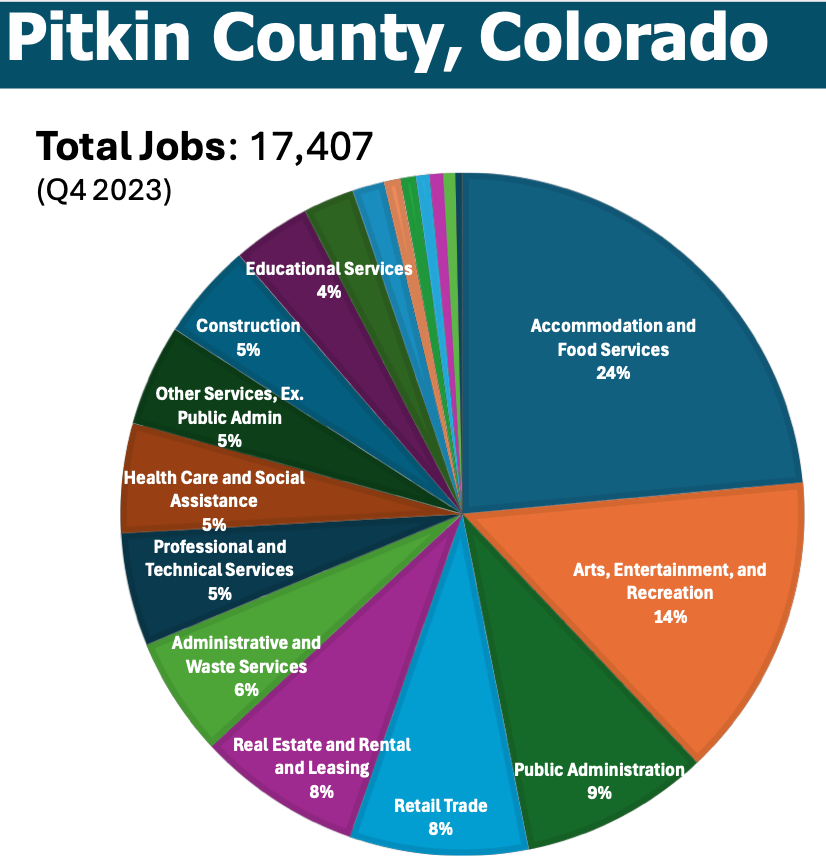
Summit County has the largest percentage of accommodation and food service jobs in its workforce out of the five counties, accounting for 32%. Tuyn said it is considered one of the primary contributing factors causing Summit’s average wage to lag behind counties that are considered to have a similar cost of living.
The U.S. Bureau of Economic Analysis shows the average wage for these industries in Summit was $39,416.
Summit’s highest-paying jobs are more scarce. Professional and technical services, which data shows paid an average salary of $107,172, and upper-level managerial positions, which had an average salary of $182,780, make up around 4% and 0.26% of the workforce, respectively.
Organizations in Summit, such as the Summit Economic Partnership, are working on diversifying the local economy through various initiatives to help startups solidify themselves in the business landscape. The organization works individually with companies on how to increase economic factors such as revenue and customers.
“We want to increase wages. That’s going to create a more solid, local middle class here, where people aren’t moving around,” Summit Economic Partnership Executive Director Thayer Hirsh said. “We want generations living here.”
Also on the lower end of regional average wages, Grand County had 24% of its workforce employed in accommodation and food service industries. In Grand, these workers made an average salary of $34,528. Behind the hospitality industry is the arts, entertainment and recreation industries, which account for a total of 17% of the jobs in the workforce with an average salary of $34,632. High-paying salaries have even less of a presence in Grand, with next to no industries paying six-figure salaries, according to The U.S. Bureau of Economic Analysis.
Grand’s two highest-paying industries, utility jobs and upper-level managerial positions for companies, had average salaries of $97,916 and $96,044, respectively. Yet, utility jobs account for 1.8% of jobs in the workforce, and upper-level managerial positions account for 0.12% of total jobs.
Pitkin County also has accommodation and food industry jobs accounting for a large portion of its total at 24%, yet the wages these workers make are significantly higher than in Grand. Data shows workers in these industries make an average salary of $51,168. Eagle County has the second-highest regional wages in these industries at an average of $41,288.
Tuyn said Routt County, which is in the middle of the pack for average wages, has fewer accommodation and food service industry jobs, making up 16% of the workforce, which results in a higher average wage in comparison to the other counties.
“In Routt County, 12% of jobs are in the health care and social assistance industry, which tends to be higher-skilled jobs which require a certain amount of education and training and pays higher wages,” Tuyn said, noting the industry pays an average salary of $75,452 in Routt.
To help facilitate wage growth, the Colorado Rural Workforce Consortium is working on talent development in the region and encouraging transferable skills in employees who are in the hospitality industries.
“Being able to have that versatility and flexibility during those off-peak seasons are really going to help them when those different job opportunities happen to be limited,” Gonzales said. “It also helps with career advancement.”
In addition, the consortium is working on supporting local apprenticeships in industries like the trades. Northwest Colorado Council of Governments supports similar efforts and works with local organizations like the Summit Economic Partnership to help boost its initiatives, as well.
Overall, the region Northwest Colorado Council of Governments covers — including the five resort counties and Jackson County — had around 100,000 jobs in the fourth quarter of 2023, which is a near 4% year-over-year increase.






Support Local Journalism
Support Local Journalism
As a Summit Daily News reader, you make our work possible.
Summit Daily is embarking on a multiyear project to digitize its archives going back to 1989 and make them available to the public in partnership with the Colorado Historic Newspapers Collection. The full project is expected to cost about $165,000. All donations made in 2023 will go directly toward this project.
Every contribution, no matter the size, will make a difference.