Summit Fire begins fire mitigation efforts on 6 acres of Silverthorne-owned land

Jessica Sachs/Summit Daily News
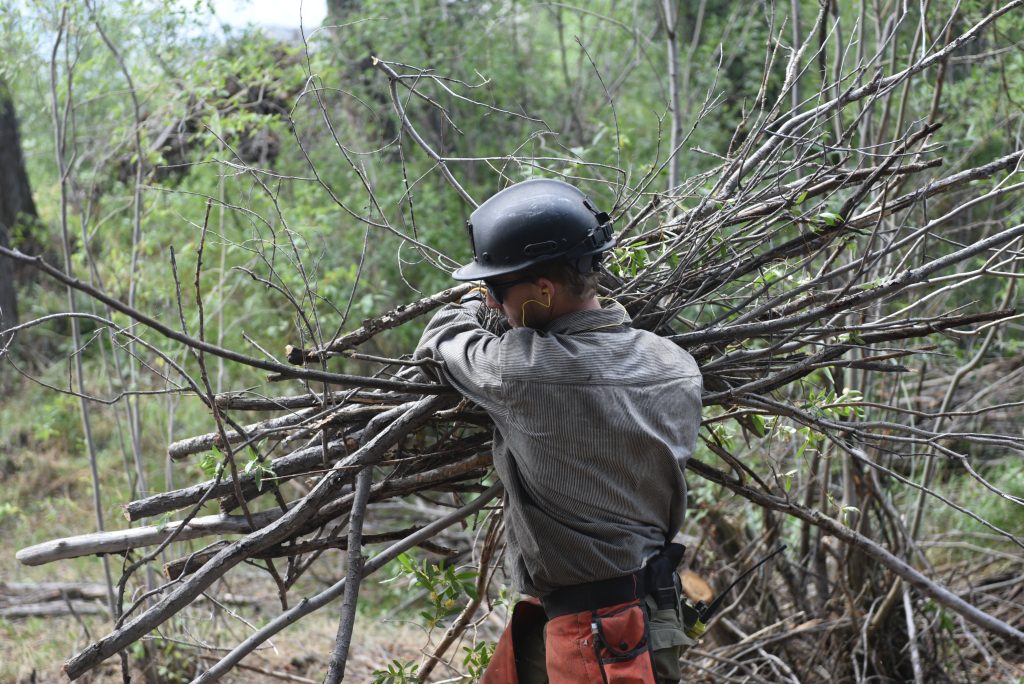
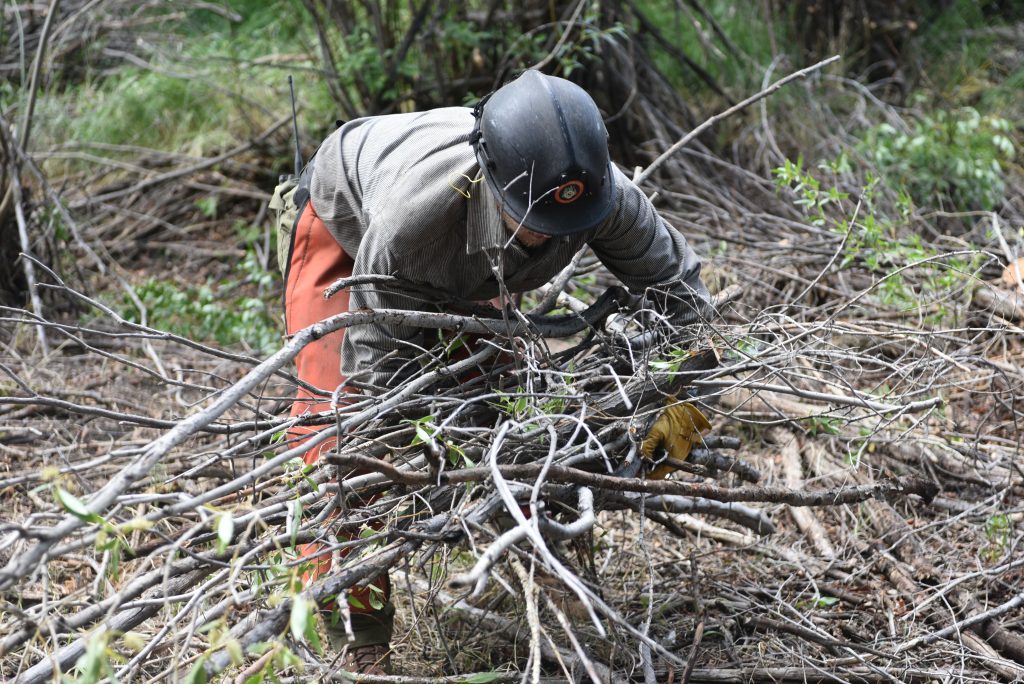
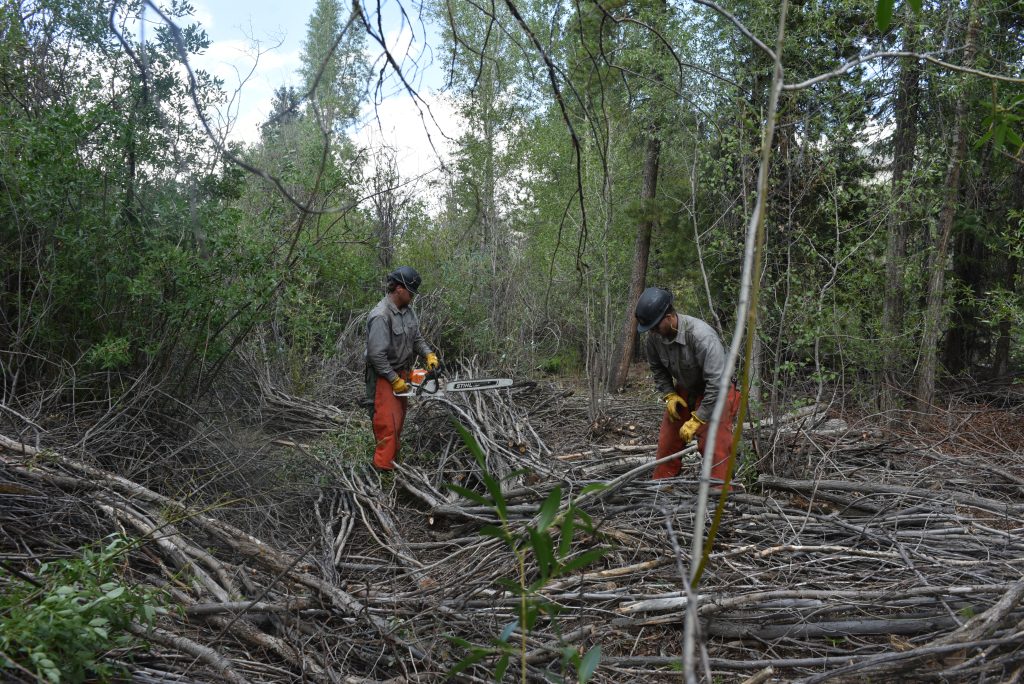
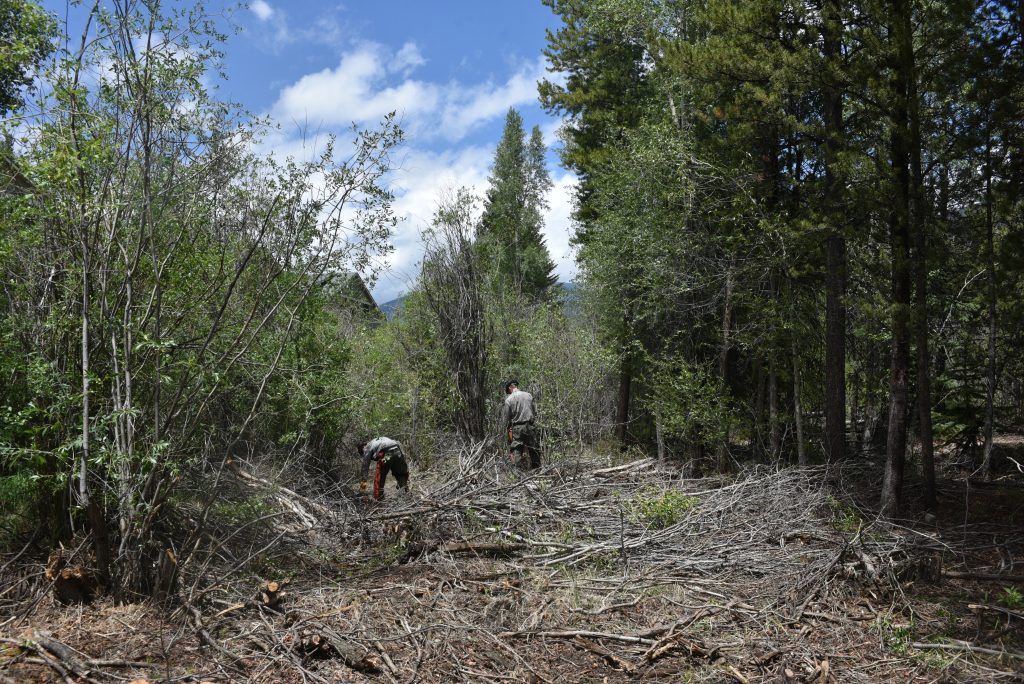
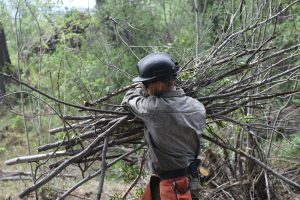
On a wooded town-owned parcel of land near Silverthorne’s Blue River Circle, firefighters from Summit Fire and EMS have been cutting down dead and diseased trees as part of preemptive fire mitigation efforts that began in the area on June 21.
Their goal is to make sure that, if a fire were to break out near this project site’s six acres, it would have less flammable material to feed on, slowing its growth and making it easier for firefighters to control.
“If we can reduce the fuel load — if we do get a fire in here — it’s going to burn at a lower intensity, at a level that firefighters can actually address,” said Steve Lipsher, a public information officer for Summit Fire.
This summer marks the first time that the department has had a full crew available to help work on fuel-reduction projects, a longheld goal for Summit Fire and an important step as fire danger and restrictions in the county continue to creep upwards.
“This is the point that we wanted to reach, where we could actually do on-the-ground preventative and preparatory work throughout our community,” Lipsher said.
It also marks an important step in ensuring that Summit County is fire ready: protecting town-owned areas.
“It’s one thing for a private property owner to take care of the property, but in a lot of these communal areas … it falls into an area where nobody really has the impetus to be able to get in there and offer this kind of work,” Lipsher said.
But the work doesn’t only protect the land owned by Silverthorne. By clearing trees along this small, residential stretch of the Blue River, the firefighters are helping fortify about 20 private properties within 100 feet of the project site, in what is known as the extended zone of fire danger. Removing dead or diseased trees and fallen plant material from this zone can help improve a home’s chance of surviving a fire.
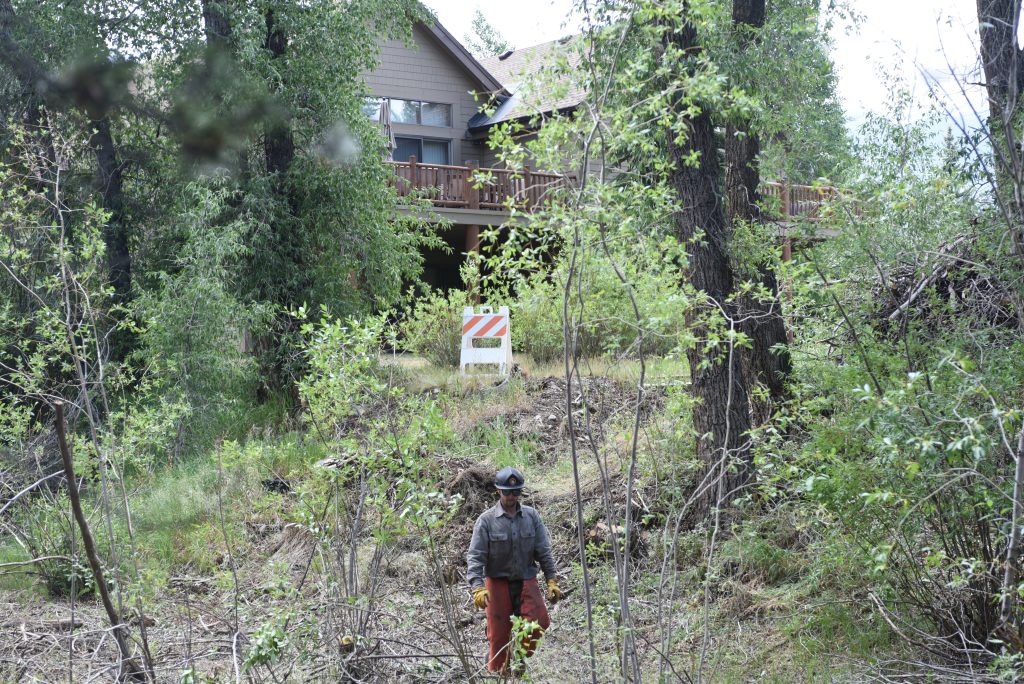
“For homeowners, we really want them to focus on their zero to five feet,” said Matthew Gerjol, a fuels crew lead with Summit Fire’s Wildland Division. “But that home ignition zone extends out to 100 feet. For some of these homeowners … that 100 feet butts into this property.”
Along with protecting homes and communal spaces, the project’s benefits are three-fold, including preserving the Blue River’s health, acting as further training for fire crews and mimicking natural cyclical behaviors of tree destruction and regrowth.
In terms of the river itself, the project’s biggest asset is reducing the amount of potentially-polluting materials that would turn into ash and end up in the water if a fire were to occur, Gerjol said.
But for the crews working on the project, Lipsher said the greatest benefit is the ability for the firefighters to continue practicing their wildland skills — like tree cutting and hauling — while still remaining available to the county for any emergency response needed. Earlier in the week, one of the five members assigned to the mitigation project was pulled away for such a reason: to fight a wildfire south of nearby Rifle.
“One of the big bonuses of us having this crew is it actually does also bolster our response to a wildfire,” Lipsher said. “I think it’s super innovative for local fire departments to be ramping up crews like this — (they) have plenty of work to do when there’s not a wildfire burning, but can drop everything and go address a wildfire at the same time.”
The project also helps mimic natural burn and regrowth cycles that keep trees healthy in the long term — particularly for lodgepole pine trees that depend on fires.
“Clear cuts that you see in different areas of the county, that’s our current tactic to mimic the natural fire regime for lodgepole pine without putting fire on the ground,” Gerjol said.
But — river and tree benefits aside — he said much of the mitigation project’s true importance is helping Silverthorne prepare for and live more safely alongside fire.
“Doing this hazardous fuels reduction is going to change the fire behavior here,” he said. “We never will remove fire from the landscape, it’s a natural theme, but this project’s super important because now we can alter what the fire behavior will be. Clearing this out, you’ll have that low intensity fire that makes it easier for us to engage and do suppression efforts.”








Support Local Journalism
Support Local Journalism
As a Summit Daily News reader, you make our work possible.
Summit Daily is embarking on a multiyear project to digitize its archives going back to 1989 and make them available to the public in partnership with the Colorado Historic Newspapers Collection. The full project is expected to cost about $165,000. All donations made in 2023 will go directly toward this project.
Every contribution, no matter the size, will make a difference.