Ask Eartha: Any tips for making the return to school more climate-friendly?
Ask Eartha
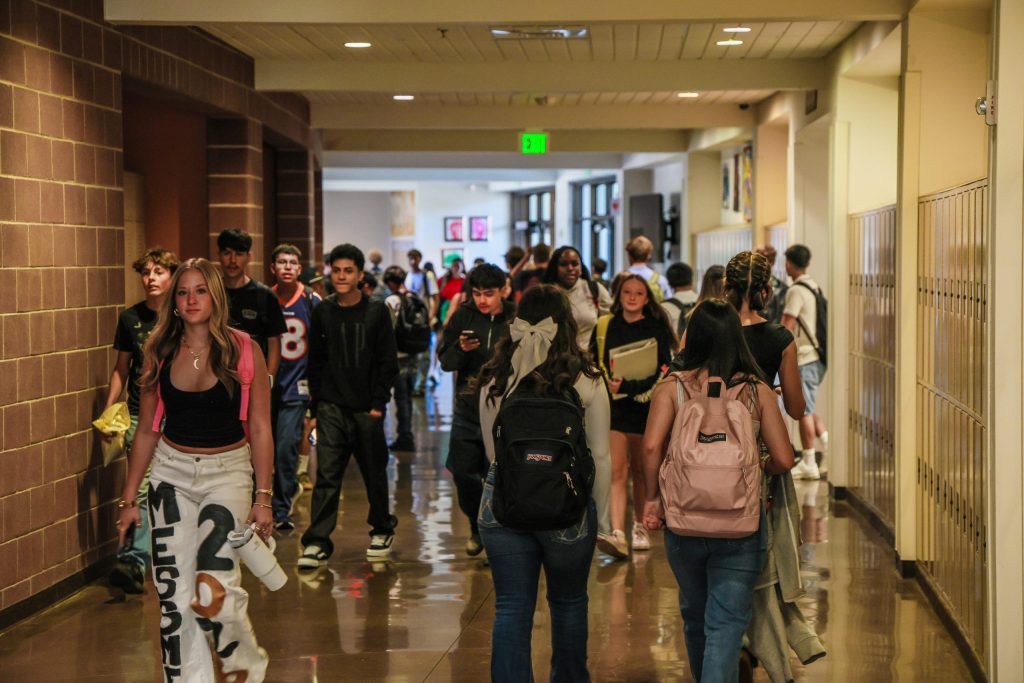
Chris Dillmann/Vail Daily archive
Dear Eartha, my kids are heading back to school next week and I’d love to make this year a little lighter on the planet. Any easy places to start?
Ah, back-to-school season, when the house briefly smells like new pencils instead of sunscreen and trail dust. I’ve got a few ideas that won’t add one more thing to your already-full plate, because let’s be honest, nobody needs a “sustainability project” on top of finding matching socks.
Skip the drop-off line
If you live close enough, walking or biking to school is the easiest climate win of the whole school year: no gas and no negotiating who sits where. Can’t walk? Summit Stage, our county’s fare-free bus system, runs routes to most schools. If biking or busing isn’t in the cards, carpooling with another family cuts your trips in half right off the bat — even a simple two-family swap, alternating mornings, adds up fast over 180 school days. And don’t underestimate the payoff: kid-free commutes in your own car twice a week does wonders for the soul, gas tank included.
Let the hand-me-downs do their thing
Your kid’s closet turns over faster than the weather at 10,000 feet, and the scale of textile waste nationally is genuinely startling. The EPA estimates Americans throw away more than 11 million tons of clothing and textiles a year, most of it still perfectly wearable — which is a lot of barely-worn dinosaur t-shirts to be sending to a landfill. Before you drop real money on new first-day outfits, try:
- A clothing swap with a few other families (even a driveway pile works, and the price is right: free)
- Neighborhood Buy Nothing or Facebook swap groups, basically a bottomless closet of other people’s barely-worn kids’ clothes
- Frisco Thrift and Treasure in Frisco or ReSaddled Thrift Store in Silverthorne, where a few bucks buys a whole outfit instead of one new t-shirt.
And the clothes too far gone to pass along still have some life left in them — ripped shirts make perfectly good rags, and that old flannel might just be next year’s lumberjack Halloween costume in disguise.
Kids never notice, or care, that their “new” school clothes came from someone else’s closet first — but your wallet definitely will, and it’ll be thrilled.
Pack a lunch with less waste
Since we’re on a roll: let’s talk lunches. A true zero-waste lunch means nothing comes home in the trash — no juice pouches, no applesauce packets, no individually-wrapped cheese sticks, no napkin, nothing. That might sound like a lot, but reusable snack bags, a cloth napkin instead of a paper one, and a refillable water bottle can cut a shocking amount of daily trash on their own, and they make your kid’s lunch look like it was packed by someone with their life together (no judgment if that’s aspirational some mornings).
Small swaps add up fast: buy a block of cheese and cut your own sticks instead of the individually-wrapped kind, use small reusable containers for dips and condiments instead of the little plastic cups, and skip the plastic wrap on sandwiches altogether — a reusable wrap or a container does the same job without the trash. A reusable lunch setup can replace hundreds of single-use bags, wrappers, and juice pouches over a school year, and by spring it usually costs less than what you would’ve spent on all that disposable stuff anyway. Basically, the planet wins, the wallet wins, and your kid gets a lunch that doesn’t look like it was assembled in a gas station.
However you get to school, whatever you’re wearing, and whatever’s in the lunchbox, a few small changes across the board add up fast — less driving, less waste, less landfill. None of it’s complicated, and all of it pays you back: a little more time, a little more money, and a little less mess. Here’s to a school year that’s lighter on the planet, one small swap at a time.
Ask Eartha Steward is written by the staff at the High Country Conservation Center, a nonprofit dedicated to waste reduction and resource conservation. Submit questions to Eartha at info@highcountryconservation.org.










Support Local Journalism
Support Local Journalism
As a Summit Daily News reader, you make our work possible.
Summit Daily is embarking on a multiyear project to digitize its archives going back to 1989 and make them available to the public in partnership with the Colorado Historic Newspapers Collection. The full project is expected to cost about $165,000. All donations made in 2023 will go directly toward this project.
Every contribution, no matter the size, will make a difference.