Get Wild: Why it’s important to leash your dog
As Summit County residents, we’re fortunate that many of our favorite trails head into three spectacularly beautiful areas of our public lands protected under the 1964 Wilderness Act: the Eagles Nest, Holy Cross and Ptarmigan Peak wilderness areas. As we learned last week, there are a few rules promulgated under the act intended to keep “the earth and its community of life untrammeled by man.”
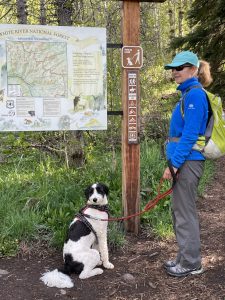
And “man” includes our pet carnivores that we are privileged to be able to bring with us onto our local wilderness trails. So, it doesn’t seem like too much to ask to comply with the rule that your dog at all times be on a physical hand-held leash no longer than six feet: “Pets are required to be on a leash to protect wildlife, other visitors’ experience, and your privilege to have them with you.”
After all, the White River is the most-visited forest in the nation and the portion of this forest encompassed by the Dillon Ranger District is the most visited in the country. So, you get the idea why the physical, hand-held leash rule is needed — there are tons of people and dogs sharing the wilderness.
Nevertheless, our U.S. Forest Service rangers and Eagle Summit Wilderness Alliance volunteer wilderness rangers still find many pups unleashed. And we’ve heard about every excuse for why dog guardians won’t leash up:
“She’s on a radio collar”: This often follows an unleashed dog bounding down the trail, owner well behind. Radio collars do notmeet the requirement for a hand-held leash.
- “My dog needs to run.” Many places in Eagle and Summit counties allow unleashed dogs. Even some less-popular Wilderness Areas, like Flat Tops, allow unleashed dogs if “under immediate voice control at all times.”
- “Don’t worry, she’s friendly!”: These words shouted down the trail offer scant comfort. Some people are scared of dogs. Others are allergic. Some just don’t like being tackled. Leashing your dog helps everyone enjoy the Wilderness experience.
- “My dog stays with me”: Your dog may (mostly) stay at leash length, but other owners will see your unleashed dog and decide it’s ok for their less-well-trained pups to be unleashed.
- “My dog might chase a (pika, grouse, deer), but would never hurt it.”: Just because you see an animal escape doesn’t mean it’s unharmed. The Latin name for dog, Canis lupus familiaris, is one word from wolf, Canus lupus, and most wildlife don’t distinguish. Escaping your pet carnivore wastes precious energy, risks injury, triggers a stress response and may cause pregnant wildlife to miscarry or abandon young.
- “My dog can take on anything out here!”: Every year, off-leash dogs end up on the losing end of wildlife encounters. Some go nose-to-nose with porcupines and end up pincushions. Others take on moose, and get trampled — or, worse yet, bring angry moose back to you. Leashing helps save on vet bills or worse. And chasing wildlife can result in fines in the thousands of dollars, and jail.
- “My dog pulls”: Yep, an untrained dog may pull. Solution? Take time to train your pup with free tips online.
- “She knows where I am”: Every year, lost dogs are reported in local wilderness areas. And remember, hunting season is months long — don’t let your unleashed dog become an unwitting target.
We are incredibly privileged to be able to recreate with our beloved pups in our three local wilderness areas. So next time you hit the trail in one of these beautiful but fragile areas, please leash up. Your dog will still have the time of their life. And the local wildlife? They, and other human users, will thank you.
Frances Hartogh is the Eagle Summit Wilderness Alliance board chair and a volunteer wilderness ranger and sawyer.








Support Local Journalism
Support Local Journalism
As a Summit Daily News reader, you make our work possible.
Summit Daily is embarking on a multiyear project to digitize its archives going back to 1989 and make them available to the public in partnership with the Colorado Historic Newspapers Collection. The full project is expected to cost about $165,000. All donations made in 2023 will go directly toward this project.
Every contribution, no matter the size, will make a difference.