Writers on the Range: Must water be enhanced and encased in plastic?
Writers on the Range
If someone told me 10 years ago that people would willingly pay over $5 for a one-gallon container of water, I would have scoffed.
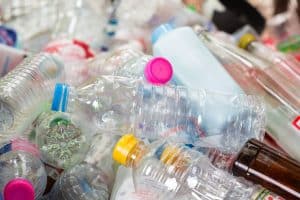
Yet here we are buying bottled water even by the cup. People buy teeny bottles that hold less than 8 ounces of water. Then while hiking or traveling, they drink and then toss.
Plastic marked PET and HDPE for are said to be recyclable. Said bottles are shredded and melted into “nurdles,” the picturesque name for plastic pellets used as raw material to make more plastic products.
That sounds promising, but according to the Container Recycling Institute, 70% of all bottles wind up in landfills, the ocean or littering the landscape. On trails in Grand Canyon National Park, I mostly pick up empty water bottles, each one probably weighing one-third of an ounce. It seems a job that will never be obsolete. Shouldn’t we have learned by now that refilling water bottles is the way to go?
We’ve all learned that plastic is nasty stuff. Yale Climate Connections cautions that each time plastic is melted and remolded it degrades, and recycled plastic is more toxic than “virgin.” The plastic can be “up-cycled” once into a fleece jacket, but eventually that jacket will get shuffled off to the landfill.
The real reason to drink bottled water is because of its purity, right? Pure fill-in-the-blank spring water. Yet the Los Angeles Times found that about 64% of bottled water is filtered tap water, and Consumer Reports found that bottled water can contain heavy metals and bacteria. A liter of bottled water might contain an average of 240,000 plastic micro-particles.
Even if bottled water comes from a spring, it must still undergo filtration and ozonization, meaning it is no longer “pure” spring water. Most spring water is also said to be minimally treated to maintain its “natural” characteristics, whatever those are.
Let’s talk about the carbon footprint. Is it green behavior to fly water across the country from a remote Pacific island? In areas where water is mined locally, sometimes from public land, are locals concerned about depleted aquifers? Is that water taken for bottling — in effect — stolen?
Then there’s designer water with all kinds of flavoring, hydrogen water, which adds more H2, or oxygen-enriched water. At what point does water become sort-of-or-not-water?
I was once on a VIP tour of a resort in the desert that boasted bespoke water. When those bottles ran out, I offered to refill them, but people told me they would drink nothing from the tap. So I took the bottles into the company van, refilled them from a huge, portable jug that had been filled from who-knows-where but probably the tap, and handed them back. I was told triumphantly: “See? This water is superior.”
At the beginning of the Bright Angel Trail in Grand Canyon one day, I saw a hiker trying to tie a flat of bottled water onto her pack. I politely ask what the Sam Hill she was doing and was told that she’d been advised to drink a liter of water every hour while hiking. I pointed out that this particular trail was popular in part because potable water was provided at several rest stops along the way. She looked offended: “I do not drink tap water.”
As long ago as 2012 it was widely reported that 20% of the waste stream in national parks was disposable water bottles, leading to sales of bottled water banned in parks. Unfortunately, that ban was rescinded by the federal government in 2017, though parks still encouraged visitors to bring and refill their own bottles. No matter — the parks estimate that most of the waste they dump each year is still plastic bottles.
Who remembers drinking from the garden hose. Anyone? Did your fingernails turn black and fall off? A character in the book “True Grit” proclaimed that he once drank water from a muddy hoof print and was glad to get it. While I might not go that far, I have drunk from a lot of questionable sources, and I’m still here to tell the tale. You might want to try the tap.
Marjorie ‘Slim’ Woodruff is a contributor to Writers on the Range, WritersOnTheRange.org, an independent nonprofit dedicated to spurring lively conversation about the West. She is a Grand Canyon educator.









Support Local Journalism
Support Local Journalism
As a Summit Daily News reader, you make our work possible.
Summit Daily is embarking on a multiyear project to digitize its archives going back to 1989 and make them available to the public in partnership with the Colorado Historic Newspapers Collection. The full project is expected to cost about $165,000. All donations made in 2023 will go directly toward this project.
Every contribution, no matter the size, will make a difference.