Breckenridge plans for water treatment plant rehabilitation that could cost upwards of $50 million

Kit Geary Follow

Andrew Maciejewski/Summit Daily News
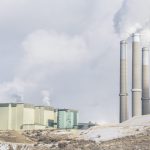
A 54-year-old water treatment plant in Breckenridge has reached the end of its life, and preliminary cost estimates put rehabilitating it at $54 million.
Breckenridge town staff members presented Breckenridge Town Council with plans for a series of projects to help the Gary Roberts Water Treatment plant reliably meet current demand at a Tuesday, Jan. 27, meeting.
The Gary Roberts Water Treatment is located at the Goose Pasture Tarn. A staff memo stated the town first evaluated improvements and rehabilitation options in 2014, but they put those on hold to prioritize Goose Pasture Tarn dam repairs. The memo noted the continued aging of the plant now makes it a critical project. It included photos of the plan demonstrating pitting, corrosion and leaks in the water tanks at the plant.
The project is currently proposed to be phased from 2027 to 2029. Staff members said there are no anticipated impacts to residents’ water service.
While preliminary cost estimates put the project at $54 million, the budget the town planned for was $50 million. Officials asked staff members what tools were at the town’s disposal to make the project stay within a reasonable budget.
Funding the possible $54 million pricetage
Public works director James Phelps said funding remains a key topic of discussion for the project.
He said he plans to work with the town’s new finance director coming on board to determine creative ways to leverage funding. He said the town has been working to garner dollars from Colorado State Revolving Fund, which is designated for projects related to water. The town also plans to use a Construction Manager at Risk Contract to evaluate and provide accurate construction costs and aid them in value engineering to identify potential cost savings.
Council member Jay Beckerman wondered about the current environment for state and federal water infrastructure-related grants.
Phelps said while staff members previously optimistic about grant funding opportunities, grant opportunities “have evaporated in many cases.” He said there aren’t ample grants for this type of rehabilitation project and many existing grants in the water realm are for infrastructure updates for problems like lead in water pipes.
A recent press release detailed the town was also vetting the possibility of using the Congressionally Directed Spending grant program.
Beckerman asked if a rehabilitation project for a plant that is still working would result in a longer life span than building a new plant. He said from his understanding “repairing a plane while it was inflight” might contribute to a lot of the costs.
SGM engineer Justin Kattnig said the rehabilitation project is planned to result in a 50-year service life for the plant. He did not mention whether it would be cheaper to build a new plant instead.
Council member Dick Carleton asked about low interest loans.
Phelps said back when the town built the North Water Treatment Plant, which broke ground in 2018 and was meant to supplement the Gary Roberts Water Treatment plant, the loan’s interest rate was around 2%. He said now a similar loan’s interest rate would be closer to 3.6%.
A system planned for the plant could provide the town the opportunity to make it a fire-ready facility in the event of a wildfire. Carleton asked if there’s any grants available in that arena the town could use.
Employees from the civil engineering firm the town is using for the project, SGM, Inc., said many wildfire-related grants are for emergency relief funding.
Given the price tag of the project, mayor Kelly Owens said she wanted to ensure the town would be as protected as possible. She wondered if there was a need for a specialized attorney.
Town engineer Shannon Smith said that would be up to the town attorney, who she mentioned has access to outside counsel if need be, but noted she didn’t foresee that being a need.
“If you need money to have outside counsel for this, I feel like this is very worthy (of that), and it feels so specialized that (it) sounds like something we’d be happy to discuss,” Owens said.
The evaluation process examined three tiers of rehabilitation that escalate costs, according to a staff memo.
Tier 1 has a focus on rehabilitation, but didn’t include replacing the existing treatment process system, which analyses found was needed. Tier 2 involved introducing a new pre-treatment system to the plant, but it would include expanding the existing filtration system when the analyses showed replacing the filtration system was necessary. So, the town opted for a third option involving a new pre-treatment system and a new filtration system.
To accommodate a new pre-treatment system, an addition would need to be made to the existing water treatment building.
Phelps said he planned to form a Water Utility Stakeholder Group to help provide more community input.


Support Local Journalism
Support Local Journalism
As a Summit Daily News reader, you make our work possible.
Summit Daily is embarking on a multiyear project to digitize its archives going back to 1989 and make them available to the public in partnership with the Colorado Historic Newspapers Collection. The full project is expected to cost about $165,000. All donations made in 2023 will go directly toward this project.
Every contribution, no matter the size, will make a difference.