Home insurance, wildfire risk, Forest Service layoffs top list of challenges facing Summit County, leaders say
On the gubernatorial campaign trail, Sen. Michael Bennet praises Summit County wildfire preparedness

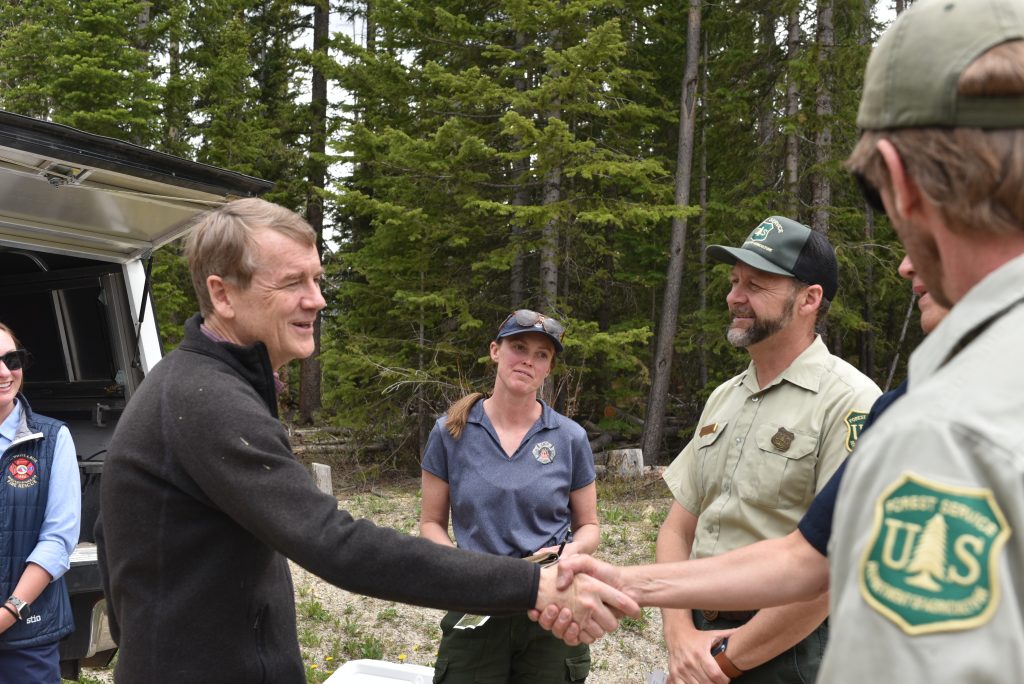
Allison Moore/Summit Daily News
Federal staffing cuts, high insurance costs and other persistent funding challenges emerged as some of Summit County’s greatest wildfire challenges at a gubernatorial campaign stop for Colorado Sen. Michael Bennet, who met Sunday, June 7, with local emergency management leaders in Breckenridge.
Bennet, who announced his bid for governor on Friday, April 11, spent much of the hour-long event asking questions as fire officials, forest rangers and municipal leaders outlined the financial and logistical hurdles they face when preparing to combat potential wildfires.
Bennet said at the federal level, “there’s massive concern about fire risk, massive concern about lack of water, massive concern about lack of snow.”
While Summit County has so far avoided severe fire activity this year, local officials said increasingly warm and dry conditions continue to heighten concerns about the potential for large, fast-moving wildfires across mountain communities.
While a range of challenges surfaced, officials repeatedly returned to funding, from state property tax policies that affect fire district revenues to federal staffing reductions that have slowed forest management work.
Standing beside a 374-acre wildfire mitigation area atop Ski Hill Road in Breckenridge’s Peak 7 neighborhood, Bennet listened to officials describe shrinking fire district revenues and other constraints that have impeded planning for long-term, wide-scale mitigation.
Chief Drew Hoehn of the Red, White & Blue Fire Protection District mentioned the devastating East Troublesome Fire which started to sweep Grand County in October 2020 and eventually grew into Colorado’s second-largest wildfire in the state’s history. Ultimately calculated to have spanned 193,812-acres, the East Troublesome Fire, Hoehn said, serves as a harrowing reminder of the physical, emotional and financial devastation that occurs years after any wildfire catches and spreads.
Hoehn said while Summit County hasn’t yet experienced such a colossal and catastrophic wildfire, he fears local agencies wouldn’t be equipped for a long recovery period. He estimated recovery from the East Troublesome Fire has cost Grand County agencies over $90 million. And he estimated that in 2017, an approximately 80-acre wildfire that scorched slopes between Frisco and Breckenridge, just a couple miles northeast of the Peak 7 neighborhood, cost Breckenridge $2 million in recovery.
“I’ll be honest, right now, we’re not working on recovery. Our wildfire specialists are all-hands-on-deck,” Hoehn said. “I don’t know how you tackle that on a statewide level, but we could certainly use any assistance.”
Funding challenges mounting
When Bennet asked whether budget constraints or bureaucracy were preventing local agencies from adequately preparing for a summer with heightened wildfire risk, officials repeatedly referenced strapped funding systems.
Both of Summit County’s fire districts — Summit Fire & EMS, which primarily covers the northern half of the county, and the Red, White & Blue Fire Protection District, which serves the southern portion of the county to Hoosier Pass — are primarily funded through property taxes. Hoehn said it’s become increasingly difficult over the past few years to ask voters for additional revenue at a time when many residents are struggling to afford basic necessities.
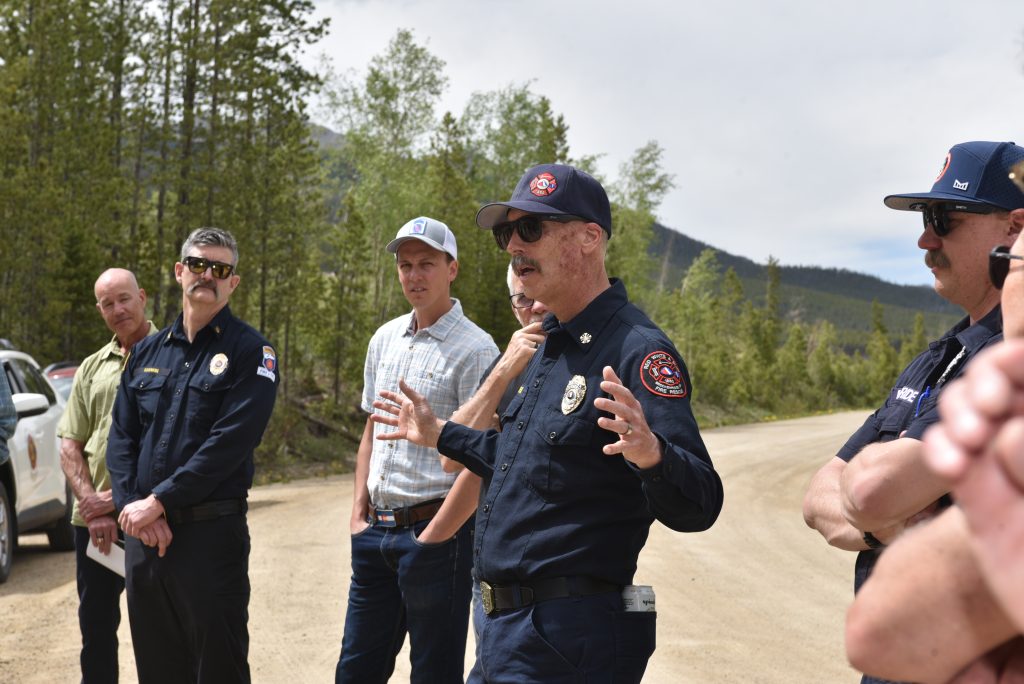
Although state lawmakers last year authorized fire districts to pursue sales tax revenue, Hoehn said doing so could create competition with municipalities that rely heavily on sales taxes to fund their own services.
“Where are we now in the process of deciding whether we want to change the approach of property taxes — whether there’s a statewide solution on that, or whether it should be left to communities?” Bennet asked Hoehn.
“They’re really local problems,” Hoehn responded.
Last year, Hoehn said, the Red, White & Blue Fire Protection District operated with an approximately $18 million budget. This year, that number dropped by $1.5 million. At that rate, Hoehn said the fire district would have to find creative solutions to continue funding its staff and essential services.
“What we never say is that babies are going to die,” Hoehn said. “We will make it work, but wildfire is not our only interest — we provide EMS, we provide backcountry search and rescue, paramedics.”
When Bennet asked whether local agencies have enough resources at this time to address wildfire risk, Matt Benedict, the Red, White and Blue’s wildfire division chief, replied, “You’re never going to hear me say we have enough.”
Benedict said several wildfire-related positions in Summit County, including his own, were initially funded through the federal Infrastructure Investment and Jobs Act. Widely known as the Bipartisan Infrastructure Law, former President Joe Biden signed the $1.2 trillion bill into law in November 2021, effectively authorizing large funding packages for national public works and infrastructure projects. As those funding sources have dried up, Benedict said local agencies are increasingly searching for sustainable funding sources, but he hopes state lawmakers will declare wildfire response a top fiscal priority.
“We are hyper-involved here in Summit County,” Benedict said. “But we need the state to petition to take on this new role and acknowledge the wildland risk and put real money behind it.”
State Sen. Dylan Roberts said recent property tax reductions approved by legislators partly intended to avoid more drastic cuts proposed through ballot initiatives. But he said negotiations persist around designating funds solely for local fire districts.
“There has been discussions about finding a separate source of funding for fire districts coming from the state level, or at least giving local fire districts the ability to tap into a new funding source,” Roberts said.
David Ilse, a Dillon District Ranger who started this April, warned that maintaining current funding levels may not prove sufficient enough as wildfire risks continue to increase.
“The problem is getting worse,” Ilse said. “We need to continue to be responsive.”
Federal layoffs slow local mitigation efforts
Emergency managers on both local and state levels raised concerns to Bennet about the impact of recent staff reductions within the U.S. Forest Service.
During the second month of his second term in office, President Donald Trump signed an executive order directing federal agencies to reduce the size of the federal workforce in a proclaimed attempt to eliminate “policy resistance.”
Since his second inauguration, Trump has downsized the federal workforce by over 300,000 people. An estimated 3,400 U.S. Forest Service employees were either laid off or offered early retirement.
Kat Gray, a fuels planner with the U.S. Forest Service, said recent staff cuts have disproportionately affected specialists responsible for environmental reviews and project planning. Many of those employees, she said, helped facilitate years-long efforts like the Frisco Backyard, a 10-year wildfire mitigation project expanding 1,250 acres of fuel reduction and 25 miles of trail work.
“We lost botanists, we lost heritage and wildlife staff, and they’re the ones … who assess and plan all these projects,” Gray said.
Gray said staffing shortages likely delayed portions of the Frisco Backyard project, which aims to reduce wildfire risk near residential and recreation areas.
“We could have been out there ready to work on it last summer,” Gray said.

Ilse estimated that over the last year, the White River National Forest has fallen from 160 permanent employees to 100.
“It takes years and years of planning and coordination to get right,” Ilse said of major wildfire mitigation projects.
Brandon McBride, a risk management and wildland specialist with Summit Fire & EMS, said he’s noticed the absence of those specialists particularly for their “support roles on large incidents.”
“So, when a fire actually does happen, all of the things that make managing that fire go smoothly are the people making phone calls, handling our paperwork, organizing,” McBride said. “Those people are largely not around, and they were very experienced in that.”
In response, Bennet said he regularly meets with U.S. Secretary of Agriculture Brooke Rollins and U.S. Secretary of the Interior Doug Burgum, and he asked attendees what concerns he should bring back to Washington.
“It would be really helpful for me to be on these calls and say what I’m hearing from you,” Bennet said.
Insurance remains top concern for homeowners
Officials also described ongoing challenges in Colorado’s property insurance market.
“Everywhere I go, I hear people say it’s getting more expensive, it’s getting less valuable,” Bennet said amid the discussion. “How do we fix that problem?”
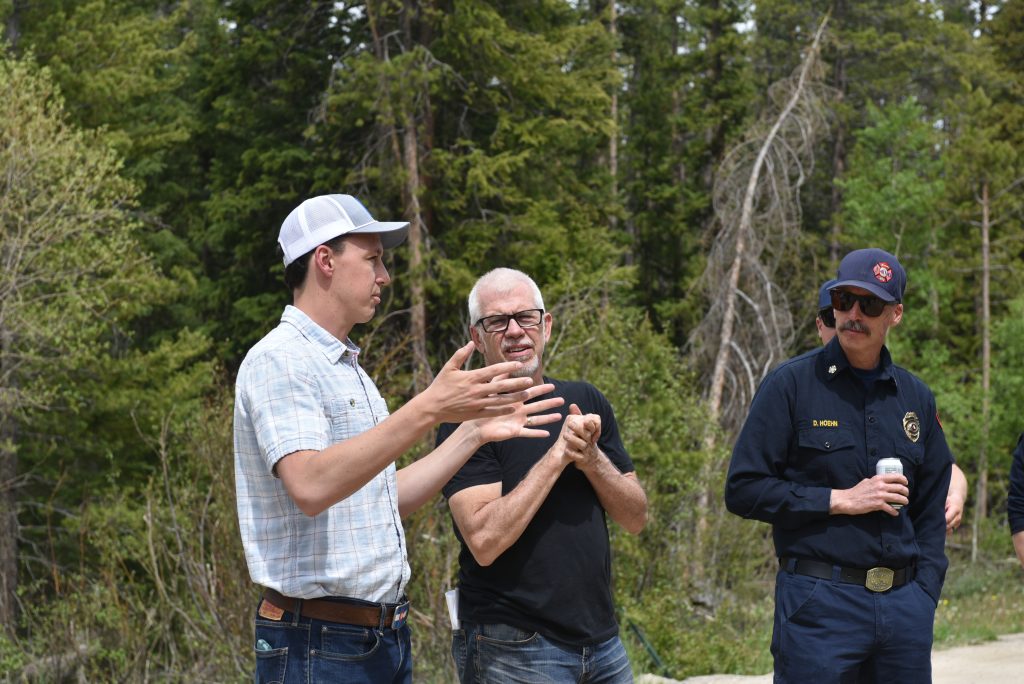
Benedict said Summit County saw insurance premiums surge several years ago as competition among insurers dropped off. While some companies have begun either reentering the market or starting new businesses, many homeowners continue to face higher costs and reduced coverage options. Colorado ranks as the sixth most expensive state for homeowners insurance, according to a Colorado State University report released in September.
“The insurance companies are holding us to a really high standard,” Benedict said.
Benedict said agencies across Summit County have spent years implementing the kinds of wildfire resistance measures insurers increasingly want to see prior to writing policies. For example, he said, the county and each town government have adopted wildfire-related building and resiliency codes and partnered with local fire districts to improve defensible space and other mitigation efforts.
“It’s all about enticing people back to the table so competition will lower the cost, or just increase insurability in general,” Benedict said.
He said local fire officials spend significant time helping residents navigate questions about insurance. Many of those people have either been dropped by their insurance company or seen premiums skyrocket, Benedict said.
“Every day, homeowners, business owners, HOAs … these people are walking straight into the firehouses, calling us, emailing us,” he said.
While Bennet didn’t suggest any solutions, he told officials he’d relay their concerns to federal officials.
“Instead of driving insurers out of Colorado, we need to be figuring out how to attract them to Colorado,” he said.
Summit County wildfire preparedness draws praise
Despite the funding restraints and other challenges voiced at the event, local leaders emphasized that Summit County has invested heavily in wildfire preparedness.
Benedict highlighted the Summit County Wildfire Council, which has distributed roughly $900,000 annually over the last nine years to support wildfire mitigation efforts across the region. Those funds have helped support homeowner grant programs, free home inspections, countywide chipping services and more. And the voter-backed Strong Futures mill levy, which in part funds wildfire mitigation projects, including hundreds of thousands pledged to the Frisco Backyard.
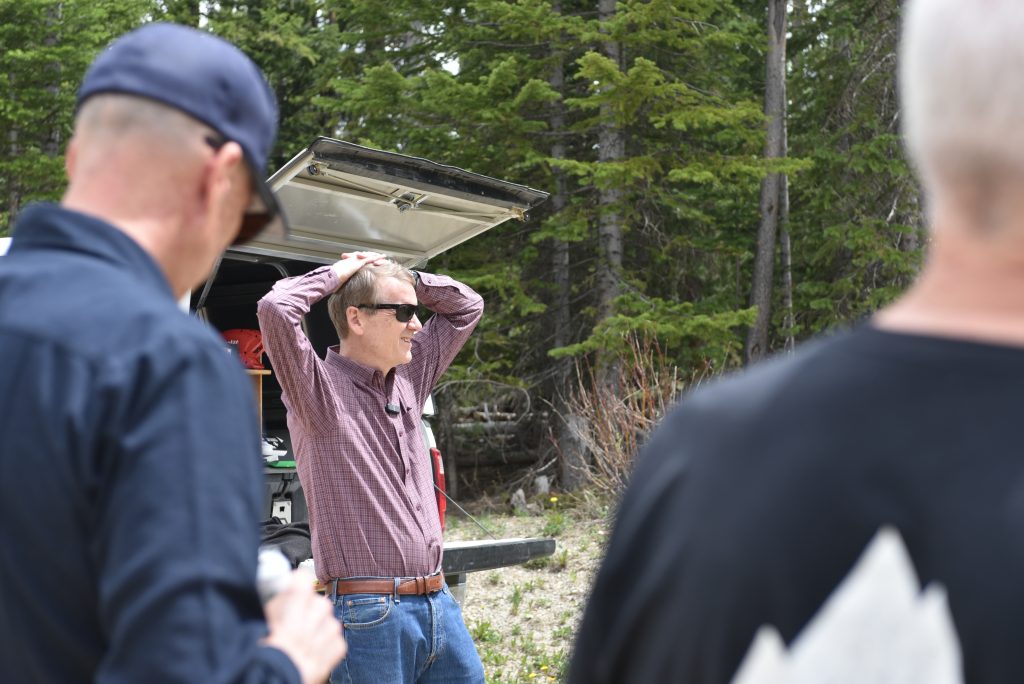
Ilse began serving as a Dillon district ranger just over two months ago after decades of work with the U.S. Forest Service, including assignments in California, Alaska and, most recently, Puerto Rico. He said the level of collaboration among Summit County agencies stands out.
“With these relationships you see here, we’re leveraging every opportunity for funding,” Ilse said. “Doing the right things on the ground, that’s why we have such great community support here.”
As Bennet’s staffers wrapped up the discussion, Breckenridge Mayor Kelly Owens said she wanted to ensure that the conversation’s focus on challenges didn’t overshadow the work already underway.
“I think it’s really important for any information that comes out of this: Summit County is really ahead of the game,” Owens said. “We’re well-coordinated, we have a lot of people in the right places, we have the right people who are sharing information and working hard. We’re very open for business and we intend to have a great summer.”
At the event, Owens sported a T-shirt reading “Bennet for Governor.” Afterwards, she told Summit Daily News that her support for Bennet’s gubernatorial campaign stems largely from the relationship he’s built with local communities over the years.
“He’s been coming here for years. He’s a really good supporter of us,” Owens said. “We have his cell phone number, and if he has questions about a specific policy, he reaches out to us.”
Owens also commended Bennet for listening to his constituents and said she thought his final summary of the day’s discussion was astute.
“We’re filling in the resource gaps that we have, to the extent that we can. We’re seeing insurance come back to have discussions,” Bennet said at the end of the event. “And we’ve got to think through the fiscal quagmire at the state to see how we can help. That’s what I heard.”
-
Sen. Michael Bennet speaks with Chiefs Drew Hoehn, left, and Matt Benedict of the Red, White & Blue Fire Protection District, after his event atop Ski Hill in Breckenridge’s Peak 7 neighborhood on Sunday, June 7.
Allison Moore/Summit Daily News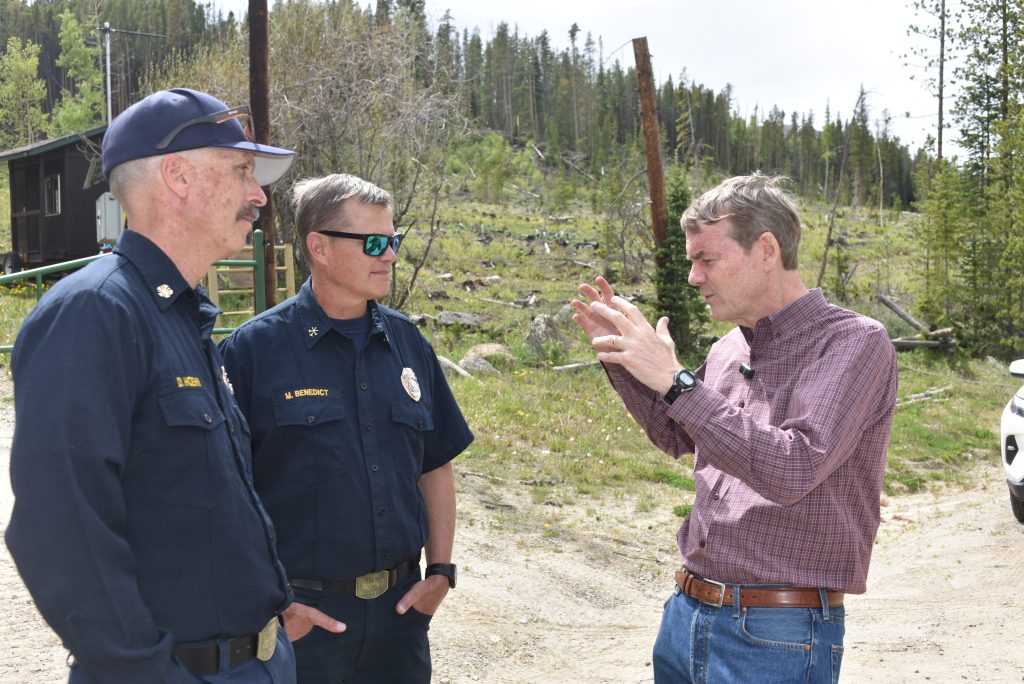
-
Sen. Michael Bennet shakes hands with Noelle Valentine, a public outreach coordinator for the Red, White & Blue Fire Protection District. Smiling behind is Steve Lipsher, public information officer for Summit Fire & EMS.
Allison Moore/Summit Daily News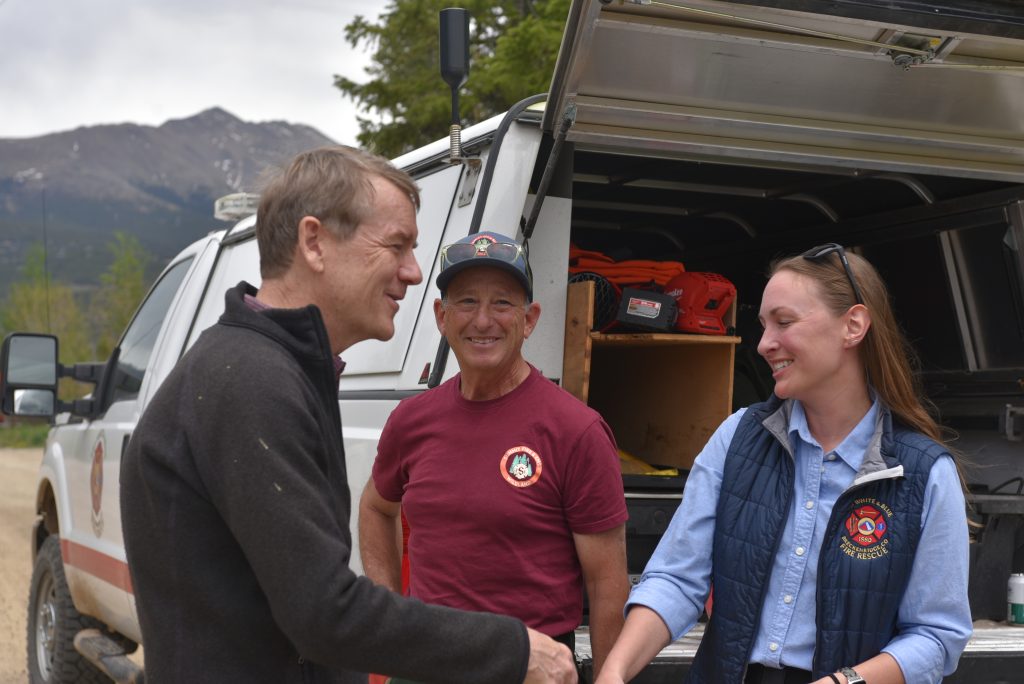
-
On his gubernatorial campaign trail, Sen. Michael Bennet asked Summit County government officials and wildfire experts how the state could better support wildfire mitigation efforts during a summer with heightened risk factors.
Allison Moore/Summit Daily News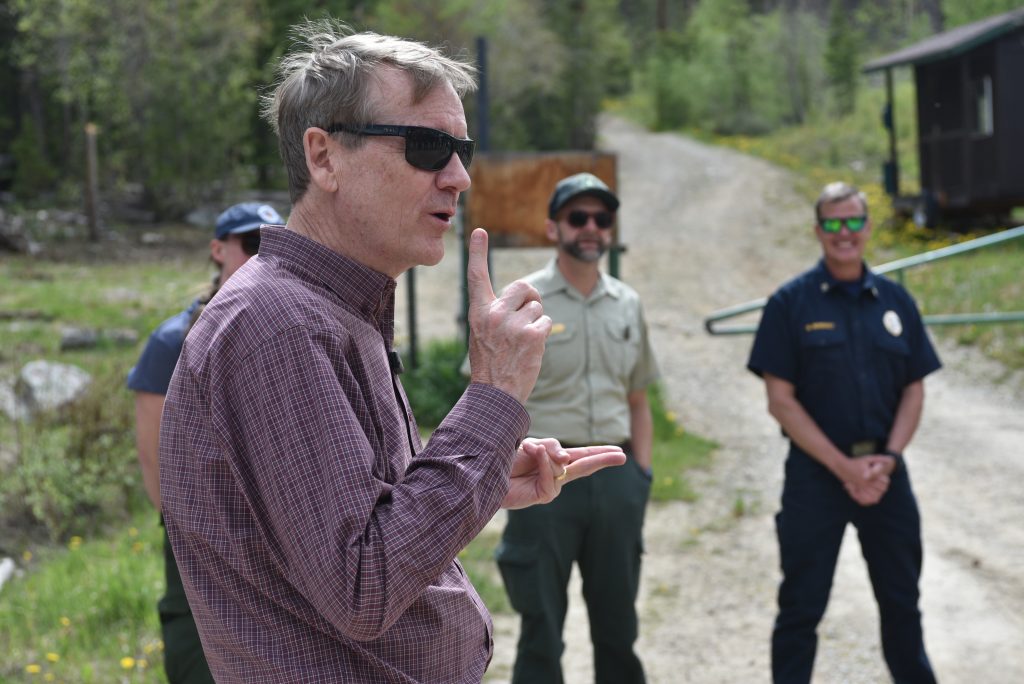
-
-
A home in Breckenridge’s Peak 7 neighborhood atop Ski Hill Road is pictured with large piles of tree branches. Summit County maintains a chipping program, so branches and other wooden debris will be collected from the street and later shredded in a chipper, reducing potential fire fuels.
Allison Moore/Summit Daily News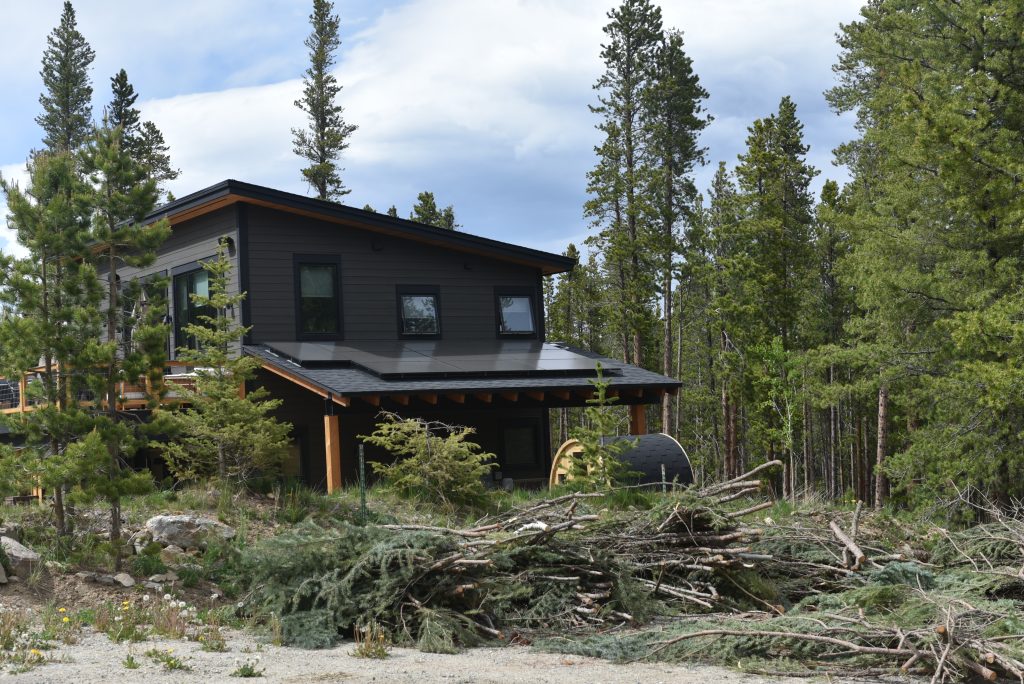
-
Matt Benedict, wildfire division chief with the Red, White & Blue Fire Protection District, spoke to Sen. Michael Bennet about concerns over high homeowners insurance costs and other challenges preventing residents from protecting their homes from wildfire.
Allison Moore/Summit Daily News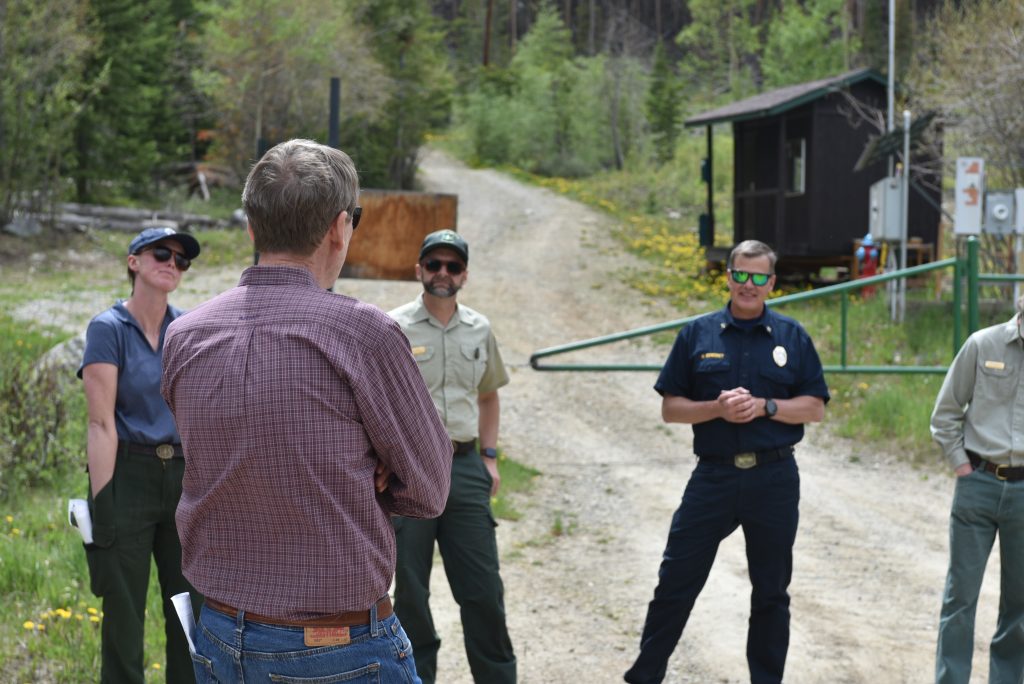
-
At the event with Senator and Colorado gubernatorial candidate Michael Bennet held Sunday, June 7, over a dozen local officials gathered to discuss concerns about and successes in local wildfire mitigation efforts.
Allison Moore/Summit Daily News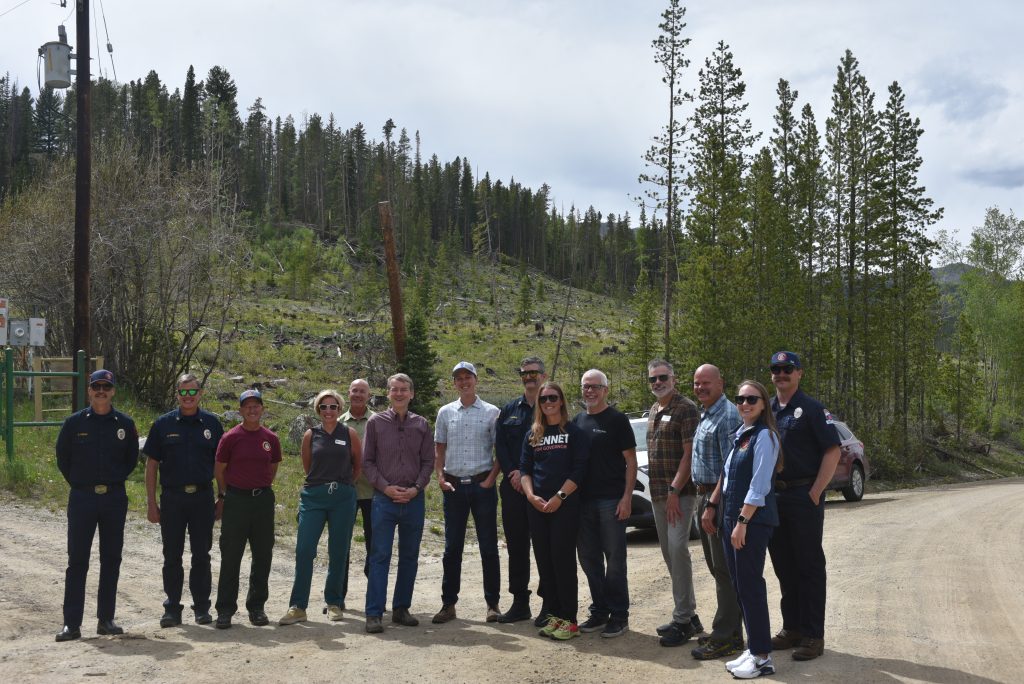









Support Local Journalism
Support Local Journalism
As a Summit Daily News reader, you make our work possible.
Summit Daily is embarking on a multiyear project to digitize its archives going back to 1989 and make them available to the public in partnership with the Colorado Historic Newspapers Collection. The full project is expected to cost about $165,000. All donations made in 2023 will go directly toward this project.
Every contribution, no matter the size, will make a difference.