Congress makes moves to reauthorize funding for billion-dollar backlog of deferred maintenance on public lands
An effort to address a $40 billion problem by bringing back the Legacy Restoration Fund is convening interests and political parties that are often at odds

Ali Longwell/The Aspen Times
A significant bipartisan push to revitalize a funding mechanism for deferred maintenance projects on federal public lands and national parks cleared two critical hurdles in June.
Natural resource committees in both the U.S. House and Senate unanimously approved bills to renew the Legacy Restoration Fund, which directs $1.9 billion annually over the next five years to improve campgrounds, trails, visitor centers and vital infrastructure.
The fund was created as part of the 2020 Great American Outdoors Act as a way to address deferred maintenance projects across national parks, wildlife refuges, U.S. Forest Service land, Bureau of Indian Education schools and Bureau of Land Management land.
It’s estimated that the deferred maintenance backlog for these agencies totals over $40 billion. The fund pulls from federal revenues from energy development on public lands.
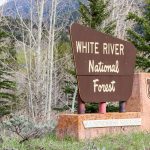
In Colorado, nearly $133.3 million from the fund was allocated to address 190 assets across 17 projects for Department of Interior-managed lands. By March 2025, work had been completed at six U.S. Fish and Wildlife Service sites and at both Rocky Mountain and Great Sand Dunes national parks. Around $114.5 million in funding was allocated to 140 projects on Forest Service land in the state, 48 of which have been completed, 41 that are in progress and the remainder of which are seeking contractors, design or other work.
As of September 2024, Colorado’s total backlog at BLM, national park and Fish and Wildlife sites was estimated to cost over $864 million.
Congress let the initial fund expire in October 2025.
However, now both the Senate and House are moving forward with bills to continue working away at this billion-dollar backlog — allocating $9.5 billion from energy revenue over the next five years. The bills have been supported by both Republican and Democratic lawmakers, with nearly 250 co-sponsors across both chambers.
This includes all but one member of Colorado’s congressional delegation: Sens. John Hickenlooper, D, and Michael Bennet, D, as well as Reps. Joe Neguse, D-CO2, Diana DeGette, D-CO1, Jeff Crank, R-CO5, Jeff Hurd, R-CO3, Gabe Evans, R-CO8, Brittany Petersen, D-CO7, and Jason Crow, D-CO6, have all signed on as co-sponsors.
It has also seen support from a broad swath of organizations, including those representing the interests of the oil and gas industry, sportspersons, outdoor recreation and wildlife.
“The Legacy Restoration Fund fulfills the balanced use of public lands that’s shaped our land management for over a century,” said Melissa Simpson, president of the Western Energy Alliance, an oil and gas trade group representing Colorado and other western states, in a statement.
Simpson added that energy producers “recognize the important balance that exists between developing the natural resources our nation needs with conserving and restoring the iconic and historic landscapes that we all treasure. They are proud that our development of America’s natural resources will continue to sustain the (Legacy Restoration Fund) for years to come.”
Outdoor Recreation Roundtable Association President Jessica Turner said in a statement that the reauthorization now “represents a generational opportunity to improve the experience visitors enjoy on our public lands and waters and to equip and maintain them to meet a growing interest in outdoor recreation as a cornerstone of healthy, resilient and sustainable economies and communities.”
Aaron Weiss, executive director of the Center for Western Policies, a Denver-based conservation and advocacy organization, said in a statement that it was “long overdue.”
“Interior Secretary Doug Burgum and Agriculture Secretary Brooke Rollins did the right thing supporting this bill to direct funding and address critical maintenance concerns on public lands, but it is truly the very least they could do,” Weiss said. “Now it’s time they start repairing the damage they’ve caused over the last 18 months. The Trump administration must fully staff and fund the agencies that steward our parks and public lands for present and future generations. That means all of our lands, for all Americans — not just the president’s vanity projects.”
While advocates and Congress had hoped the bill would receive President Donald Trump’s signature ahead of the Fourth of July and America’s 250th birthday celebration, it didn’t quite make the deadline, as the Senate has adjourned for the holiday.
“As we near our nation’s 250th anniversary, reauthorizing the Legacy Restoration Fund is a powerful opportunity to deliver lasting results for all Americans and our public lands,” said Doug Burgum, Secretary of the Interior, in the Senate committee news release on the bill’s June 17 passage.






Support Local Journalism
Support Local Journalism
As a Summit Daily News reader, you make our work possible.
Summit Daily is embarking on a multiyear project to digitize its archives going back to 1989 and make them available to the public in partnership with the Colorado Historic Newspapers Collection. The full project is expected to cost about $165,000. All donations made in 2023 will go directly toward this project.
Every contribution, no matter the size, will make a difference.