Willow Fire grows over 900 acres overnight, prompting new evacuations as suppression costs top $4 million
Forecast Sunday storms may bring erratic winds, adding to “active” fire activity

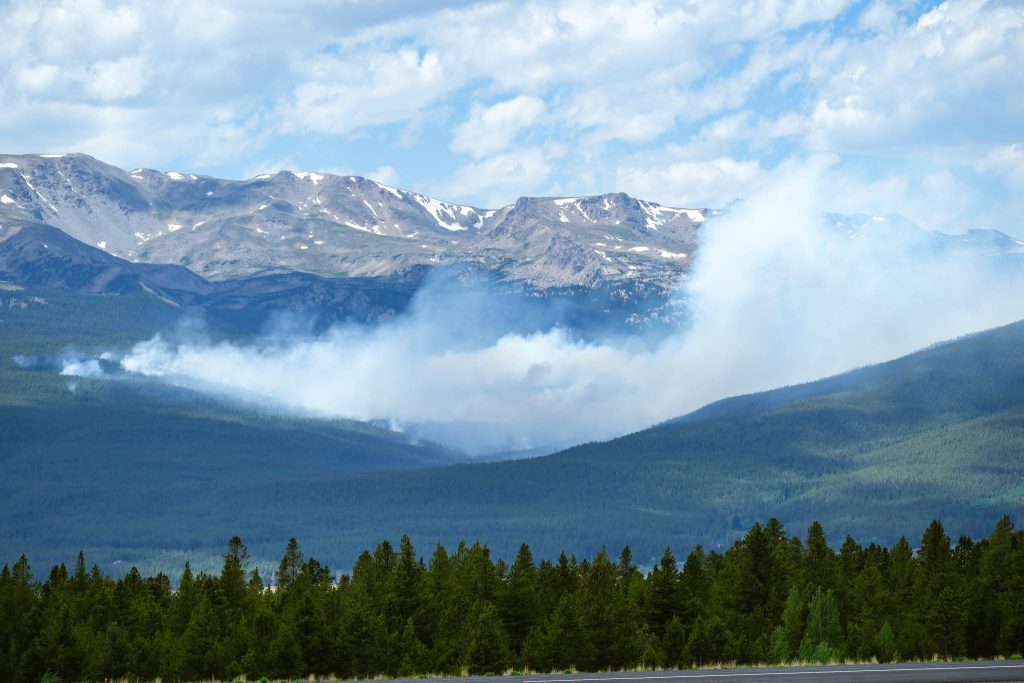
Southwest Area Complex Incident Management Team 4/Courtesy image
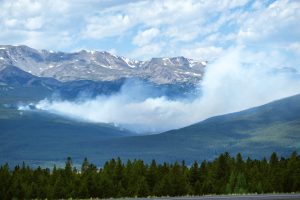
The Willow Fire in Lake County grew more than 900 acres overnight into Sunday, July 5, prompting new evacuation orders as firefighters continue working to contain the blaze spreading west of Leadville.
The wildfire was estimated at 3,956 acres Sunday morning, according to the fire detection app Watch Duty. Saturday afternoon, the fire had grown to 2,969 acres and remained 0% contained.
But as of around 9:30 a.m. Sunday, July 5 — almost a full week after flames first sparked — the fire has been 1% contained, according to the Lake County Sheriff’s Office and Willow Fire incident management team.
“Last night we had significant growth in the fire, mostly to the south,” said Lake County Sheriff Heath Speckman during a morning update Sunday.
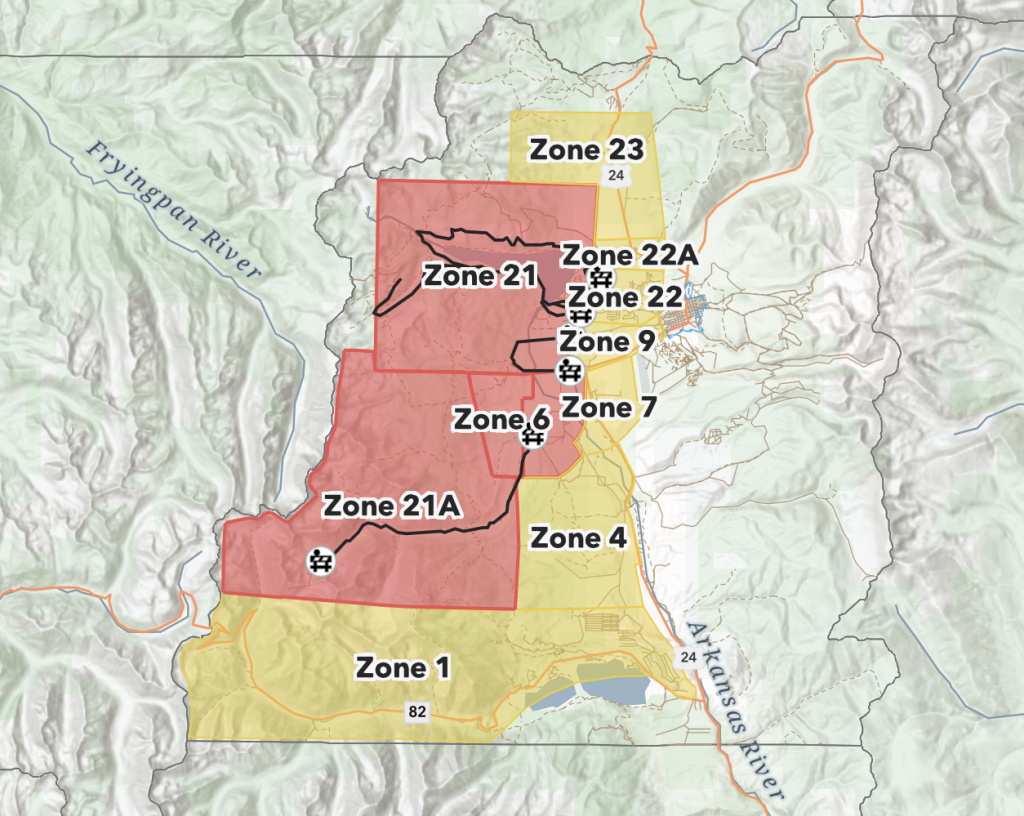
The Lake County Sheriff’s Office ordered mandatory evacuations for the Lake Fork, Stargazer Circle and County Road 11 areas, with residents instructed to leave by noon Sunday. Members of Lake County Search and Rescue and other law enforcement personnel knocked on doors in those neighborhoods Sunday morning to notify residents and assist with evacuations.
Officials also moved Zone 6A into mandatory evacuation status and placed Zones 1, 4 and 7 under pre-evacuation notices. The Lake County Sheriff’s Office coordinated with Southwest Area Complex Incident Management Team 4 and the U.S. Forest Service to evaluate current fire behavior, weather, terrain and access routes.
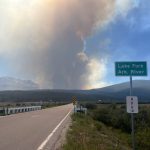
The newly added pre-evacuation areas include Twin Lakes, the Pan-Ark subdivision, portions of Colorado Highway 24 and several county roads south of Leadville. Residents in those areas are encouraged to begin gathering medications, identification, chargers, important documents and supplies for pets and livestock while remaining alert for additional updates.
Colorado Mountain College is no longer serving as an evacuation shelter, according to the sheriff’s office. Residents needing shelter or re-entry “Salamander” cards should instead go to the public safety complex at 200 Steele Drive in Buena Vista or Battle Mountain High School at 151 Miller Ranch Road in Edwards. Speckman said the locations were established to the north and south of the fire to provide two different access points in the event of evacuation.
During an update Saturday evening, Speckman said more than 500 personnel have been assigned to the fire. He estimated suppression costs have reached approximately $4.2 million.
“That’s the cost to the Forest Service and the state of Colorado, so don’t worry, it’s not coming out of Lake County’s budget,” he said.
Despite the fire’s continued growth, Speckman said firefighters have successfully protected threatened infrastructure at the Leadville National Fish Hatchery, where the fire first sparked Sunday, June 28.
“Even though the fire has moved very close to the fish hatchery, all the firefighters have been protecting those structures in that area, and currently there’s no damage to any structures,” Speckman said.
Speckman added that no injuries have been reported.
“(It’s) pretty incredible to think that (with) over 500 people working the fire, nobody’s been hurt,” he said.
On Saturday, the sheriff’s office also established a new pre-evacuation Zone 9 encompassing portions of southern Leadville, including Stringtown, Saturday’s Fast Stop Travel Center, County Road 36 and surrounding neighborhoods.
“It provides us a layer of protection,” Speckman said. “If that fire starts to move close to Leadville, we’re ready to start evacuating all the zones that could be affected.”
Speckman said officials will provide as much advance notice as possible before issuing mandatory evacuation orders but warned that changing fire conditions could limit residents’ ability to return home.
“If the fire is moving faster than expected, we may not let you back into the area that’s affected, if it’s an immediate need,” he said Saturday evening.
Sunday storms may bring lightning, erratic winds
According to the Willow Fire incident management team, the fire exhibited active behavior Saturday along both the northern perimeter and the southeastern corner of its bounds. Similar fire behavior is expected to persist Sunday.
The eastern perimeter of the Willow Fire between Twin Mounds and the Leadville National Fish Hatchery saw limited growth Saturday, but fire officials warned potential storm-driven northwest winds could increase activity later Sunday.
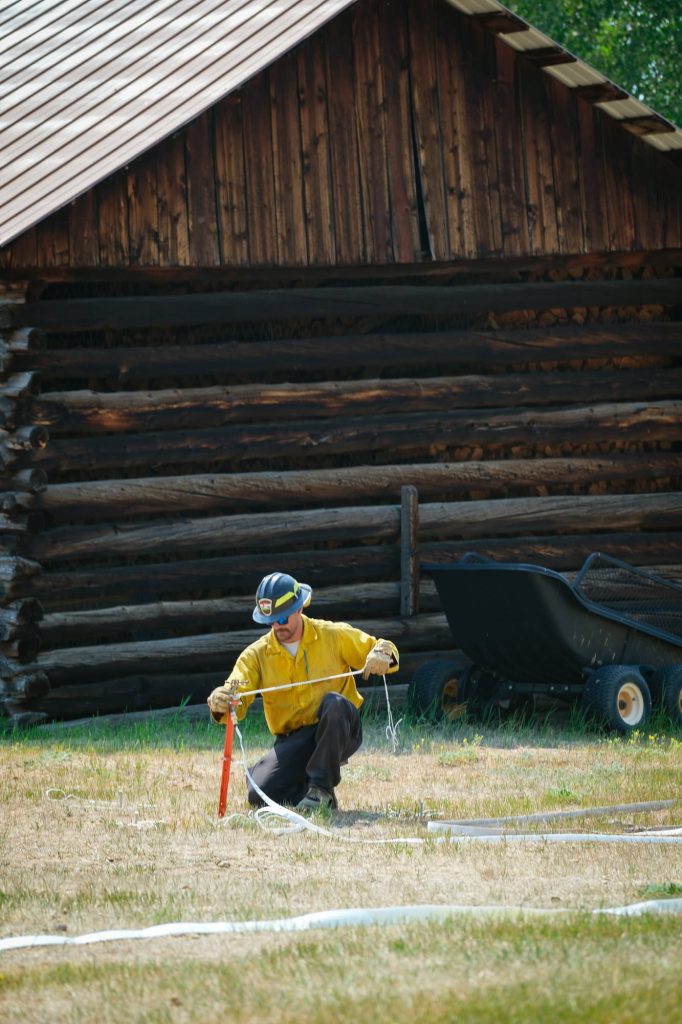
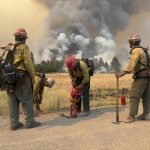
Firefighters spent Saturday holding spot fires north of the perimeter and continuing structure protection efforts on the fire’s eastern flank using pumps and hoses, according to an updated post from around 10:15 a.m. Sunday. Crews focused work in Halfmoon Creek, the Colorado Outward Bound School area and nearby U.S. Forest Service facilities.
On the southeast perimeter, crews continued constructing firelines — strategic gaps in vegetation to help prevent wildfire spread — using heavy equipment and scouting Forest Road 130 as a potential secondary containment line. Firefighters also conducted operations near the fish hatchery late Saturday to reduce fuels adjacent to established containment lines.
As of Sunday, July 5, an initial attack group has been staged to respond to any new ignitions, according to a morning update from the Southwest Area Complex Incident Management Team. Helicopters are also being used for bucket drops to support ground crews. Additional firing operations may occur near power lines and other infrastructure if conditions allow. “Firing” involves intentionally igniting fire along control lines to remove unburned vegetation ahead of an advancing wildfire.
Incident meteorologists have forecasted a 20-30% chance of thunderstorms later on Sunday. While storms aren’t expected to produce significant moisture, they could bring lightning and gusty, erratic outflow winds. Smoke impacts are expected to continue throughout the area.
Fire officials have said steep terrain, limited access and extremely dry fuels continue to challenge containment efforts. Tim Ross, incident commander for the Willow Fire, said on Monday, June 29 — the second day of the fire — that firefighters had to hike over three and a half hours to reach key access points when combatting initial flames.
Ross also described “record-low” fuel moistures following a historically dry winter, noting that alpine snowpack and water levels are far below normal, contributing to increased fire activity.
The cause of the Willow Fire remains under investigation.
Residents can find updates on evacuation and pre-evacuation notices at Facebook.com/WillowFirePSICC or with the Lake County Sheriff’s Office at Facebook.com/LCSO2019. Both pages provide an interactive evacuation map. The app and website Watch Duty also provides live updates on containment, spread and evacuation orders.
Information on local road closures, re-entries and donations can be found at LakeCountyCO.gov/599/Willow-Fire. Air quality in Leadville can be monitored at Map.PurpleAir.com.
Summit County impacts
While the fire remains centered in Lake County, Summit County officials say the impacts continue to be felt across the High Country as smoke, staffing demands and mutual aid deployments stretch regional resources.
Matt Benedict, wildland division chief for the Red, White and Blue Fire Protection District, said many Summit County workers, including “several” firefighters, commute from Leadville.
“Life is still going on, and these guys are still coming to work,” Benedict said. “It’s pretty crazy to go to work at a firehouse that’s in a different county with a big fire in your backyard.”
Benedict said Summit County fire districts initially sent seven personnel to assist in fighting the Willow Fire, including two rigs and a managerial staffer, with additional resources since deployed to Lake County and other fires across the state. For example, Steve Lipsher, public information officer for Summit Fire & EMS, was recently dispatched to the widespread and still-growing Aspen Acres Fire near Pueblo.
“We still do have people over in Leadville supporting that incident as best we can,” Benedict said.
Benedict said the ongoing statewide demand for fire resources has affected Summit County’s departments, but he said both Summit Fire and the Red, White and Blue remain staffed and ready if an incident breaks out.
“It draws down our local resources, and we’ve worked really hard to make sure our stations are staffed, but it’s a toll for sure,” he said.
Benedict said all local fire crews remain prepared but concerned about a fire catching in Summit County.
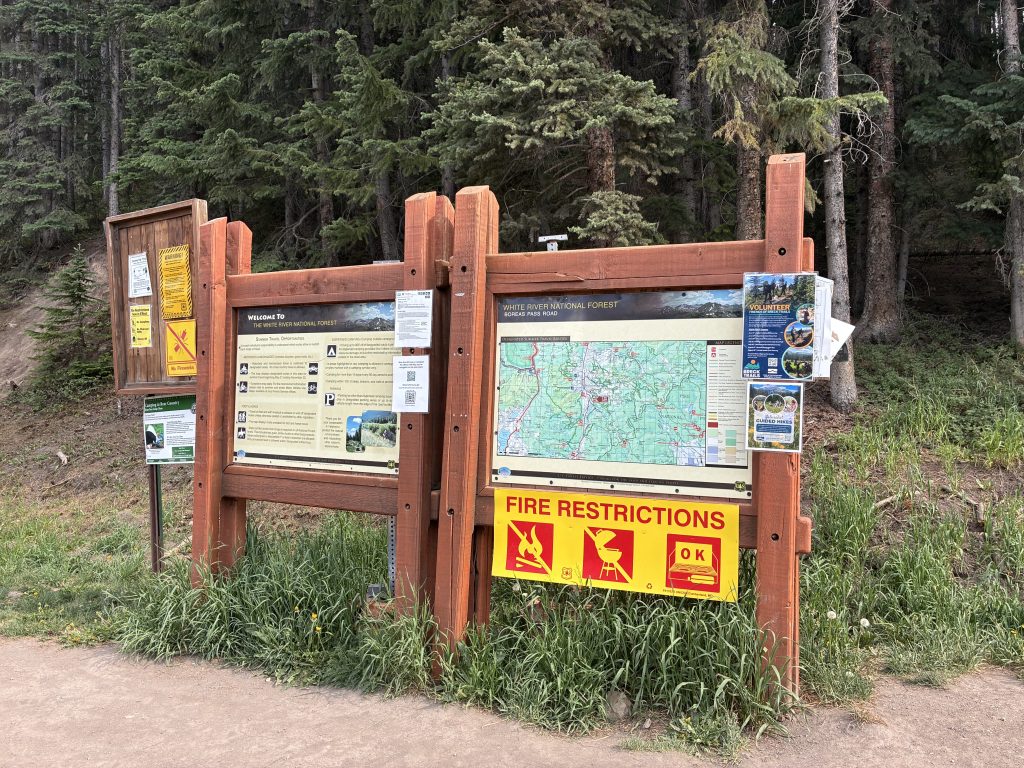
“Whether it’s an illegal campfire on Miners Creek, these are the things we’re anxious about — people that just don’t know we’re in Stage 2, they’re from out of town, they haven’t seen the hundreds of signs about restrictions,” Benedict said. “We’re staffed, we’re ready to go, but we’re anxious.”







Support Local Journalism
Support Local Journalism
As a Summit Daily News reader, you make our work possible.
Summit Daily is embarking on a multiyear project to digitize its archives going back to 1989 and make them available to the public in partnership with the Colorado Historic Newspapers Collection. The full project is expected to cost about $165,000. All donations made in 2023 will go directly toward this project.
Every contribution, no matter the size, will make a difference.