Dozens of Summit County volunteers train to help evacuate animals in emergency situations

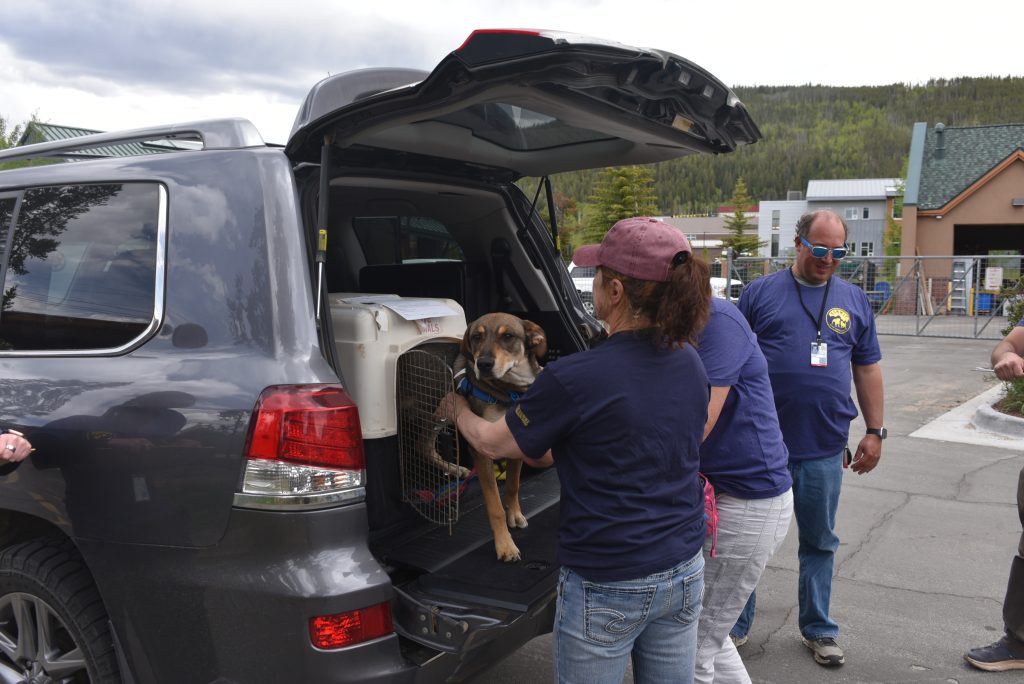
Kyle McCabe/Summit Daily News
Summit County Animal Response Team members are not often called to action, but when they are, they are ready, thanks to the group’s yearly training day.
The team helps Summit County Animal Control retrieve pets from people’s homes when the owners cannot do so themselves because of an emergency evacuation caused by something like a wildfire. JJ McGill, the director of the Summit County Sheriff’s Office’s animal control division, said that, in an evacuation, people can call to request an animal rescue, and the volunteer team will retrieve their pet and bring it to the shelter for them to claim.
The operation requires preparation, so the team trains once a year, most recently on June 3. McGill said the training has three parts: the receptionist team, the staging area and the evacuation teams. The first fields calls from residents, the second makes sure the evacuation teams have everything they need to go into the field and the third goes to people’s homes to retrieve the animals.
“We rotated 30 minute stations between three areas,” McGill said. “Then we practiced it and put it all in place. We had 16 mock rescue requests that we had volunteers call into receptionists.”
The receptionists would dispatch the calls to the staging team, which would prepare the evacuation team and send them out to the location. The evacuation teams drove from the shelter, where the training was based, to another location with shelter animals ready to be rescued.
“We have the animal control officers teaching how to catch animals, what to do with shy animals, different animal behavior, how to put cats or dogs in a kennel that maybe don’t want to go into a kennel,” McGill said.
Another important part of the evacuation team’s training was to always have one team member paying attention to the fire, McGill said, in case the team needs to get back to safety. They also train to get in and out of a house in five minutes or less, she said.
The training this year drew around 45 volunteers, McGill said, and with animal control staff, the training had about 60 people.
“That’s probably one of our biggest turnouts,” McGill said. “We’re just fortunate that we have that many people interested in being brave to assist other people and animals.”
McGill said that the animal control staff by themselves would not have enough capacity to operate an emergency response team like this.
In the time McGill has been with animal control, the response team has been put on standby a few times, like for the Peak 2 Fire in 2017 and the Ptarmigan Fire in 2021. The Buffalo Mountain Fire in 2018 did force evacuations that necessitated the response team, though.
“We had about 14 rescue requests and reunited those animals with their owners,” McGill said.
Everyone interested in the team attends the training, meaning many are returning members while others are new, McGill said. Those interested in joining can call the shelter at 970-668-3230 to get connected to a volunteer coordinator, she said, and although there is not another training scheduled until next year, smaller ones could happen if enough people showed interest.
“We get so much benefit out of when we do the big group ones,” McGill said. “All of our staff is here, everybody’s training it, and then we actually do the mock evacuation, which I think is so useful, to actually put everything together.”
Animal control shares information on its Facebook page about how to prepare for emergencies like wildfire evacuations, McGill said, including information specific to pet owners.
“Preparation is the key to a successful emergency event,” McGill said. “You can’t plan for everything, but at least plan for what you can now, and then be willing to adapt with the rest.”
-
Summit County Animal Response Team volunteers and animal control officers gather around a table June 3. The group was at the staging area for the team’s annual training session.
Kyle McCabe/Summit Daily News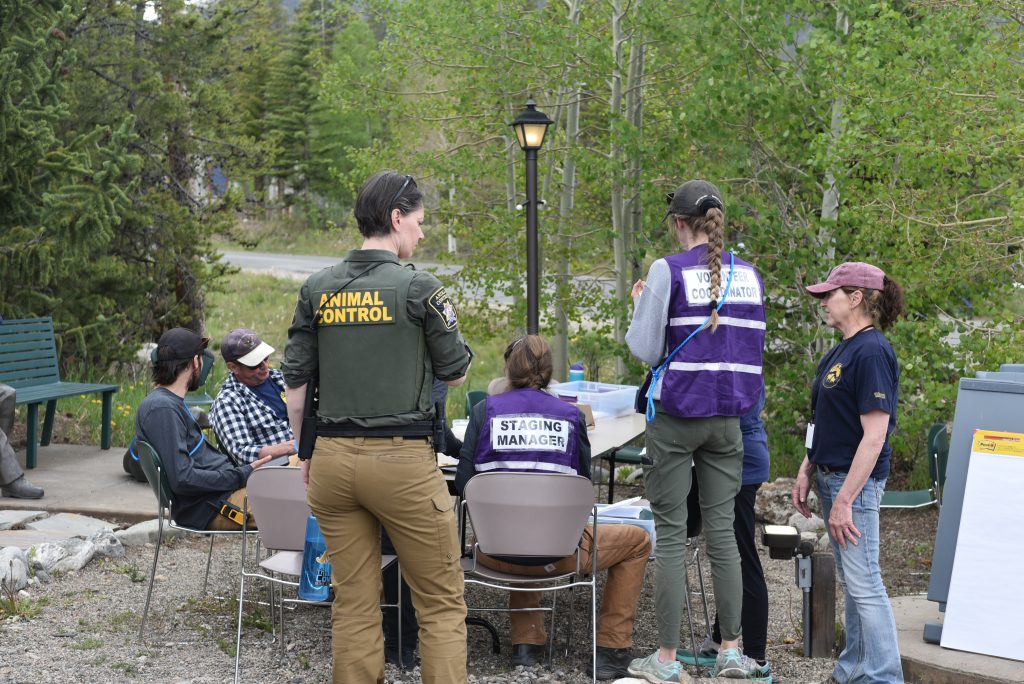
-
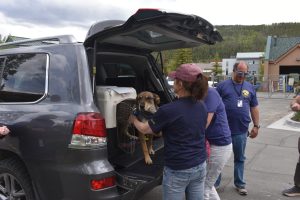
A dog thanks a Summit County Animal Response Team volunteer for giving them a ride back to the shelter June 3. The team helps retrieve pets from homes when owners cannot get there because of evacuation orders.
Kyle McCabe/Summit Daily News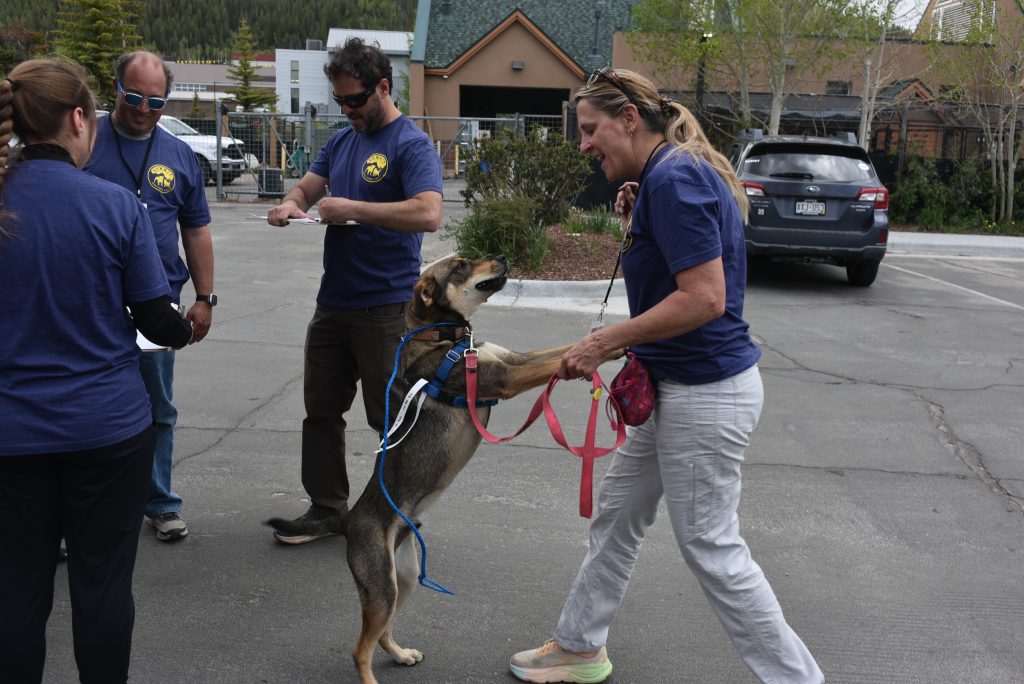
-
A volunteer places a magnet on their car June 3 identifying it as part of the Summit County Animal Response Team. The team helps retrieve pets from homes when owners cannot get there because of evacuation orders.
Kyle McCabe/Summit Daily News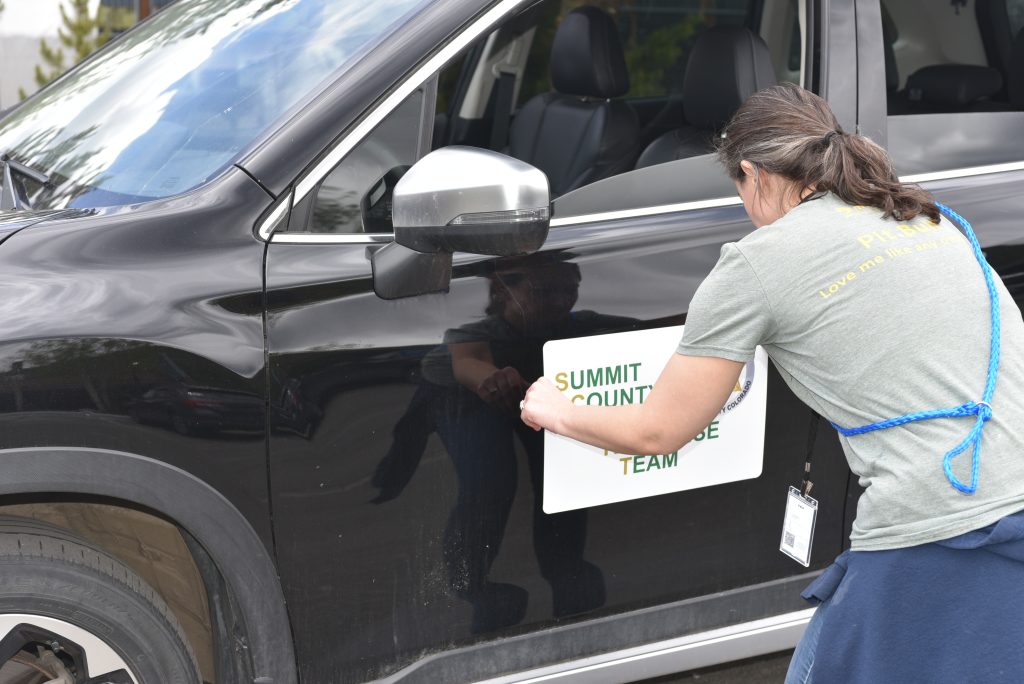






Support Local Journalism
Support Local Journalism
As a Summit Daily News reader, you make our work possible.
Summit Daily is embarking on a multiyear project to digitize its archives going back to 1989 and make them available to the public in partnership with the Colorado Historic Newspapers Collection. The full project is expected to cost about $165,000. All donations made in 2023 will go directly toward this project.
Every contribution, no matter the size, will make a difference.