From the mat to Mount Elbert, Summit County’s female athletes find success in male-dominated sports

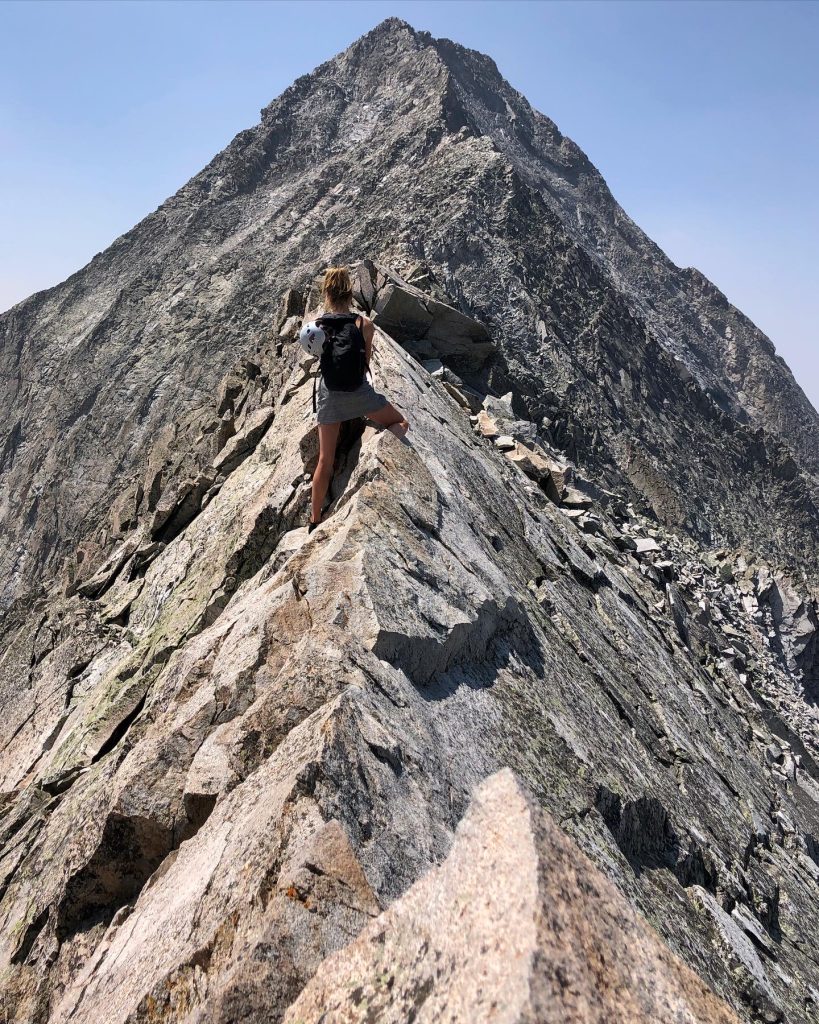
Erin Ton/Courtesy photo
Jess Gresho’s nails are usually painted pink. She often has glitter on her face, and her athletic gear — from her ski pants to her running shoes — boasts bright colors and funky patterns.
But Gresho wasn’t always so comfortable showcasing her femininity while participating in her many, mostly male-dominated, passions. She skis — both freeskiing and backcountry— dirt bikes, mountain bikes and runs ultramarathons. In all of those spaces, she used to suppress the most feminine parts of herself to fit in.
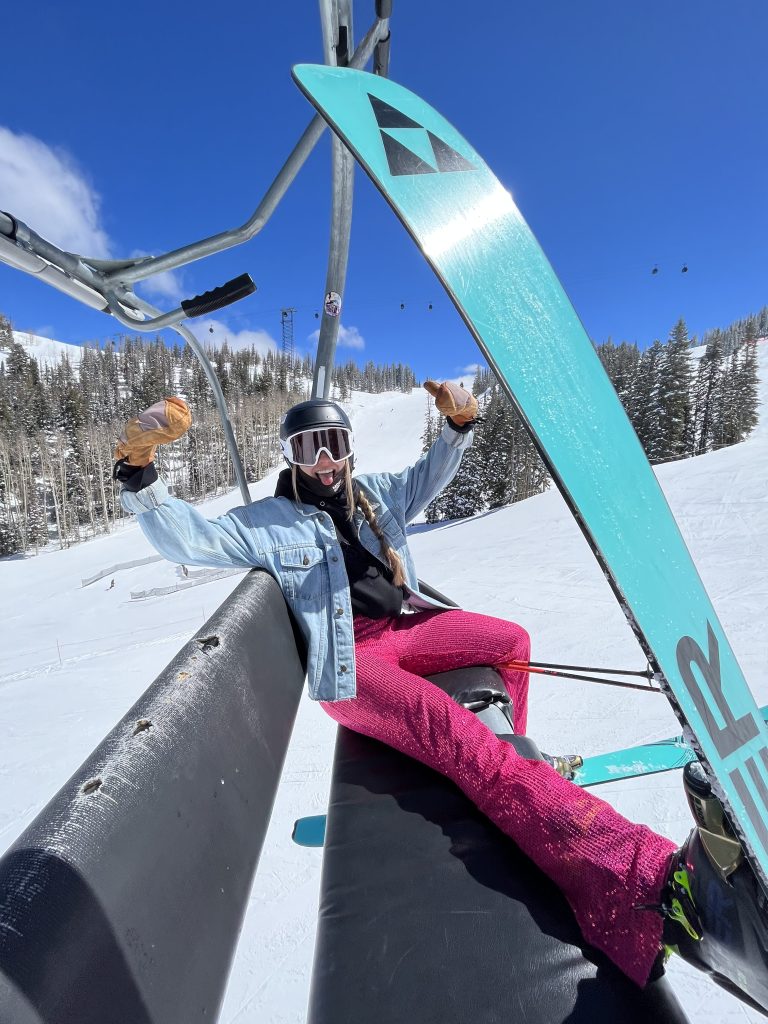
“I hadn’t stepped into that kind of expression until two or three years ago, because I felt like I had to be boring or tamed,” she said. “I just bluffed my personality because I didn’t feel like it fit to express those more girly things.”
Across Summit County, female athletes like Gresho have been making strides in male-dominated sports, from the Summit Tigers 15U girls hockey team winning Colorado’s state championships in April to Summit High School introducing a girls wrestling program last year.
Instrumental in that effort was Ayla Hampton, a rising Summit High senior who, like Gresho, has learned to celebrate her femininity in a predominantly male sport.
“I love repping my pink,” Hampton said. “A lot of the girls on the Summit High School team will have these super girly, fun socks or matching cute hair. We all dyed our hair pink this year for state (championships.)”
But it hasn’t always been easy. Oftentimes, there were no other girls for her to wrestle, so she’d have to wrestle boys instead. They weren’t always thrilled by the prospect.
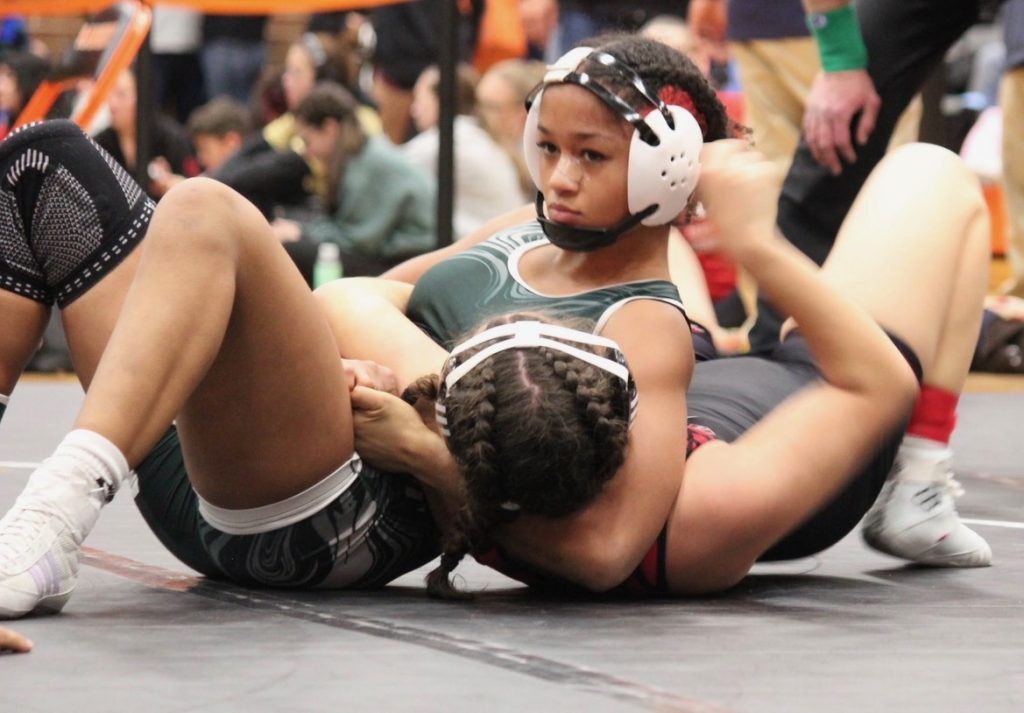
“A lot of boys don’t want to wrestle you because they don’t want to potentially get beaten by a girl,” Hampton said.
Other times, she’s felt that her achievements have gone undercelebrated compared to men in the same sport.
“At times it kind of feels like your accomplishments can be undermined because, ‘Oh, you’re just a girl,’ or ‘Oh well, you won that as a girl,'” she said. “People are just more surprised when you’re beating boys and when you’re doing good against boys.”
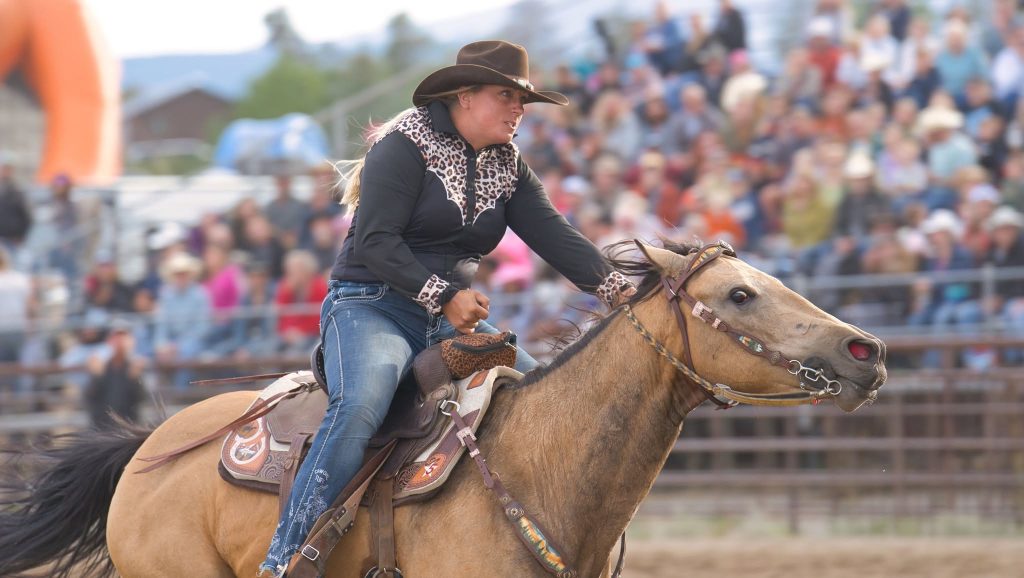
Jesslyn McGill is a rodeo rider who competes in barrel racing — a predominantly female subsect of the mostly male sport. She says that, like Hampton’s experiences in wrestling, her achievements in rodeo have often been diminished due to her gender.
“Just for barrel racing itself, it’s more of a woman-dominated sport,” she explained. “You do end up being sometimes the blunt end of the joke, of ‘Barrels don’t run very fast, so I don’t know why you can’t win against those.'”
The jokes don’t encapsulate the true breadth of barrel races, which — contrary to the feedback McGill receives — don’t actually involve racing barrels themselves. Riders race each other to have the fastest time around a course of three barrels, often competing to win by just tenths or hundredths of a second. It can be a tough mental game, which, McGill explained, makes it all the more vital to learn how to shut out gender-based criticism.
“It’s just one of those things where you don’t take it personal,” she said. “Nobody knows your full story, nobody knows the challenges that you’ve overcome to get to where you are, and you should be proud of yourself that you’re even putting yourself out there to try to do that.”
Like McGill, Erin Ton is no stranger to criticism. She’s a trail and mountain runner who often runs in Summit County. Sometimes, she does it in high heels — a practice that, she says, has opened her up to gender-based criticism.
She first hiked up Mount Elbert in a dress and heels as a way to celebrate climbing Colorado’s highest peak. When she received online criticism after a photograph of her and her sister hiking in heels was posted online, she decided to do it again. Now, she’s climbed almost 30 14ers in high heels.
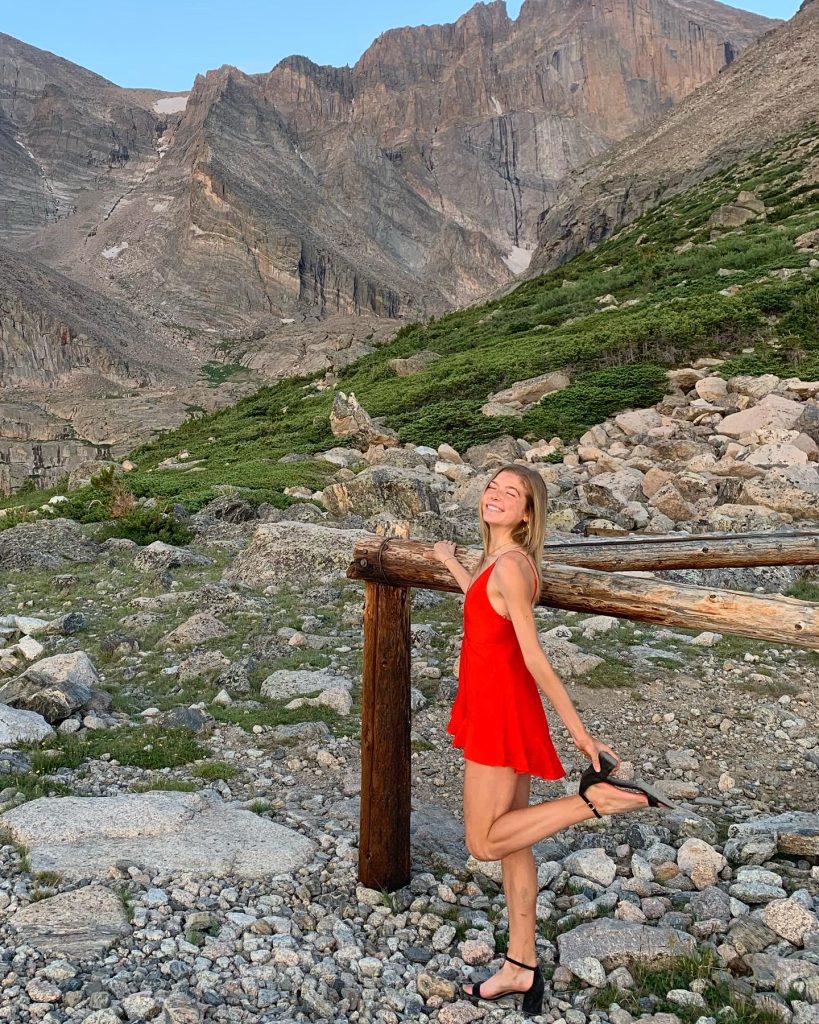
“We received a lot of online criticism, mostly from a male audience, saying that we were being reckless and putting search and rescue teams in danger,” Ton said. “That just lit a fire under me.”
She said she doesn’t feel reckless — the heels actually give her extra leverage on tough climbs, and she always brings a backup pair of shoes. She instead feels empowered.
“I hope to show that women shouldn’t be placed into a box,” she said. “You could be outdoorsy and a badass athlete and run up these peaks really fast, but still embrace your feminine and girly side and enjoy getting dressed up.”
Some of Ton’s critiques focus on her actual ability to complete difficult climbs and trails, rather than the perceived danger of her footwear.
“I think there still exists quite a bit of stereotyping and judging based off of appearance,” Ton said. “For some reason, men think that I’m not qualified to be out there, when oftentimes they don’t know the extent of my background and that I’ve spent more time, and climbed these peaks more times than they probably have. … I don’t think you should have to list off a resume of your credentials in order to play in the outdoors.”
That pressure to present yourself in a certain way can quickly become pressure to look a certain way, Ton says.
“You see a certain way that a female athlete is supposed to look like, and so if you don’t look exactly like that, you kind of question yourselves,” she said. “For a lot of women, it does lead to disordered eating.”
According to the National Eating Disorder Association, the prevalence of eating disorders in female athletes ranges from 6% to 45%, while it ranges from 0% to 19% for male athletes.
Some of the women say that being in a male-dominated sport helps them to escape that pressure, allowing them to exist in an environment focused more on performance than looks.
Both Gresho and Hampton were gymnasts before landing in mountain sports and wrestling, respectively. The two women say that they see less of a focus on their appearances in their new chosen fields.
“Something that always comes to my mind when I think about my experience growing up as a gymnast is a comment that my coach made about my body when I was 12,” Gresho said. “Just comments like things that I can’t change, like ‘Your rib cage is too big,’ or just things that they wouldn’t really say in male-dominated sports.”
Hampton said she had similar experiences in the past.
“In gymnastics … sometimes it feels like you’re always having to size yourself up and fight for your spot, or you have to look the best, or you have to do the best,” Hampton said. “In wrestling, especially since I’ve gotten into high school, the boys, the girls, they’re so much more focused on just performing the best they can, rather than sizing each other up.”
It’s a major improvement, but the women say there’s still room to grow, from the stereotypes they face to online hatred or limited opportunities.
Still, women’s sports are growing in Summit County, and with it, hope that more women will find their paths in spaces formerly reserved for men.
“Across the board, I see a lot more representation,” Gresho said. “Because of that, you can tell that women are taking up way more space, especially young girls.”








Support Local Journalism
Support Local Journalism
As a Summit Daily News reader, you make our work possible.
Summit Daily is embarking on a multiyear project to digitize its archives going back to 1989 and make them available to the public in partnership with the Colorado Historic Newspapers Collection. The full project is expected to cost about $165,000. All donations made in 2023 will go directly toward this project.
Every contribution, no matter the size, will make a difference.