Summit County commissioners give guidance on affordable housing strategy and financing

Kyle McCabe/Summit Daily News
Editor’s note: This story has been updated to correct the name of Summit County government’s Housing Helps program.
As part of a “deep dive” into the topic of housing at a July 28 work session, the Summit Board of County Commissioners gave guidance to county housing department staff on affordable housing strategy.
Co-interim housing directors Lina Lesmes and Brandon Howes reviewed the housing departments’ principles, projects and goals before getting to its 2026-2027 recommendations and a five-year financial projection. The first recommendation was to continue putting “significant” funding toward the Housing Helps program.
“We think this is a low cost, low risk, high reward project,” Lesmes said, “and a way to target buydowns when we don’t want to do individual buydowns.”
Through the Housing Helps program, the county gives 10-25% of a property’s value to its buyer in exchange for the buyer placing a deed restriction on the housing unit. Lesmes said housing department staff prefer the program to buydowns, which add deed restrictions to existing housing by having the county purchase units, add deed restrictions and sell them at a discounted price.
Lesmes said the last time the county completed a buydown was 2021, before she started working for the housing department. She said the county had some issues while purchasing some units and had to deal with problems while owning some, like extensive repairs and insurance issues.
“There’s a lot of unknowns there,” Lesmes said. “We have the housing helps program, … which I think is a way of the county having less liability with what can go wrong and the homeowner having the ability to pick whatever’s out there that they want themselves.”
Commissioner Eric Mamula said the potential problems with buydowns are not enough reason for the county to do away with the program.
“I’ve got to tell ya, it’s still cheaper than building,” Mamula said.
Mamula said staff should be able to assess whether a unit would be a good buydown option. Commissioner Tamara Pogue agreed that the county should still look to perform buydowns if staff identifies “a good deal” on the market.
The commissioners agreed with a recommendation that the housing department prioritize partnerships with towns or organizations like Habitat for Humanity over projects solely supported by the county. Mamula said partnering on projects helps the county’s dollars have more impact.
The department also recommended that it focus on the Wayside project, which will redevelop a former hotel that the county and town of Breckenridge jointly purchased in 2022 to turn into workforce housing. The commissioners agreed, with Pogue adding a caveat that, if some other opportunity arose, the board may readjust its priorities.
Lesmes reviewed a five-year financial projection for the housing department, pointing out that expected spending on the Wayside project would lower the fund’s ending balance from around $8 million in 2027 to just over $200,000 in 2028. An influx of money from Breckenridge’s contributions on the project and the sale of those units would bring the fund back up to about $4 million and nearly $11 million at the end of 2029 and 2030, respectively.
Pogue said the county’s housing strategy and financing could be affected by the results of a feasibility study on the U.S. Forest Service employee housing project. The county partnered with the federal agency in 2023 to build employee housing on Forest Service land near Dillon, but the project stalled in 2025 when the county parted ways with the project’s developer.
Proposition 123
The board had a separate budget item scheduled to discuss the housing department’s last recommendation, which was to adopt code amendments to maintain the county’s Proposition 123 eligibility. Proposition 123, which Colorado voters passed in 2023, has designated hundreds of millions of dollars for affordable housing across the state. State legislators this year siphoned $130 million from the program to help balance the state budget.
The county must adopt code amendments to incorporate an expedited review process, or “fast track,” for affordable housing projects by December 31 to remain eligible for Proposition 123 funding in the 2027-2029 cycle, according to a staff memo.
Pogue said she would support adding the needed code amendments not only to maintain funding eligibility but to create cost savings for builders by fast-tracking projects. She also said the limited Proposition 123 funds do not seem like a reason to forego retaining eligibility.
“They swept some of it, but they didn’t swallow it,” Pogue said of the legislature’s fund cuts. “I think just because they swept it once, there’s a lot of people who are going to be fighting for them never to sweep it again.”
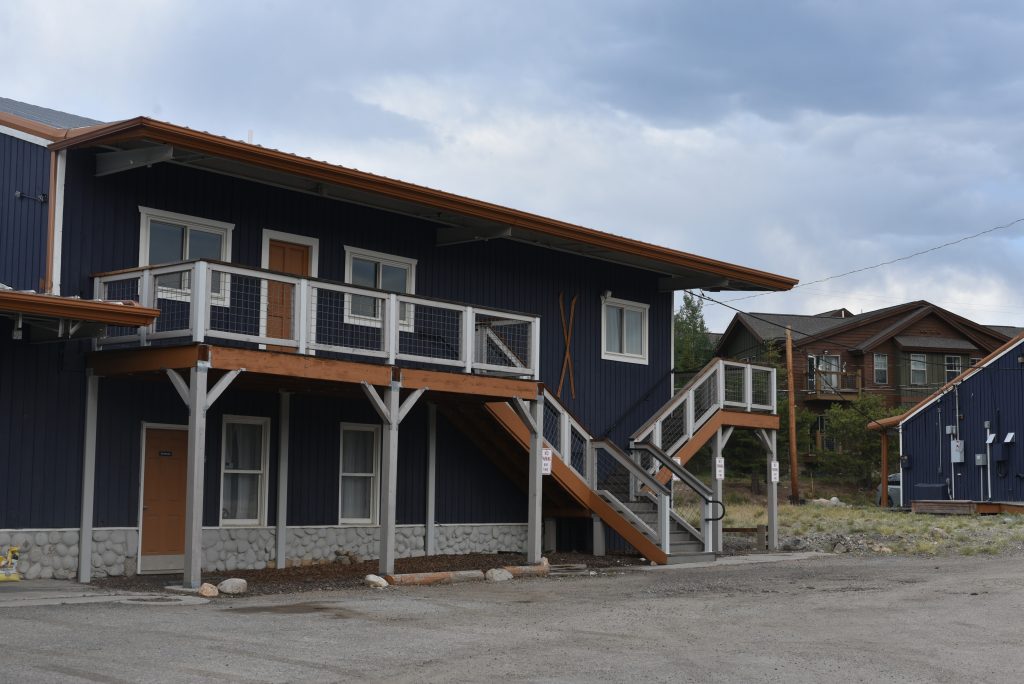
A staff memo stated Proposition 123 could be a funding source for the Forest Service project, the Wayside project and the acquisition of the Alpine Inn, which the county started to lease for affordable housing in 2021.
Mamula asked if the required code amendments would negatively affect the quality of affordable housing in the county. Lesmes said the code is very targeted and only affects the process of building affordable housing, not the product.
The commissioners voiced support for pursuing the code amendments and opting into Proposition 123 eligibility.






Support Local Journalism
Support Local Journalism
As a Summit Daily News reader, you make our work possible.
Summit Daily is embarking on a multiyear project to digitize its archives going back to 1989 and make them available to the public in partnership with the Colorado Historic Newspapers Collection. The full project is expected to cost about $165,000. All donations made in 2023 will go directly toward this project.
Every contribution, no matter the size, will make a difference.