Summit County could spend more than $17 million on affordable housing in 2024 as budget discussion continues
Highest-cost items would be planned developments and continuation of existing assistance programs

Robert Tann Follow

Robert Tann/Summit Daily News
As Summit County officials continue to make revisions to a proposed 2024 budget ahead of a planned final adoption in December, the most current proposal would see a roughly $4 million increase in spending on affordable housing next year.
During a Summit Board of County Commissioners meeting on Tuesday, Oct. 24, officials signaled they could support spending about $17.3 million on affordable housing projects in 2024, up from $13 million spent in 2023.
“It will utilize most of all affordable housing dollars we can squeeze into 2024,” said finance director David Reynolds.
The increase comes as major housing initiatives move forward and as property tax revenue from a voter-approved affordable housing fund is projected to jump significantly. According to Reynolds, revenue for that fund is projected to rise from $2.2 million this year to $3.9 million in 2024.
The county plans to use $3.7 million of that for housing projects, Reynolds said, adding, “That’s only about one-third of the dollars” that fund county affordable housing initiatives.
The rest comes from sales and lodging taxes, as well as grants and rent collection from some county-owned properties. Some of the property tax increase is expected to be offset by revenue losses from Keystone’s incorporation as a town, which impacts sales tax collection, as well as lower-than-expected lodging taxes, Reynolds said.
While a first-draft budget proposal presented by Reynolds earlier this month showed more than $16 million in spending on affordable housing, that did not account for smaller projects as well as staffing costs that, when added together, boost the county’s expected expenditures to over $17 million.
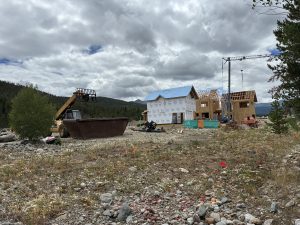
The highest-cost projects include developments that are projected to break ground next year, such as income-based rental apartments planned to be built on U.S. Forest Service administrative land near Dillon and new deed-restricted, single-family homes in the Bill’s Ranch neighborhood near Frisco.
Officials estimate the county will spend $3.7 million and $3.1 million, respectively, on just those projects next year. Other high expenses will be continued funding for programs, such as down payment assistance for homebuyers, subsidies for accessory dwelling units and incentives to convert short-term rentals to long-term rentals. Under the current budget proposal, spending on those programs in 2024 would be $2.5 million, $750,000 and $550,000, respectively.
Stay connected to Summit County.
Sign up for daily or weekly newsletters at SummitDaily.com/newsletter
The down payment assistance program, known as Housing Helps, has proven to be particularly successful over the years, according to housing director Jason Dietz. The program provides financial assistance to first-time homebuyers who agree to place a deed restriction on their home to keep it more affordable for future buyers.
The program has added about 20-30 units to the county’s housing supply each year, something Dietz called “really cost-effective per bedroom” compared to the cost of new construction.
Commissioner Tamara Pogue said she’d like to see more state support for such programs, which are currently ineligible for funding through Proposition 123 — the affordable housing measure approved by Colorado voters last year, which only dedicates funding to new developments.
Officials also discussed infrastructure spending on the Forest Service project and future leasing of the Alpine Inn in Frisco.
For the Forest Service project, the county is planning to build a small roundabout near the intersection of U.S. Highway 6 and Lake Dillon Drive, which leads to the entrance of the Dillon Work Center where the rental units have been proposed. While total costs for that project are unclear, the initial 2024 budget called for $1 million in spending for it next year, which would come from the dedicated affordable housing fund.
Reynolds proposed paying for that project with revenue from a capital fund that supports infrastructure projects instead, which would save $1 million in housing fund spending and bring the total housing budget down from $18.3 million to $17.3 million. Commissioners agreed to the change.
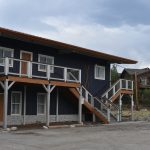
Reynolds said the county needed to decide if it would extend its lease on the Alpine Inn through next year. It represents one of three hotels in the county that officials have recently leased and converted into year-long rental units. The others are the former LOGE hotel in Breckenridge and the Days Inn property in Silverthorne.
Without extending the lease on the Alpine Inn past 2024, Dietz said, “We’d have to come up with a game plan to let the folks know that we’re not moving forward.”
Pogue said she wants the county to do whatever it can to avoid displacing those tenants, adding, “We don’t have anywhere to move them to.”
Commissioners indicated they were supportive of spending $593,000 next year to extend the lease — part of nearly $800,000 in total spending for maintaining hotel conversions in 2024. While Dietz said he had not budgeted for any additional conversions next year, Pogue said future lease agreements could always be a possibility.
“There are always opportunities,” she said. “So, again, I think the conversation about what other dollars can we leverage will be really important.”




Support Local Journalism
Support Local Journalism
As a Summit Daily News reader, you make our work possible.
Summit Daily is embarking on a multiyear project to digitize its archives going back to 1989 and make them available to the public in partnership with the Colorado Historic Newspapers Collection. The full project is expected to cost about $165,000. All donations made in 2023 will go directly toward this project.
Every contribution, no matter the size, will make a difference.