Summit County commissioners OK funds for nonprofits that focus on food assistance, environment, immigrants, health and more
Grants will provide funding for a wide range of programs in the county, and some applications for the program were moved to alternative funding sources

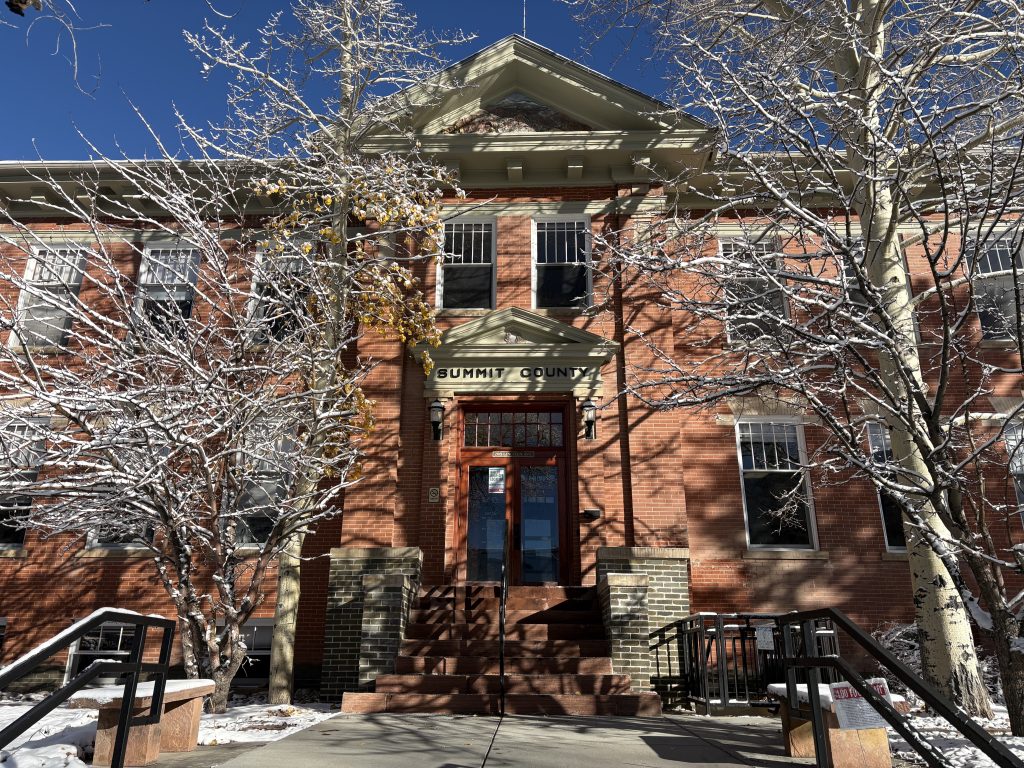
Kyle McCabe/Summit Daily News
After giving staff direction in November to revise suggested distributions for the county’s grant program, the Summit Board of County Commissioners heard and approved the revised recommendations Dec. 9.
The Summit County Government Grant Program received a remodeling for the 2026 cycle with a new schedule based on similar grant programs provided by towns. The commissioners expressed concerns with the county staff’s original recommendations, asking them to look for ways to fund some requests with money from other funds and to more fully fund small requests, as those projects were more likely to not happen at all if they received only partial funding.
At the Nov. 25 meeting, staff recommended spending $500,000 on the government grant program in 2026, with $400,000 being allotted in the first round and $100,000 being allotted six months later. Commissioner Tamara Pogue suggested using all the money in the first round, if needed, to fully fund more applications.
Executive administrative manager Caitlin Johnson presented the staff recommendations at both meetings, and she said Dec. 9 that the staff had offset enough expenses by using alternate funding sources that it was not recommending eliminating the second round.
The recommendation designates five projects as eligible for early child care and learning funding and another three eligible for mental health funding. Altogether, they total $178,500 in funding from alternative sources.
Staff recommended fully funding any project with a request below $50,000, Johnson wrote in a memo, based on the board’s direction. There were six applications in that category that staff recommended funding with government grant program money, and all of the applications recommended to receive alternative funds fell into that category.
Applications staff recommended to receive grant program money included ones addressing food insecurity, supporting arts and culture, supporting the immigrant community, offsetting medical costs for uninsured patients, providing energy efficiency rebates and educating the public on natural resource conservation. The allocations totaled $371,500.
Commissioner Nina Waters asked her peers about increasing the allocation to the High Country Conservation Center, which requested $230,870 for energy efficiency rebates, home studies and education.
Waters said the recommended allocation of $106,000 — an $87 increase from the previous recommendation — is less than what the county granted the conservation organization last year. Waters said the allocation last year was around $180,000.
“We don’t have a sustainability department,” Waters said. “High Country Conservation Center is the only tool that we have to implement a lot of our climate action goals.”
Commissioner Eric Mamula said the center gets funding from the Strong Future fund on top of whatever amount it receives in government grant program money. Waters replied that the Strong Future funds are for waste reduction efforts, which are separate from the things the center wants to fund with government grant program money.
Waters proposed using more of the $500,000 budgeted for the grant program in the first round of funding to provide the conservation center with an amount closer to its 2025 allocation. Mamula and Pogue disagreed, saying they would rather keep more funds available for the second round, particularly for food insecurity.
Mamula said that the number of people going to nonprofits like the Family and Intercultural Resource Center and Smart Bellies has increased since “the SNAP debacle,” referring to a lapse in distribution of benefits for the federal Supplemental Nutrition Assistance Program related to the federal government shutdown earlier this year.
“I know (the High Country Conservation Center) does strong work,” Mamula said. “Some of these programs are important. For me, I would say that I would rather save that money for some of the food insecurity programs.”
Waters said she had hoped the center’s allocation would increase between the November and December meetings, but the $87 increase did not “feel like a substantial change.” She said she would feel comfortable giving the center 80% of their ask, which would be around $184,000, and using reserves if needed for “major impacts,” like food insecurity, if needed.
Mamula and Pogue disagreed, saying “basic needs” should be prioritized and that the center could apply for more funds in the second round.
“If the season is better than we think, if we get snow, if the international tourism is not as far down, we will have a different opinion in April than I do right now,” Mamula said.
The commissioners instructed staff to move forward with the awards as recommended.





Support Local Journalism
Support Local Journalism
As a Summit Daily News reader, you make our work possible.
Summit Daily is embarking on a multiyear project to digitize its archives going back to 1989 and make them available to the public in partnership with the Colorado Historic Newspapers Collection. The full project is expected to cost about $165,000. All donations made in 2023 will go directly toward this project.
Every contribution, no matter the size, will make a difference.