Colorado governor, Democrats announce package of bills to increase housing supply, bolster transit centers
Jared Polis and lawmakers are again wading into local land-use issues while also seeking to pair new housing with transit investments

Robert Tann/Summit Daily News
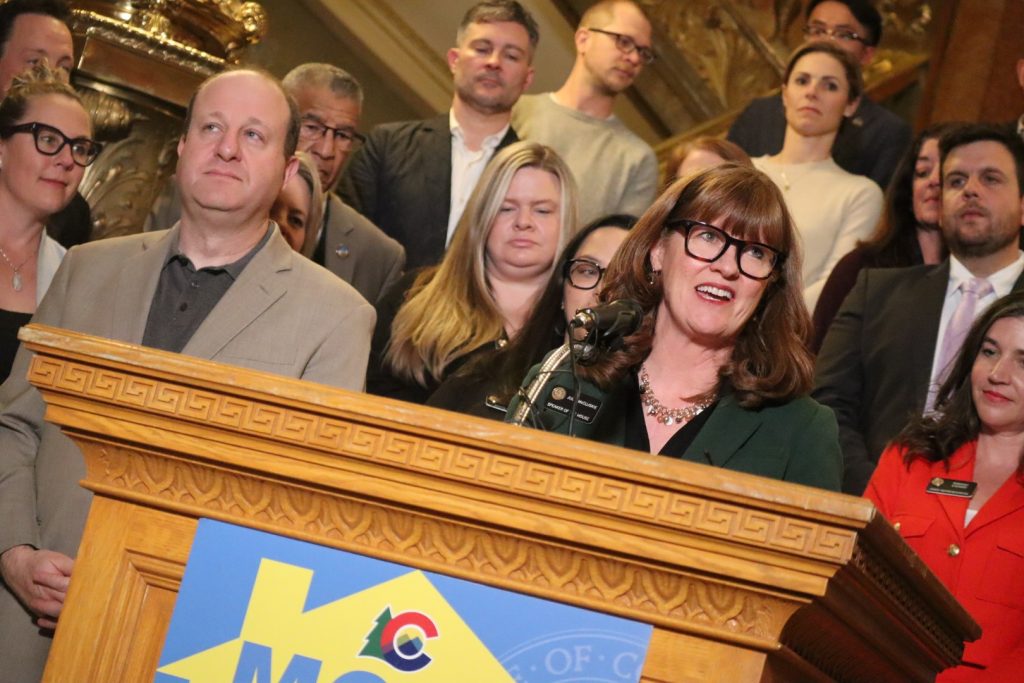
Colorado Democratic lawmakers and Gov. Jared Polis on Wednesday announced a trio of bills aimed at building more affordable housing and investing in transit centers.
The legislative package is the latest in an ongoing push by the state to take a more active role in housing, which has long been a responsibility of local governments, as communities buckle under the high cost of rent and homeownership.
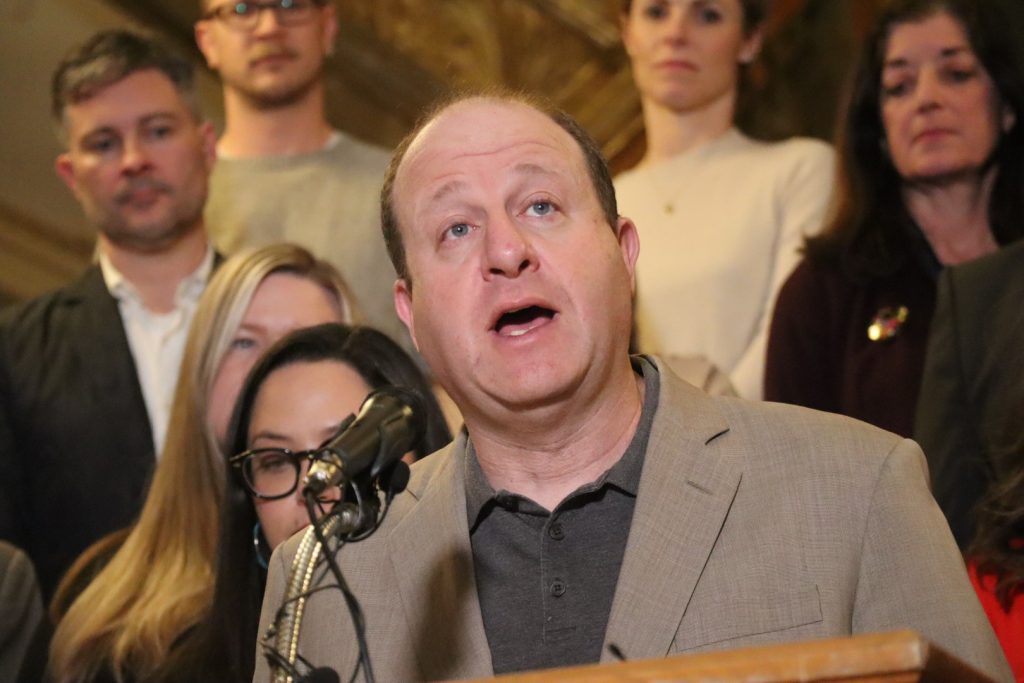
“It costs too much to live here, and our legislators are really hearing that,” Polis said during a press conference at the Capitol with lawmakers and local leaders. “These (bills) are a key part of the work the legislature is doing to make it more affordable for everyone to live here in Colorado.”
Democrats’ centerpiece measure is House Bill 1, which supporters are calling the Housing Opportunities Made Easier, or HOME Act. The bill would allow public schools, colleges, nonprofits, transit agencies and other entities to bypass local zoning codes and build affordable housing on land that they own.
The measure is modeled after legislation last year that sought to allow churches to build housing on their land, which ultimately failed to advance out of the state Senate.
With the HOME Act, lawmakers are once again wading into the fight between local and state control when it comes to housing and land-use. The Colorado Municipal League, which represents more than 270 of the state’s cities and towns, opposes the bill.
“Municipal leaders across Colorado are actively working to increase affordable and attainable housing opportunities,” said Colorado Municipal League Executive Director Kevin Bommer in a statement. “One-size-fits-all policies from the state Capitol ignore the unique needs of
each community. (HB 1) would strip away local authority that has been the foundation of responsible growth and balanced planning in Colorado for decades.”
Colorado House Speaker Julie McCluskie, D-Dillon, acknowledged during Wednesday’s press conference that there has been “conflict with some of our local leaders around land-use and the ways that we should pursue increasing housing inventory in the state.”
But McCluskie said policymakers have “all stayed at the table and continued to work on problem-solving and making sure that Coloradans’ voices were heard.”
Proposals to circumvent local land-use policies have seen mixed success in the legislature.
Lawmakers took two years to pass Polis’ chief housing plan to increase density across the state. The original measure in 2023 would’ve overridden land-use codes in communities large and small, including ski towns, which were largely opposed to the proposal. After that measure failed to garner enough support, the legislature passed a slimmed-down version of the bill in 2024 that exempted smaller and rural communities and focused exclusively on populous metro areas primarily along the Front Range.
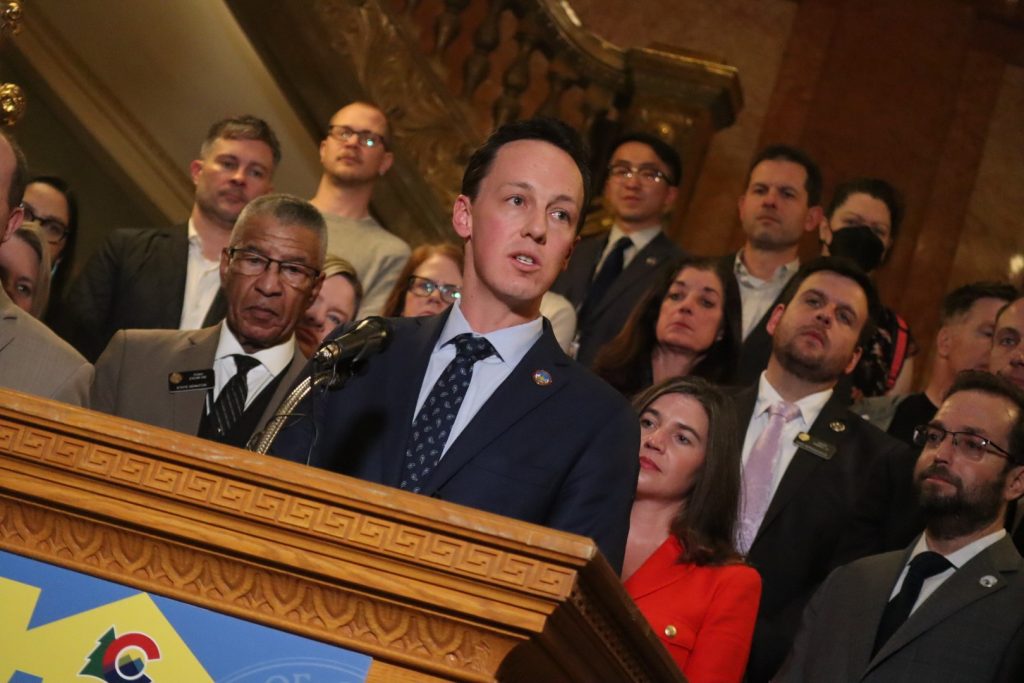
Sen. Dylan Roberts, D-Frisco, who was against the initial attempt to overhaul land-use codes in mountain towns, said last week that the HOME Act represents a more targeted approach. Roberts’ chief concern with density requirements is that, without the proper guardrails, it will just lead to more luxury housing being built in resort communities.
“I think the HOME Act is only going to be available to entities that are already interested in only building the type of housing that we need to deal with our affordable housing issues,” Roberts said. “They are nonprofits or government entities that want to use their land resources … to help with a problem in their community. It’s not allowing anybody and everyone to build any type of home that they want.”
Roberts said that, while the state can’t just build its way out of a housing crisis, there is a legitimate need for more housing supply to counteract demand that has driven up prices.
Roberts also spoke on Wednesday about another housing bill he’s sponsoring alongside McCluskie that aims to help local governments build more housing near transit areas, like bus centers and rail stations, as well as invest in transportation infrastructure. The move is meant to help both increase housing inventory while reducing traffic congestion and emissions.
House Bill 65, also sponsored by Rep. Steven Woodrow, D-Denver, and Sen. Tony Exum, D-Colorado Springs, would allow local governments and transit authorities to dedicate up to 25 years’ worth of state sales tax revenue to fund infrastructure projects that are within a 1.5-mile radius of a transit area. The state would allow for up to $75 million per year in total sales tax revenue for such projects.
HB 65 also creates a new state tax credit to help communities build housing in those transit areas. The state would allocate up to $50 million per year for the tax credits starting in 2027 and lasting through 2033.
Roberts said the measure will “make it easier for local governments to build transit stations that support new housing and ridership, without overwhelming their own resources.”
He also touted the bill’s benefits for the state’s mountain passenger rail project, which is currently on track to deliver daily commuter rail services between Denver and Granby starting in November. State officials plan to eventually extend service further into northwest Colorado, including Steamboat Springs, Hayden and Craig.
The third housing bill lawmakers are bringing forward would expand property tax exemptions for vacant land where developers plan to build affordable rental housing. That measure, House Bill 66, is sponsored by Reps. Rebekah Stewart, D-Lakewood, and Katie Stewart, D-Durango, and Sen. Matt Ball, D-Denver.
The bill builds off legislation passed in 2023 that created a property tax exemption for land used to build for-sale affordable homes.
Taken together, the three bills represent a continuation of what Polis has dubbed his “More Housing Now” agenda, which has been a chief priority of his second term.
Now, in the last year of his governorship, Polis acknowledged it will likely take time for much of that legislation to make a difference in the housing market. But he said the decisions made today will have a lasting impact on the future.
“Fundamentally, it’s about the landscape of Colorado being one that, over the next several years, leads to a more local and affordable Colorado, as opposed to the status quo, where it becomes less and less affordable,” Polis said. “So, it’s really about that fork in the road and taking ownership of that decision of, ‘Who do we aspire to be in five years, 10 years?'”









Support Local Journalism
Support Local Journalism
As a Summit Daily News reader, you make our work possible.
Summit Daily is embarking on a multiyear project to digitize its archives going back to 1989 and make them available to the public in partnership with the Colorado Historic Newspapers Collection. The full project is expected to cost about $165,000. All donations made in 2023 will go directly toward this project.
Every contribution, no matter the size, will make a difference.