Wildland firefighters say things are ‘basically as dry as they can get’ in Colorado’s forests — fueling ‘schizophrenic’ wildfire behavior
Wildland fire chiefs across the mountains say thick logs and ‘1,000-hour fuels’ that fill high-Alpine forests are drier than ever, making wildfires unpredictable

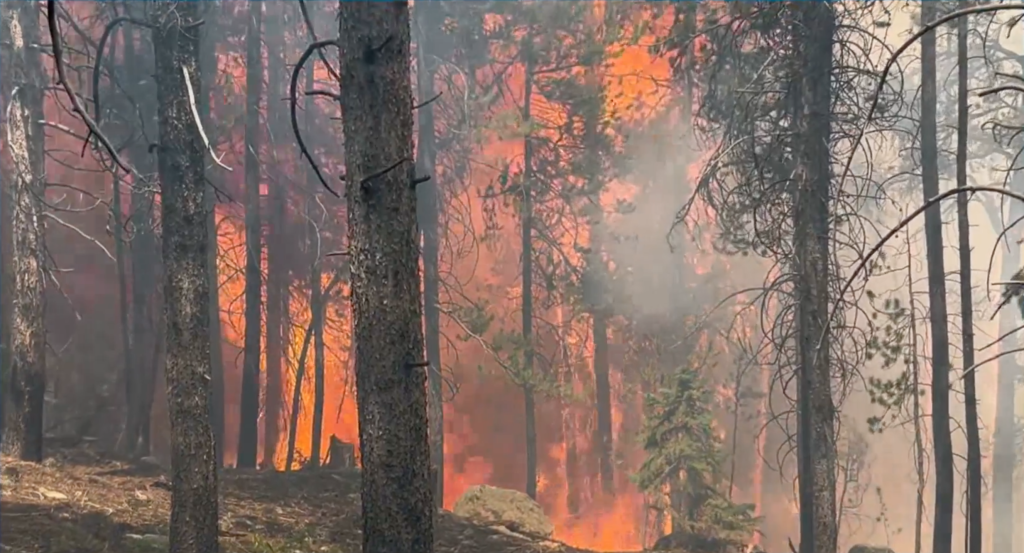
Southwestern Area Complex Incident Management Team 4/Courtesy photo
A historic drought is turning Colorado’s mountain landscapes into a tinderbox.
After last winter’s record-low snowpack, wildland firefighters who continuously monitor indexes of weather and climate data to help predict wildfire risk and how conditions might affect fire behavior say they’re staring down unprecedented levels of dryness.
“That lack of snowpack has had a very real impact on the fuels, the vegetation — specifically the large logs that are on the ground,” said Jim King, the fire behavior analyst for the Willow Fire burning near Leadville. “Those are 1,000-hour fuels. The way we measure those in this line of work, they’re just at the very peak. They’re basically as dry as they can get.”
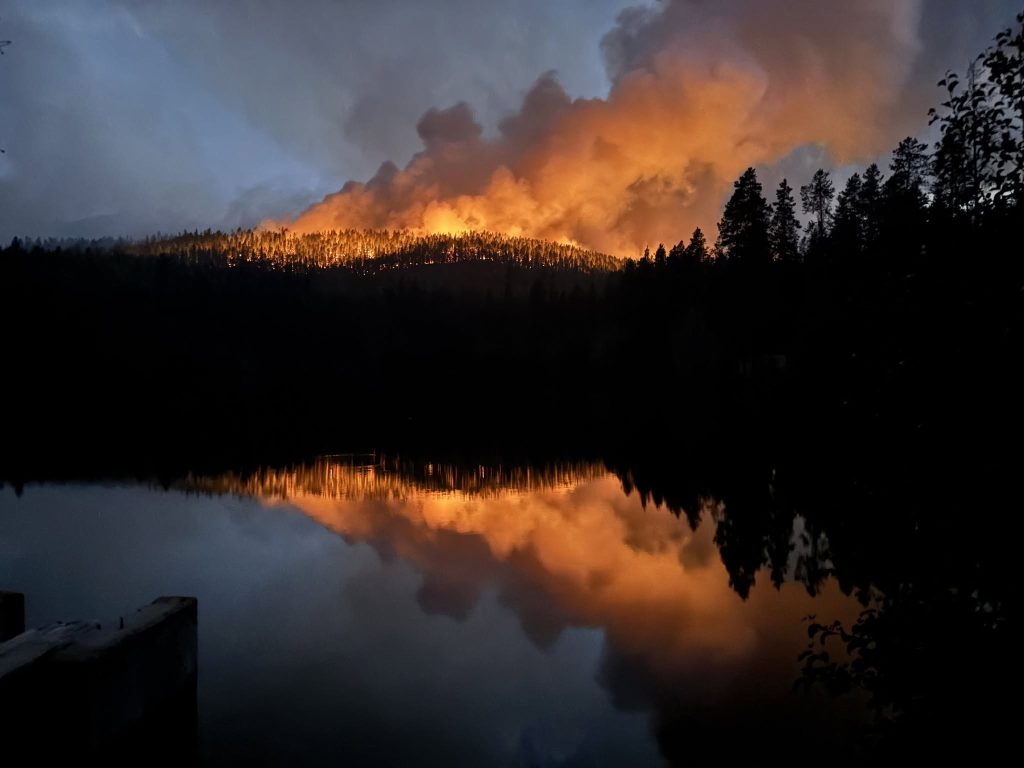
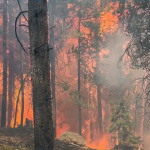
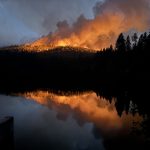
In updates during community meetings this month, King described how bone-dry logs in the dense forest near Turquoise Lake, along with high winds, contributed to 100-foot columns of flames and extreme fire behavior that at times threw “spots” — or new fires started by sparks and embers — more than a half mile ahead of the blaze.
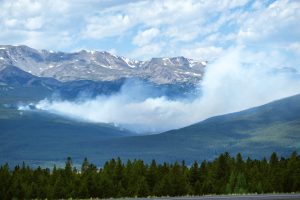
The Willow Fire — which had burned about 4,500 acres with 22% containment as of Friday morning — is one of five major fires that have swept across Colorado since the last weekend in June. The way the fire has burned out of control just below the treeline at 10,000-feet has wildfire leaders in nearby mountain communities say they’re paying attention.
Matt Benedict, the wildland division fire chief at the Red, White & Blue Fire Protection District, which is just over the Continental Divide in Breckenridge, said it’s unusual to see significant fire growth in high-Alpine timber so early in the summer.
“That’s typically an August-September issue, when things have had a whole summer to dry out, and instead we’re seeing it in the end of June and beginning of July,” Benedict said. “So that’s pretty alarming to us. It is certainly the one thing that makes me anxious at this point — is the reaction we’re seeing with our heavy timber.”
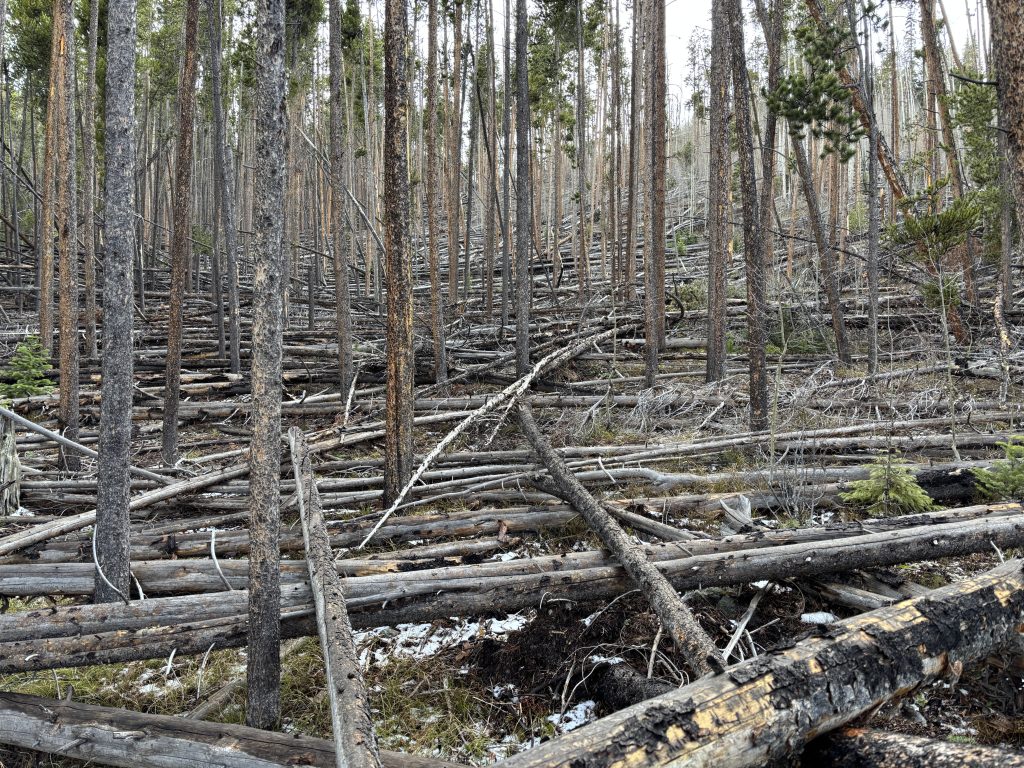
Dry 1,000-hour fuels are adding to ‘erratic’ fire behavior
One of the things that wildland firefighters say they are so concerned about is that it’s not just grasses and shrubs that are dry. It’s also thick trees and downed logs.
Wildland firefighters call these “1,000-hour fuels” because they are so dense that they’re slow to gain or lose moisture and take approximately 1,000 hours, or 40 days and nights, to saturate or dry out. At high elevations, 1,000-hour fuels usually soak in water from the snowpack through much of the spring, then take most of the summer to dry out, according to wildfire experts. But the historic drought has left them parched and drier than ever.
“The fuels, in essence, have never been this dry,” said Hugh Fairfield-Smith, the wildland division chief at the Eagle River Fire Protection District.
One metric wildland firefighters use to understand how dry fuels are — and how hot they’ll burn — is known as the energy release component.
According to Wildfire.gov, energy release component values build up as conditions get drier and are therefore a “good reflection of drought conditions.” The moisture of 1,000-hour fuels is a “primary input” to the index because these thick fuels are hard to burn when wet but can add a lot of fuel to a fire when they are dry enough to ignite.
Benedict said the energy release component, “tells us how stubborn fires are going to be and how explosive they’re going to burn.”
“We’re setting all-time records” right now, he added.
The Colorado Division of Fire Prevention and Control’s fire environment dashboard shows near-record breaking energy release components values at nearly every location in the mountains in recent days.
At the Willow Fire, the amount of 1,000-hour fuels is part of what officials say has made the fire so hard to battle. With the massive amount of material that is available to burn, King said the fire has been hard to put out and will smolder even when conditions calm down, ready to torch again when winds pick up.
“This fire is in a fuel type that is erratic — schizophrenic, you might say,” he said. “It doesn’t take much to set it off.”
From neighboring Pitkin County, Aspen Fire Wildland Battalion Chief Jake Spaudling has also been watching the Willow Fire with apprehension.
With 1,000-hour fuels so dry and energy release components so high across the region, Spaulding said wildfires will spread quickly and are more likely to climb into the canopy of a forest where they are hard to control.
“It just means that we’ve got to be ready for extreme fire behavior and to see things that maybe we’ve never seen before,” he said.
‘Rain will have literally no impact’ on 1,000-hour fuels
As summer wears on, wildland firefighters warn that even rain won’t do much to improve Colorado’s wildfire risk.
While forecasts are calling for an active monsoon season that could bring substantial rainfall later in the summer, wildfire officials are worried that any precipitation could come as a double-edged sword.
“The unfortunate part — this is the part that’s got us all on edge — is we’re going to see the potential of dry lightning when we see the monsoon start,” Benedict said. “This is not a monsoon push by any means, but when we see the monsoon introduce itself, we typically see lightning out in front of it, just because of all the dry air that’s out there.”
Even as some smaller storms have floated through the mountains in recent days, Benedict said the monsoon season has yet to kick in and more dry weather is expected through July. When it does rain, he said the dry soil “takes its share first,” leaving little water remaining for vegetation and fuels.
Because 1,000-hour fuels are so dense and woody, Fairfield-Smith said that even regular monsoon rains can do little to reverse how much these logs and timber have dried out amid this historic drought.
“I don’t want to be all doom and gloom, but a few days of rain will have literally no impact on 1,000-hour and timber fuels,” he said. “Just a few days of rain will only impact the grass and maybe a little bit of brush. If we had a lightning strike in timber while it was raining, it could still move 1,000 acres in a day — easy.”




Support Local Journalism
Support Local Journalism
As a Summit Daily News reader, you make our work possible.
Summit Daily is embarking on a multiyear project to digitize its archives going back to 1989 and make them available to the public in partnership with the Colorado Historic Newspapers Collection. The full project is expected to cost about $165,000. All donations made in 2023 will go directly toward this project.
Every contribution, no matter the size, will make a difference.