Sheriff’s Office receives nearly 50 reports of potential fire restriction violations in 3 weeks

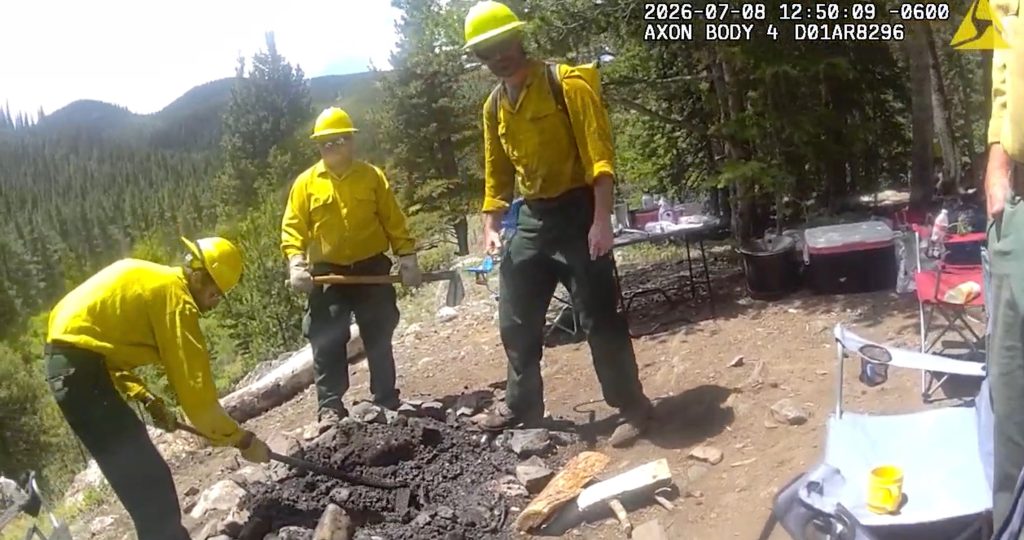
Image_7-9-26_at_1.19 PM
Editor’s note: This story has been updated to provide additional clarity on the Sheriff’s Office’s investigations.
Since Summit County entered Stage 1 fire restrictions June 19, the Summit County Sheriff’s Office has investigated nearly 50 reports of potential fire restriction violations.
Restrictions increased to Stage 2 on June 26, making more activities and types of fires illegal in the county. Sheriff’s Office Sgt. Mike Schilling said that, out of the close to 50 investigations deputies have completed, only eight have so far resulted in penalty assessments. The other 42 calls found no violations, according to Schilling.
“We’re seeing complete buy-in across the community,” Schilling said. “We’re seeing everybody pull in the same direction. It’s really a great thing to be a part of right now.”
The penalties people receive for violating fire restrictions include fines and court dates for Class 2 misdemeanor charges. Schilling said the charge is for unlawful conduct on public property, and according to the Colorado Revised Statutes, it results in a mandatory fine of $250 to $1,000. Depending on where the violation occurs, the penalty could be just a $150 county fine. Four of the penalty assessments have been fines and four have been court summonses, according to Schilling.
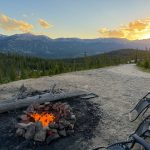
Schilling said the community has done a good job reporting any potential violations it sees, including an unattended campfire July 5 near the top of Miners Creek Road. Fire officials quickly extinguished the still-burning fire, thanks to a backcountry user reporting it, Schilling said.
“That was the real deal on a very windy day,” Schilling said. “Something as simple as that could really save us, right? All it takes is one fire on the wrong day, and, you know, we’ll be in it.”
The Miners Creek fire is not included in the eight penalty assessments because deputies have not yet issued a summons or fine, but Schilling said the Sheriff’s Office has a suspect in that case.
Schilling also said deputies have come across several campfires that have been fully extinguished but show signs of being recently lit. Those cases do not typically result in penalty assessments because the area is vacated before deputies find it.
Not all penalty assessments have been for illegal campfires, Schilling said. Deputies have issued two to people welding in their driveways, which is not allowed under Stage 2 fire restrictions. They have only issued one penalty assessment for use of fireworks, which happened on the Fourth of July.
Schilling said deputies responded to an illegal campfire in Wildernest on July 3 and cited someone from a group of people who were visiting the county for Independence Day. The next night, deputies responded to a report of people using sparklers in the same area.
“The same group was then lighting sparklers,” Schilling said. “They were cited also, especially given that we had already talked to that group of people the day before.”
Deputies issued the penalty assessments to two different people in the group, Schilling said.
The Sheriff’s Office’s enforcement of fire restrictions has not changed from years past, Schilling said, although more activities and types of fires that have been illegal this summer because the county entered Stage 2 restrictions for only the second time in the last five years, doing so more than a month earlier than it did in 2025.
The number of violations are difficult to compare to past years because of the difference in restrictions, Schilling said, but he thought it seemed appropriate for the conditions. He said the community has shown “voluntary compliance” of fire restrictions and has made fire danger a popular topic of conversation.
“The more we talk about it, the more people pay attention, and the more they comply on their own, which is awesome,” Schilling said.
Fire restrictions do not prevent all fires, Schilling said. The Black Lake Fire, which ignited south of Heeney and was entirely contained by firefighters July 9, started because of a lightning strike, according to the Red, White & Blue Fire Protection District.
“The natural risk of wildfire is one thing, and we accept that in Summit County — we know it’s there,” Schilling said, “but the human risk is really what’s controllable, and it takes personal responsibility and community collaboration.”
Sheriff Jaime FitzSimons has suggested that the Summit Board of County Commissioners pass an updated ordinance about fire restriction enforcement that would increase county fines for violations to up to $1,000. Currently, county fines are $150 for someone’s first violation, $500 for their second and $1,000 for their third.
FitzSimons said at a commissioner meeting that the more than six-fold increase for a first violation would provide a greater deterrent to violating restrictions. The ordinance, which Schilling said has not been updated in 20 years, would bring fines in line with those in other counties, FitzSimons said. While neighboring Grand County’s fines start as high as $1,000, other nearby counties, like Lake and Routt, have lower initial fines of $250 and $100, respectively.
“Fire restriction effectiveness depends on practical enforcement and penalties that reflect the risk posed by the violation,” Schilling said.
Schilling encouraged community members to share their opinions about the potential fine increase with the board of commissioners before or at its July 21 meeting, where it will have a public hearing on and second reading of the ordinance.




Support Local Journalism
Support Local Journalism
As a Summit Daily News reader, you make our work possible.
Summit Daily is embarking on a multiyear project to digitize its archives going back to 1989 and make them available to the public in partnership with the Colorado Historic Newspapers Collection. The full project is expected to cost about $165,000. All donations made in 2023 will go directly toward this project.
Every contribution, no matter the size, will make a difference.