A Republican congressman is trying to hold onto his western Colorado seat. His primary challenger says the district needs a stronger conservative.
Ron Hanks, a former Colorado legislator, Jan. 6 protester and 2020 election denier, criticized Rep. Jeff Hurd’s record on public lands, tariffs

Robert Tann Follow
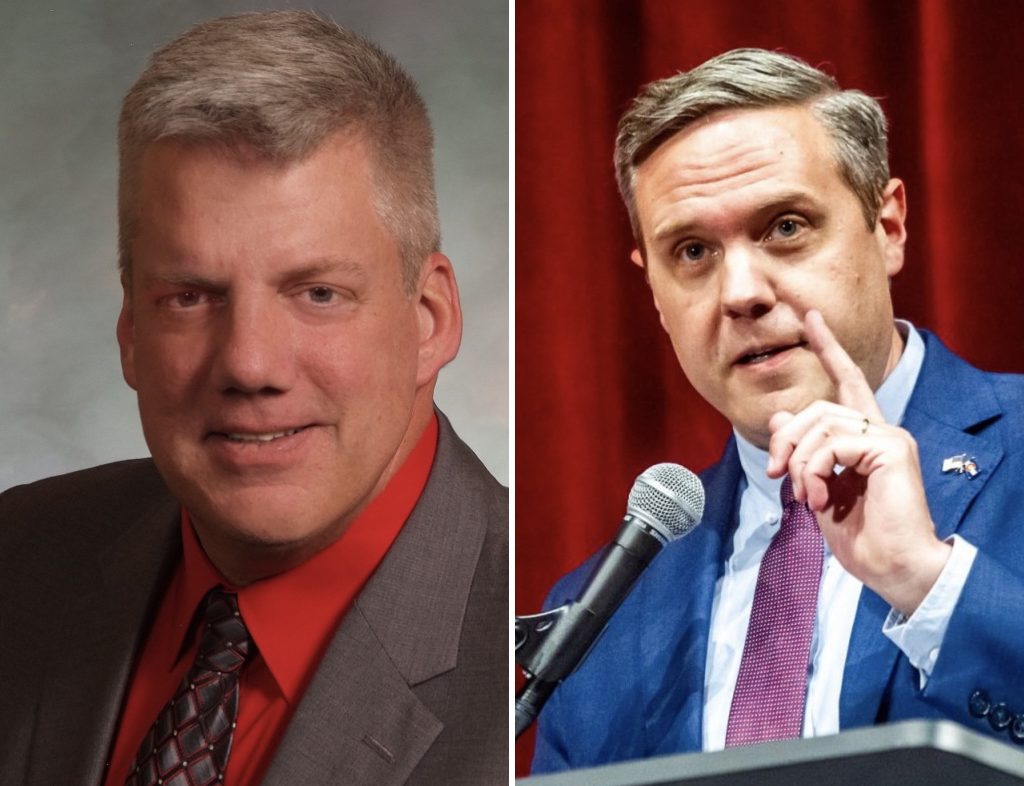
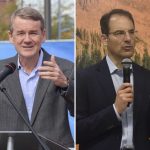
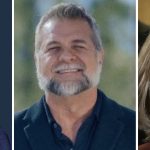
Colorado General Assembly/Courtesy photo, and Larry Robinson/Grand Junction Daily Sentinel
A former state lawmaker is vying to replace first-term Republican Rep. Jeff Hurd in the 3rd Congressional District, which encompasses most of western and southern Colorado.
Ron Hanks, who served as a representative from Canon City in the Colorado House from 2021 to 2023, is set for a rematch against Hurd in the June 30 primary, the winner of which will face off against the Democratic nominee for the congressional seat in November. Hanks previously challenged Hurd in 2024, after Rep. Lauren Boebert, a Republican who represented the region for two terms, abandoned her reelection bid to run in a different district.
Hanks served more than three decades with the U.S. Air Force and worked in intelligence and national security before becoming a state lawmaker, during which time he sponsored bills focused on expanding gun rights and limiting mail-in voting. Hanks, who denies the results of the 2020 presidential election, also participated in the Jan. 6, 2021 protest at the U.S. Capitol, though he said he did not enter the Capitol building or engage in rioting.
Hurd declined to be interviewed for this article but his campaign manager, Nick Bayer, said Hurd would participate in an interview for the general election.
Hanks said he decided to run against Hurd, a Grand Junction attorney, due to frustration over Hurd’s legislative record, which he said has not been conservative enough. Hanks entered the race in April after securing a spot on the primary ballot during the Colorado Republican Party’s assembly in Pueblo.
Hanks said that Hurd has been largely absent when it comes to interacting with voters. The two Democrats running for Hurd’s seat, Alex Kelloff and Dwayne Romero, have also knocked Hurd for his lack of in-person town halls since being elected.
“Jeff Hurd has hidden from the voters,” Hanks said. “We call him, ‘never seen, never ‘Hurd.””
The 3rd Congressional District stretches from the northwestern corner of Colorado through most of the Western Slope and also swings east to include Pueblo. While roughly half of its registered voters are unaffiliated, the district favors Republicans and hasn’t been represented by a Democrat since 2011.
Hurd won the seat over his Democratic challenger in 2024 by 5 percentage points, or 19,804 votes, while Trump won the district that same year by nearly 10 points.
Do western Colorado voters want a more conservative representative?
Hanks said Republican primary voters deserve a more conservative alternative to Hurd, who Hanks said has “failed as a representative, as a conservative.”
Hurd has supported much of congressional Republicans and President Donald Trump’s agenda, including voting for the One Big Beautiful Bill Act last summer. The legislation carried much of Trump’s domestic priorities, including extending and expanding tax cuts and boosting funding for immigration enforcement. It also reduced funding and limited eligibility for Medicaid and the Supplemental Nutrition Assistance Program, or SNAP.
But Hurd has also broken with the majority of Republicans on some high-profile issues, including a vote in January to restore subsidies for health insurance plans purchased through the Affordable Care Act, which never passed the Senate.
Hurd was one of four Republicans who voted last year to keep Minnesota Democratic Rep. Ilhan Omar on her committee seats after she was criticized for comments she made following the killing of conservative commentator Charlie Kirk. During a telephone town hall last fall, Hurd called Omar a “crazy liberal congresswoman” but said he voted against stripping her of her positions because he felt it would have infringed on Omar’s First Amendment rights.
Hurd was also one of six Republicans earlier this year who voted in favor of a resolution to rescind Trump’s tariffs on Canada, saying in a statement at the time that the tariffs were hurting agriculture and steel industries in his district. The vote temporarily cost Hurd Trump’s endorsement, though Trump re-endorsed Hurd about a month later.
Hanks said he would have voted against that resolution and called Trump’s tariff policy “rather masterful and ingenuous.”
“This global economy is going to undergo some monumental changes and what President Trump is doing with the tariffs is giving us a tremendous lever,” Hanks said, referring to Trump’s strategy of trying to extract more favorable trade deals through tariffs.
Hanks has also accused Hurd of supporting “land grabs” by expanding protections for public lands.
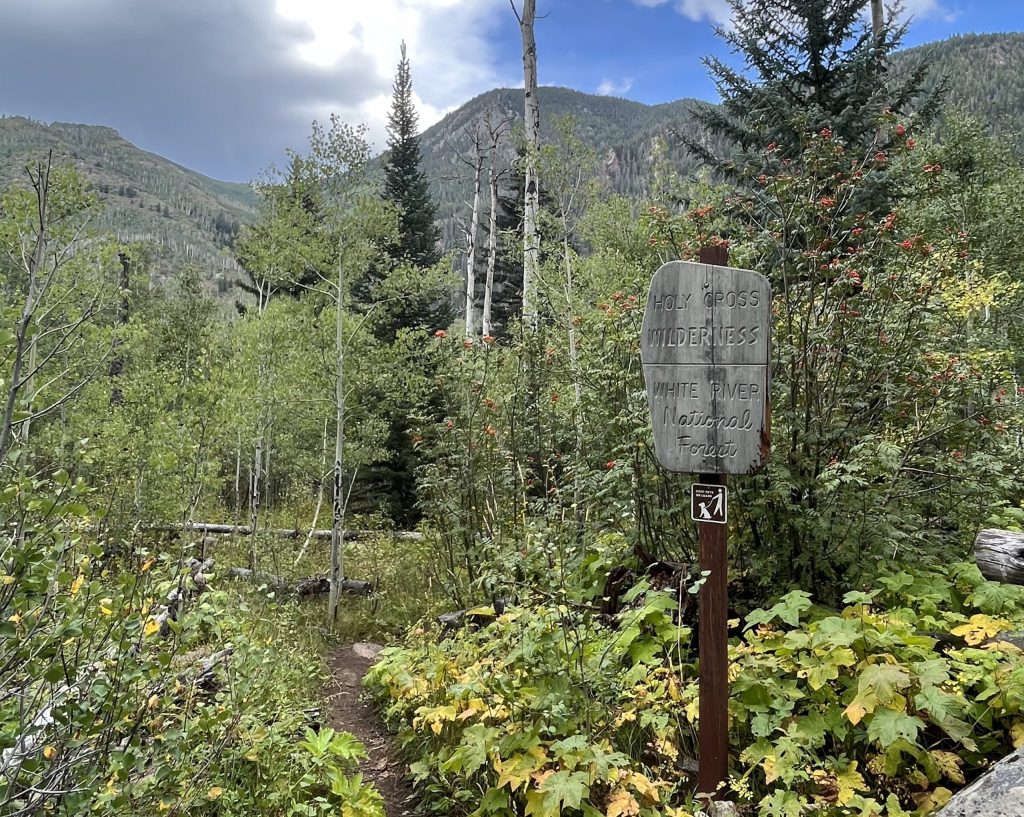
While Hurd has supported policies to open more public lands to natural resource extraction, he is also a sponsor of legislation that would bolster protections for hundreds of thousands of acres of western Colorado land.
The Gunnison Outdoor Resources Protection Act, or GORP Act, also sponsored by Democratic Sens. Michael Bennet and John Hickenlooper, would extend and enhance federal protections for some 730,000 acres of land across in and around Gunnison County, touching on areas in neighboring Saguache, Ouray, Hinsdale, Delta and Pitkin counties. That includes removing more than 74,000 acres of key lands in Delta County’s North Fork Valley from oil and gas development.
Hurd, in a previous interview, said he sponsored the GORP Act because it has support from local communities in his district, including businesses, recreation groups, local governments and the Ute Mountain Ute Tribe. Hurd said he campaigned on a promise to “make sure that we have federal lands management decisions that have the buy-in of the people that are affected by them.”
Hanks said the GORP Act would allow the federal government to “lock up land,” which he said is “not a conservative position.” Hanks said he would prioritize drilling and mining on more public lands to increase energy output.
“I’m an oil and gas fan,” Hanks said, adding that he worked in the fracking industry in North Dakota. “It’s a necessary form of energy and it works day or night, rain or snow, and that’s a big difference from solar and wind.”
Hanks defends Jan. 6 participation
Hanks was at the Jan. 6 protest in Washington that resulted in a riot at the U.S. Capitol building in 2020.
Hanks, who believes former President Joe Biden was “fraudulently installed” as the winner of the 2020 election, said he attended Trump’s speech at the Ellipse near the White House.
Over the course of more than an hour, Trump falsely claimed that he won the 2020 presidential election and refused to concede to Biden. Trump urged his supporters to march to the Capitol, where Congress was voting to certify Biden’s win, and told them, “If you don’t fight like hell you’re not going to have a country anymore.”
Hanks said he arrived on the Capitol grounds shortly after Trump’s speech concluded and saw “people scaling the scaffolding” who he called a “totally different group.” Hanks said he did not enter the Capitol building “because it looked like an opportunity for a stampede.”
“The people that I went there with were very peaceful, very concerned with their country,” Hanks said, adding, “There’s no reason to be ashamed of being at Jan. 6; in fact, I’m quite proud of it.”
Hurd, in a 2025 Colorado Public Radio article, called Jan. 6 “a dark day in American history, and it was an assault on our republic and the peaceful transfer of power.” Hurd said he was “deeply disappointed” in Trump’s pardons for many of the rioters, who Hurd said “assaulted law enforcement officers” and “fought to stop the constitutional certification of the 2020 election.”
Will Trump’s endorsement matter?
Trump’s endorsement has carried weight for Republican primaries this election cycle, with many of his preferred candidates winning across the country.
They include more conservative Republicans who’ve signaled loyalty to Trump, such as Texas Attorney General Ken Paxton, who defeated incumbent Sen. John Cornyn in the Republican primary for Texas Senate in a landslide last month.
Earlier this year, Trump pulled his endorsement from Hurd after the congressman voted to rescind some of Trump’s tariffs. In a statement posted on Truth Social, Trump said Hurd is “one of a small number of legislators who have let me and our country down.” Trump instead endorsed Hurd’s initial primary challenger, Hope Scheppelman, a Navy veteran and a former vice chair of the Colorado Republican Party.
But roughly a month later, Trump reversed himself and re-endorsed Hurd after convincing Scheppelman to drop out to take a position in Trump’s administration. Trump, in another Truth Social post, said Hurd should “in no way, shape, or form, be impeded from winning.”
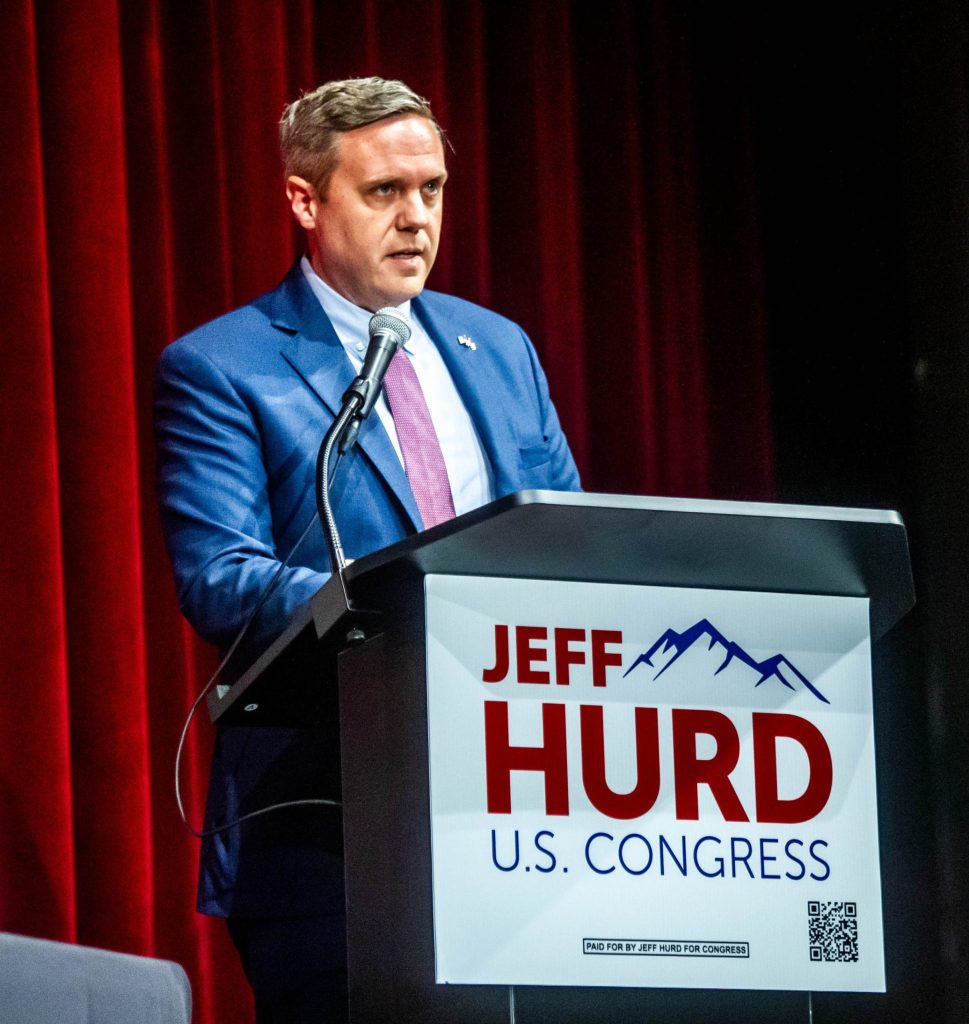
The turnaround highlighted the potential competitiveness of the race in the general election, with POLITICO reporting that House Speaker Mike Johnson, a Louisiana Republican, and other House GOP leaders had for weeks been pushing Trump to re-endorse Hurd. Republicans currently hold a slim 217-212 majority in the House, meaning losing just a handful of races in November could flip the chamber to Democratic control.
In a statement at the time, Hurd’s spokesperson Bayer said Hurd did not ask Trump to re-endorse him or to convince his primary challenger to drop out, nor did he ask Republican leadership to lobby for the president’s support on his behalf. He instead downplayed Trump’s endorsement for winning the election in November.
“Congressman Hurd is confident that the voters of (the 3rd Congressional District) will vote to re-elect him because he has consistently voted to put the district first,” Bayer said.
Hanks said he isn’t worried about Hurd having Trump’s endorsement and that voters are ready for a representative who will uphold conservative values.
“Jeff Hurd is unworthy of the position and he deserves an opponent,” Hanks said.
According to the most recent federal campaign filings, Hurd had raised over $1.5 million for his re-election as of the end of March, with just over $1 million in expenditures. Since Hanks entered in April after the most recent filing deadline, he has not yet reported any campaign contributions.
Ballots began being sent in the mail to registered voters on Monday, June 8. Voters will have until June 22 to return their ballot by mail to ensure it is counted, or until 7 p.m. on June 30 to drop their ballot off at a drop box or to vote in person.
Information on how to register to vote or update voter information can be found at GoVoteColorado.com.





Support Local Journalism
Support Local Journalism
As a Summit Daily News reader, you make our work possible.
Summit Daily is embarking on a multiyear project to digitize its archives going back to 1989 and make them available to the public in partnership with the Colorado Historic Newspapers Collection. The full project is expected to cost about $165,000. All donations made in 2023 will go directly toward this project.
Every contribution, no matter the size, will make a difference.