How one organization is working to help keep water in rivers during extreme drought
The Colorado River Trust is pursuing multiple avenues to ensure water remains flowing for fisheries, the recreation economy and water users
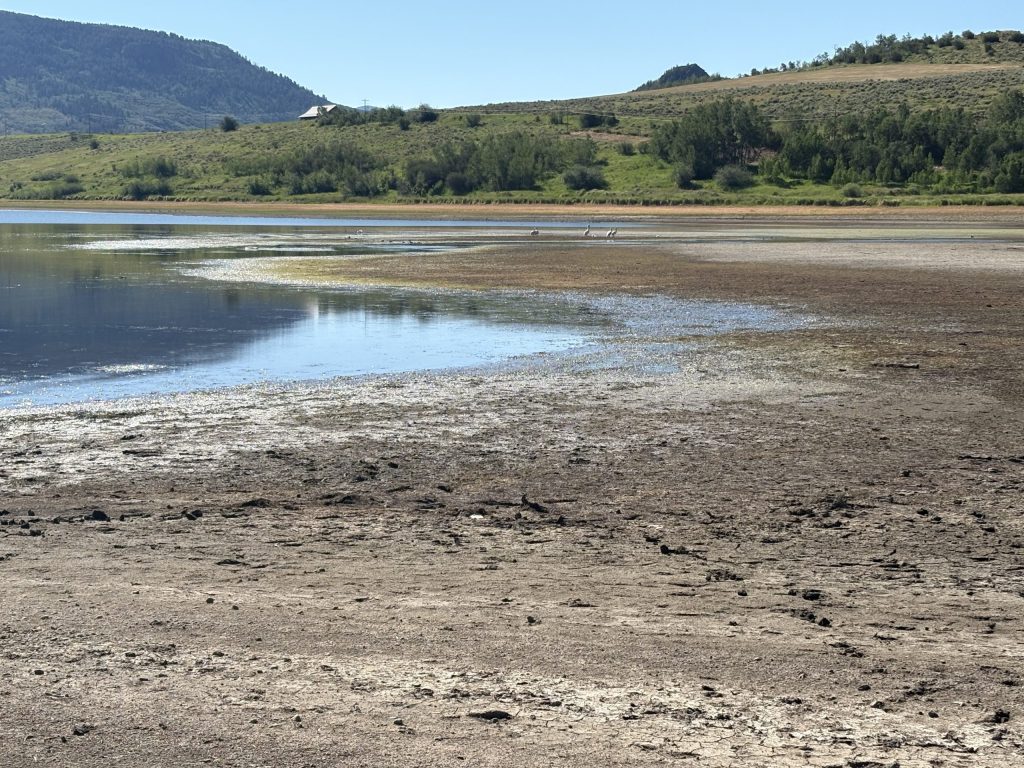
Trevor Ballantyne/Steamboat Pilot & Today
Colorado is known as the headwaters state, meaning that nearly all of its water supply originates inside the state’s borders as precipitation, primarily mountain snowpack. In a year like this, where the winter’s dismal snowpack led streamflows to reach unprecedented lows, some organizations are actively working to keep water in the rivers.
Water Education Colorado hosted an online discussion on Thursday, July 9, with experts from the Upper Yampa Valley Water Conservancy District and Colorado Water Trust to answer: “Why is there water in this river, but not that one?”
“From my opinion, sometimes it’s geography, sometimes it’s water right seniority and availability, and other times it’s a little bit of luck,” said Danielle Snyder, a water resources specialist for Colorado Water Trust based in Durango. “More often than not, though, it’s the people in the communities we work with that make it happen. A reservoir operator is going to make a release. A project partner is willing to lease us water. And (Colorado Parks and Wildlife) is willing to go into the river to evaluate conditions.”
Colorado Water Trust is a nonprofit organization that started in 2001 and has negotiated agreements that have returned over 32 billion gallons of water to streams, according to Kate Ryan, a Boulder-based water lawyer and Colorado Water Trust’s executive director. The success relies on tools and systems like instream flow agreements, reservoirs, leases and water rights acquisitions to keep rivers flowing.
Ryan said that in some of the state’s larger rivers — including the Yampa and Colorado rivers — “nearly half of our water is added back into those streams” through the efforts of the organization and its partners.
Colorado water rights complicate flows

The challenge of keeping water in rivers tracks back to Colorado’s prior appropriation doctrine in the state constitution, which established a “first in time, first in right” approach when it comes to water.
“Every single drop of water, if you go out in a stream today, is headed to somebody downstream,” Ryan said.
The most senior water rights belong to those users who were first to get their water rights recognized, but this does not mean that senior water rights always get all they are entitled to.
“In a year like this, we have water rights as senior as the 1900s that are not getting water this year because the drought is so severe,” Ryan said.
Colorado didn’t recognize certain uses as rights initially, meaning that some rights — including municipal, industrial and environmental water rights — didn’t come until later. It wasn’t until the 1970s that the state authorized the Colorado Water Conservation Board to appropriate water rights for instream flow, requiring water to stay in rivers to benefit the environment.
“When stream flow starts to drop low, the junior water users are cut off first,” Ryan said. “If you think about it, those 1970s water rights are very, very junior. In a year like this, it’s very unlikely that they are going to be satisfied.”
Instream flow water rights
For the Colorado Water Trust, the state’s instream flow program represents a vital way to keep rivers flowing. Since 1973, the Colorado Water Conservation Board has established instream water rights on nearly 1,700 stream segments covering more than 9,700 miles of stream, and natural lake level water rights on 480 natural lakes.
“If we don’t have those kinds of water rights in a year like this, there may be rivers that are going completely dry,” Ryan said.
One strategy for the organization is to acquire or change senior water rights so they can be used for instream flow, Ryan said. When changed from the original right — whether it was used for agriculture, mining, municipal or some other water use — it retains its seniority, but requires that the flow remain in the river and cannot be diverted for consumptive uses. The organization put out a call in April to ask agriculture partners to consider temporarily sharing water from their rights to keep rivers flowing.
Reservoir storage and leasing water

Reservoirs serve as another mechanism to keep rivers flowing. The Colorado Water Trust holds an instream flow agreement with the Colorado Water Conservation Board to lease water from Stagecoach Reservoir and deliver that water to a 5.4-mile reach of the Yampa River.
Holly Kirkpatrick, the public affairs manager for the Upper Yampa Water Conservancy District, which owns and operates Stagecoach, said that the Yampa River basin follows a “very natural hydrograph,” with limited storage coming from its reservoirs located high in the basin.
“We see big spikes during peak runoff from April to June, typically,” she said. “And then, every year, even in a wet year, our base flows are going to drop in the late summer months. This year, we are seeing much lower flows, historical inflows, and that’s having some impacts.”
Even beyond the reach of the Yampa where the water trust holds the instream flow agreement, “oftentimes, the releases from Stagecoach will account for more than half of the river flow,” Kirkpatrick said.
Kirkpatrick said that the Colorado Water Trust has held the most stored water in Stagecoach Reservoir since 2022, with smaller contracts for agricultural, industrial and municipal use.
“In an extreme drought year like this, every acre-foot counts, and we’re making our best attempt to hold storage pools at the moment as long as possible,” Snyder said. “We turn down releases when we see rain might be coming, and we adjust for other events as well.”
For example, this week, Snyder said they increased the Stagecoach release slightly due to the extremely hot temperatures expected to hit Colorado this weekend.
Another example is in the Colorado River basin, where the Colorado Water Trust leases water from the town of Palisade and QB Energy, an oil and natural gas company, from their rights in Ruedi Reservoir. The reservoir, located in the Upper Frying Pan Valley upstream of Basalt, was constructed by the U.S. Bureau of Reclamation to “compensate Colorado River basin water users for those transmountain diversions,” Snyder said.
The water it leases flows downstream through 150 miles of river and supports a large number of fisheries, including those for trout in the Frying Pan and Roaring Fork rivers, and native species like bluehead suckers, roundtail chubs, racerback suckers and Colorado pikeminnows in the Colorado River
“Especially in drought years like this, flows on all three of these rivers drop to levels that stress fish out. Our leased water helps provide things like thermal refuge, aquatic food base and fish passage through the corridor to help keep these fish populations alive and hopefully thriving — but this year, it’s mostly just alive,” Snyder said.
The organization has yet to utilize its releases there this year, Snyder said, adding that these require approval.
“When Ruedi releases water in the Frying Pan (River), it doesn’t just flow as a free-for-all downriver in unlimited quantities. There’s constraints on how much water the river can handle, and we’re not the only ones making requests to release water out of the river,” she said.
Still, adding some water to the streams and rivers struggling this year can have a big impact, transforming them “from a dry riverbed to a healthy, flowing ecosystem,” Ryan said.







Support Local Journalism
Support Local Journalism
As a Summit Daily News reader, you make our work possible.
Summit Daily is embarking on a multiyear project to digitize its archives going back to 1989 and make them available to the public in partnership with the Colorado Historic Newspapers Collection. The full project is expected to cost about $165,000. All donations made in 2023 will go directly toward this project.
Every contribution, no matter the size, will make a difference.