Commissioners seek indefinite renewal of Strong Future property tax measure while touting successes of past funding
The mill levy has funded wildfire mitigation, behavioral health, early childhood care and more in Summit County

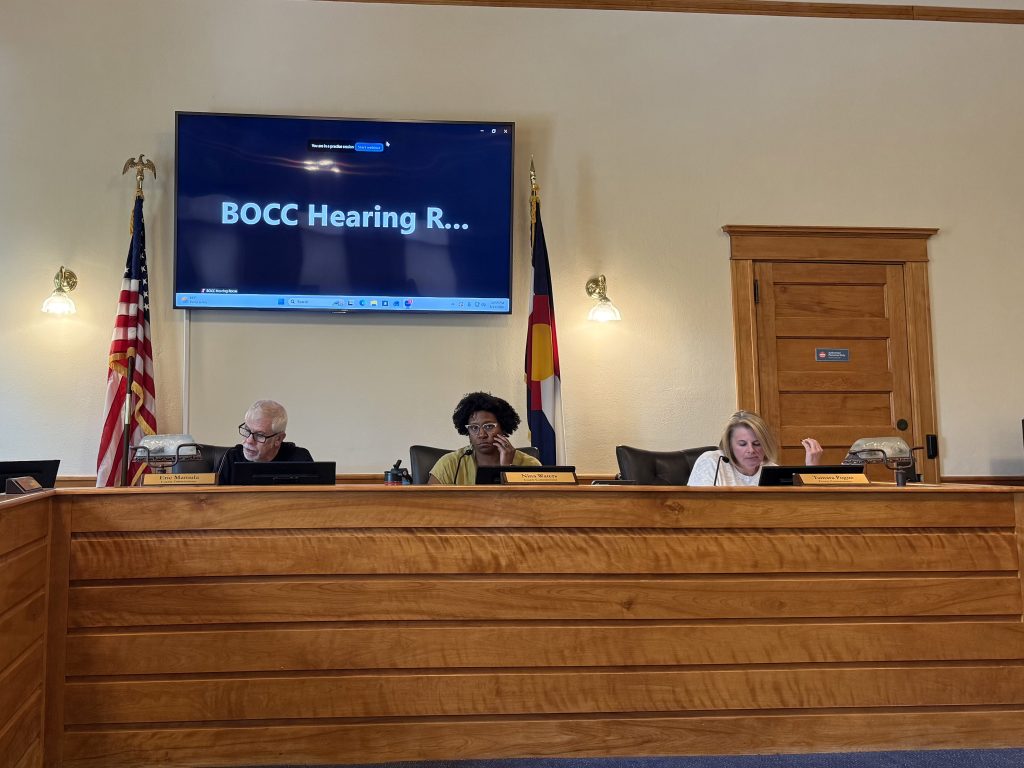
Kyle McCabe/Summit Daily News
Editor’s note: This story was updated to include a response to a question about why the county chose an indefinite timeframe and to correct a misspelling of Commissioner Tamara Pogue’s name.
A 2018 ballot initiative created a property tax mill levy to address a selection of issues officials viewed as “essential needs,” establishing the county’s Strong Future fund. The mill levy expires in 2028, but the Summit Board of County Commissioners approved language for a 2026 ballot measure to extend it.
The board gave its approval for what will be Ballot Measure 1A on the November 2026 ballot at a regular meeting Tuesday, Aug. 11. It proposes extending the mill levy indefinitely to continue funding wildfire mitigation, behavioral health programs, early childhood care, recycling and waste diversion, and public building improvements.
“(I) would respectfully ask for everybody’s support in reauthorizing this, so that we can continue to make sure we take care of our own in Summit County,” commissioner Tamara Pogue said.
Voters passing the ballot measure would continue an already existing tax and not cause any increase to property taxes. The 4.652 mill levy equates to $465 of tax for every $100,000 of assessed residential property value, according to county communications director Adrienne Saia Isaac. A residential property with a $1 million actual value would have an assessed value of $63,240, meaning its owner would pay $249 per year toward Strong Future. Isaac wrote in an email that other types of properties, like commercial or agricultural, have different calculations for assessed value and therefore costs associated with the measure. The tax collected about $84 million from 2019 to 2025, and the county has spent about $73 million, according to Isaac.
The indefinite “timeframe allows for the long-range planning necessary to address ongoing issues the measure was approved to address in the first round,” according to a written statement from Isaac.
Pogue spoke about the “impact this money has already had” on the community, calling out statistics included in the resolution, including that over 1,400 families have received financial support for early childhood care.
“We know that childcare has a return on investment of $17 for every $1 we invest,” Pogue said. “I think the thousands of children who have benefited from these, from the taxpayer support of Strong Future, will set them up well for their entire life.”
The early childhood care programs funded through Strong Future have added 100 new childcare slots, dispersed $15 million in tuition credits and invested $4.4 million into teacher retention since the 2018 approval, according to Isaac.
Pogue, who was a leader of the 2018 Yes on 1A campaign as then-executive director of the Family and Intercultural Resource Center, also mentioned some of the behavioral health improvements helped by Strong Future funds. She said the Summit County Sheriff’s Office’s Systemwide Mental Assessment Response Team, or SMART, has helped thousands of people experiencing mental health crises.
“As we are experiencing the undoing of the social safety net due to some of the choices our federal government is making, this money is now more important than it’s ever been,” Pogue said.
Strong Future funds have helped fund over 4,400 mental health scholarships and over 20 programs put on by local organizations, including the SMART program and the new walk-in crisis and substance use recovery center, according to Isaac.
Wildfire prevention spending has contributed to 72 projects, supports the county’s free curbside chipping program and provides wildfire mitigation grants for homes, homeowner associations and local businesses, Isaac wrote. Commissioner Nina Waters said Summit County’s wildfire prevention efforts are seen as models for other counties in Colorado, and Pogue said the efforts seem “more important than ever” this summer due to persistent drought and extreme wildfire danger.
The Strong Future fund has also helped recycling and waste reduction efforts, including the funding of two recycling dropoff centers, a free composting program and grants for projects that aim to improve diversion rates.
Funding directed to public facilities has helped renovate and expand three Summit County Library branches, construct an emergency services building and the Summit County Search and Rescue facility, add noise mitigation at the shooting range, construct the Wildflower Nature School and complete maintenance at the community and senior center.
At the Aug. 11 meeting, Waters asked staff about language in the resolution that states the ballot measure passing will ensure mental health and substance use prevention and treatment programs will be available in the county “regardless of any cuts to state or federal funding.” Waters questioned why the resolution included that language about funding cuts for mental health but not other programs.
County attorney Jeff Huntley said the resolution was prepared in that way because funding for those types of programs seems to be the most at risk.
“I’m assuming the same would be true of any other subject areas that are maybe further scrutinized by the federal government,” Huntley said. “Hopefully that era will come to an end, but we’ll see.”
Waters said she worried not including the language for the other parts of Strong Future could jeopardize those areas if federal or state funding dries up. She gave an example of wildfire response, saying a federal disaster declaration normally provides access to federal recovery funds.







Support Local Journalism
Support Local Journalism
As a Summit Daily News reader, you make our work possible.
Summit Daily is embarking on a multiyear project to digitize its archives going back to 1989 and make them available to the public in partnership with the Colorado Historic Newspapers Collection. The full project is expected to cost about $165,000. All donations made in 2023 will go directly toward this project.
Every contribution, no matter the size, will make a difference.