With roughly 20 open business spaces, Dillon Town Council shows support for new business incentive programs

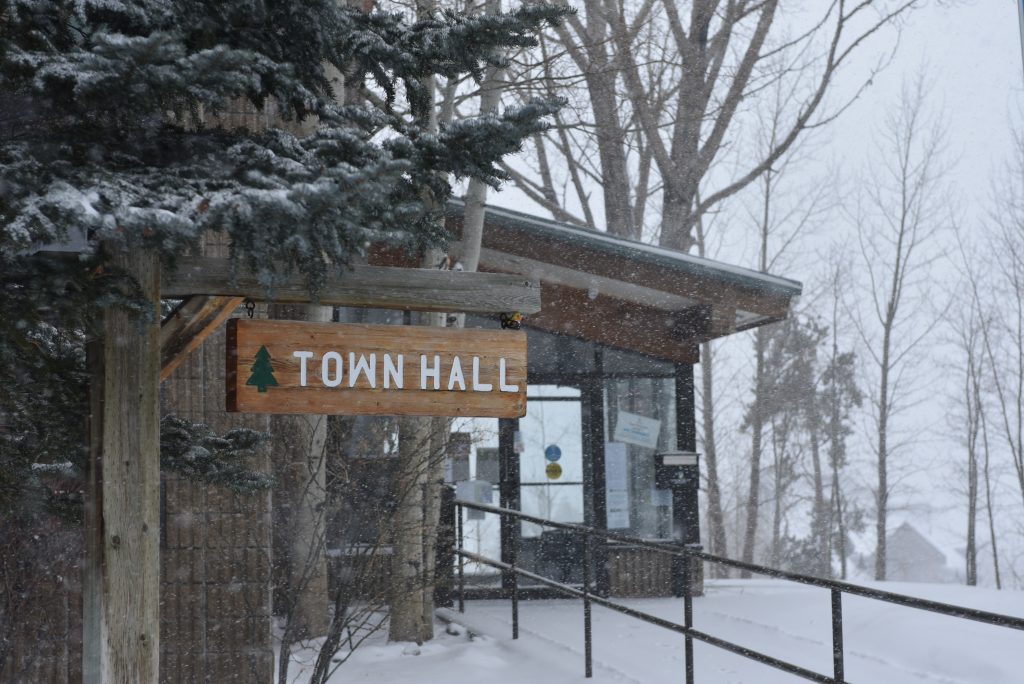
Kyle McCabe/Summit Daily News
The Dillon Town Council discussed potential new business incentive programs at its April 14 work session. The programs would look to provide financial assistance to businesses in the town core.
Proposed programs would offer a maximum of $15,000 per project and include facade or storefront improvement, vacancy activation, tenant improvement and relocation assistance. Town manager Nathan Johnson said the selection of programs is based on what other urban renewal authorities offer as business incentives.
“Right now, we have approximately 20 open business spaces that we could try to do something here yet this year,” Johnson said.
Johnson said staff originally intended for the programs to use funds from the Dillon Urban Renewal Authority, but after legal review, some of the programs would not be eligible. A staff memo stated the total annual cost would be $50,000-$100,000, depending on program performance.
Facade improvement grants would help fund exterior improvements like signage, windows, lighting, paint and outdoor seating, according to the memo. Vacancy activations would help fill vacant commercial spaces with pop-up retail, seasonal businesses, art installations or food kiosks that operate for three to 12 months. Tenant improvement grants would help with minor interior buildouts, code compliance, and improvements to flooring, fixtures or layout for businesses with two- to three-year leases. The relocation assistance grants would help offset expenses for businesses moving to or within the town core, or the area within and around La Bonte Street, Buffalo Street and Lake Dillon Drive.
Mayor pro-tem Joshua Samuel said business incentives seem like a missing part of the town’s urban renewal authority. He said the authority currently does not have anything to encourage businesses to improve or anything to help them relocate if new development displaces them.
“It’s important that businesses and residents that might be in these facilities (being redeveloped) get assistance in order to facilitate a fairer process,” Samuel said.
Council member Barbara Richard voiced support for the idea, adding that she has heard of towns having restaurant-specific assistance. Richard said programs like leasing assistance, where the town would pay an annually decreasing percentage of a restaurant’s rent, could help it bring restaurants to specific areas.
Stay connected to Summit County.
Sign up for daily or weekly newsletters at SummitDaily.com/newsletter
“The community keeps saying ‘restaurants, restaurants, restaurants,'” Richard said. “Now remember, we do have a lot of restaurants. We do have over 30, but people want ones that they can walk to (in the town core).”
One such restaurant leasing assistance program on the Front Range had a “decent success rate,” Richard said, with 60% of restaurants involved still operating six years after opening.
Council members Rachel Tuyn and Kyle Hendricks indicated support for the proposed programs before Richard suggested the program may need more financing than proposed. Samuel responded that the proposal is “a good starting point,” and the town could expand the program in the future if needed.
Samuel said the relocation assistance funding may need to be adjusted in the future to be based on percentages of costs incurred by businesses. He also said the facade and storefront improvement program is “very similar” to a downtown redevelopment agreement Longmont uses to support local businesses. He asked Johnson if staff could reach out to Longmont to learn more about its program, and Johnson said yes.
When Samuel asked the council if they would like staff to continue developing the business assistance proposal, the members responded affirmatively.
Richard then brought up a related topic listed on the meeting budget about Dillon leasing town-owned buildings to businesses. She said the idea would be to find short-term tenants for buildings, like the one that formerly housed Pug Ryan’s Brewing Co., that the town has purchased with the intent to redevelop.
When Richard asked how the town could fill the spaces, Johnson said the “sky’s the limit” and it would depend on what exactly the Town Council wanted to do. Hendricks questioned what sort of business would want a temporary space, and Tuyn said the town would need a better idea of when the buildings will be demolished before it offers anyone a lease.
Richard said that conversations with Colorado Mountain College leadership have indicated redevelopment will not start for 12-18 months. The town has an intergovernmental agreement with the college to develop a new campus, likely on the old Pug Ryan’s property and nearby lots. Richard also said that local artists have expressed interest in renting temporary space for co-ops.
“They’re used to running booths, and they’re used to running (ones) at the farmers market,” Richard said. “It isn’t that hard to set up (temporary) spaces. I do think if we wanted to pursue it, we’d have to put some energy behind it. It might be possible.”
Town attorney Douglas Stallworthy said it may be difficult to rent the spaces because the town would need to perform further inspections, and possibly maintenance, on the buildings first. Stallworthy said an idea Richard proposed of having a temporary restaurant in the Pug Ryan’s building would be especially difficult, as it can take significant time and money to prepare a commercial operation for leasing.
Council member Linda Oliver suggested the town make use of the grass lawn in front of the Pug Ryan’s building by setting up tables and chairs and allowing food trucks to operate in the area. Stallworthy said the feasibility of that idea would be a question for the planning and zoning commission.










Support Local Journalism
Support Local Journalism
As a Summit Daily News reader, you make our work possible.
Summit Daily is embarking on a multiyear project to digitize its archives going back to 1989 and make them available to the public in partnership with the Colorado Historic Newspapers Collection. The full project is expected to cost about $165,000. All donations made in 2023 will go directly toward this project.
Every contribution, no matter the size, will make a difference.