First-of-its-kind wildfire evacuation drill in Summit County shows how to be ready for fires as a high-risk season looms
Recalling panic during 2018 Buffalo Mountain Fire, participants practice preparedness ahead of ‘unprecedented’ dry summer

Allison Moore/Summit Daily News
Bill and Dawn Darling remember the helicopters first.
“It was scary because they had helicopters right over the house,” Bill Darling said.
“Right over our heads, practically,” Dawn Darling cut in.
In 2018 — just a year after purchasing their second home in the Mesa Cortina neighborhood in the Wildernest area — the couple received a text that they had roughly 45 minutes to gather their most precious belongings and evacuate.
The Darlings and their new neighbors watched as aircraft dipped into the Dillon Reservoir, scooped up hundreds of gallons of water and flew directly over their roofs as hot pink fire retardant rained throughout the hillside, attempting to counteract the billowing blaze.
Nearly any long-term resident of Mesa Cortina remembers the day of the Buffalo Mountain fire — a 91-acre conflagration that threatened nearly 1,500 structures and triggered the evacuation of over 1,600 people.
On Sunday morning, the Darlings found themselves back at their Mesa Cortina home — this time for a drill designed to recreate the pressure of a wildfire evacuation in real time.
“I think this will make a big difference,” Bill Darling said. “We really didn’t know what to do last time, and we want to be prepared this season.”
Dawn Darling was nearing the end of her driveway on Sunday, April 26, when Steve Lipsher pulled up in a marked Summit Fire & EMS vehicle. Lipsher, the department’s public information officer, spent around 45 minutes patrolling the neighborhood as participating residents scrambled to exit their homes.
Moments earlier, the Darlings had dragged five 20-gallon propane tanks from inside their garage to 50 feet down the driveway.
“Was that a smart thing to do, or no?” Dawn Darling asked Lipsher from behind the wheel of her red SUV.
For the Darlings, the first-of-its-kind neighborhood evacuation drill didn’t feel abstract. And this year, the couple fears, worst of all, losing their home. Both said they have intense worries about wildfire risk in the High Country this summer.
“This is the worst I’ve ever seen it, and we’ve been coming here since 1991,” Dawn Darling said, pointing to low water levels in the Dillon Reservoir, record-low snowpack and historic drought conditions affecting much of the West.
Lipsher said even outside of work, everyone seems to be talking about wildfire.
“This is the talk of town right now, this wildfire threat,” Lipsher said. “We had such a low snow year and a warm and dry spring.”
Lipsher, who largely facilitated the drill and held a subsequent debrief meeting, said it was Mesa Cortina residents who really pushed for the evacuation exercise.
“Really there isn’t anywhere in the county where we’ve done an evacuation like this, and I think that it’s going to be a learning experience for everybody,” Lipsher said. “Until you get that message (alert) and see a big plume of smoke behind your house, you don’t realize what you need to be worried about.”
Counting the minutes
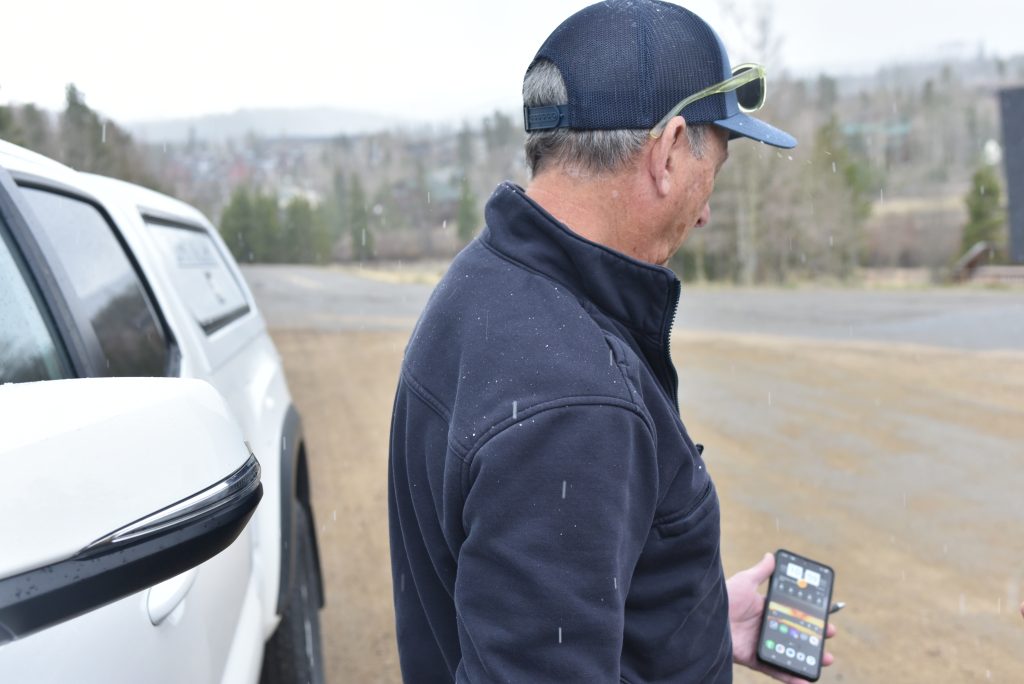
At 11 a.m. on Sunday, participating Mesa Cortina and Cortina Ridge residents received a county emergency alert instructing them to evacuate the neighborhood and head to the fire station on the north side of Silverthorne.
The moment simulated how residents would actually be notified of a nearby wildfire. A few of the volunteer participants Sunday didn’t receive the notification announcing the start of the evacuation drill. Lipsher noted that anyone who hasn’t re-registered for Summit County Alert messages since the system changed last June needs to do so in order to continue to receive them.
“We think that’s an issue that a lot of people didn’t get that instruction,” Lipsher said.
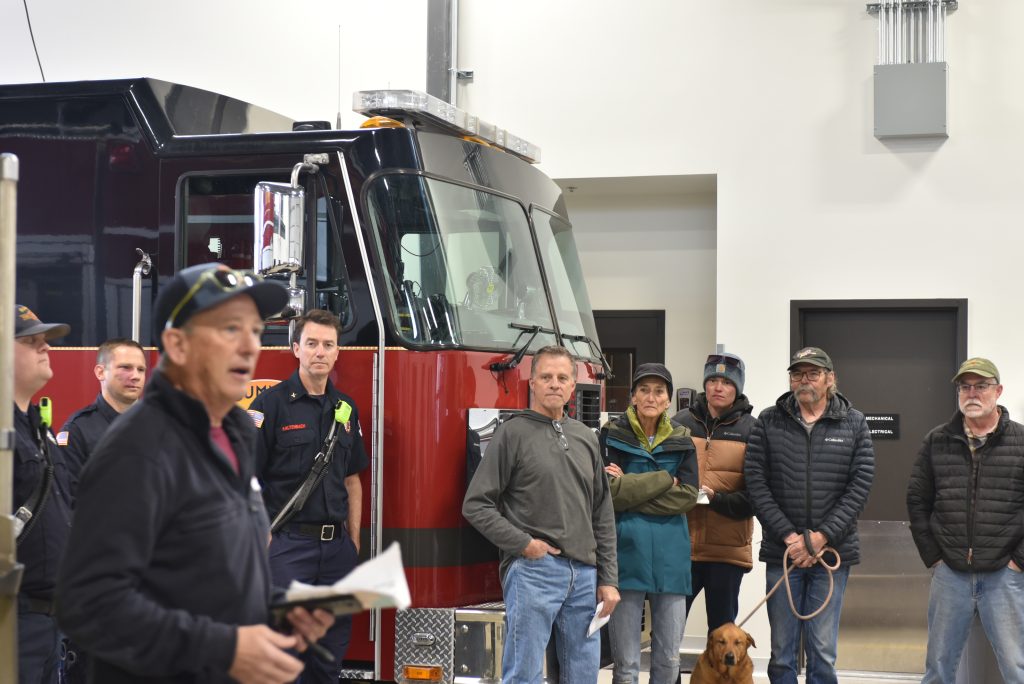
At the fire station, Lipsher hosted a debrief with around 40 volunteer participants from the Mesa Cortina area, reminding the crowd about what necessities to pack in a car depending on evacuation time. Lipsher also compiled checklists for “go-bags,” including necessities like medications, important documents and other irreplaceable or sentimental items.
“We train all the time, but most residents don’t,” Lipsher said. “Nobody knows what they’re going to think until they get that message on their phone saying, holy cow, they’re going to evacuate the whole neighborhood.”
Lipsher said he was in part inspired to run the drill after seeing a front-page photo in the Summit Daily News following the 2018 Buffalo Mountain Fire. It depicted a couple lugging a 60-inch television set from their smoking home to their car. Lipsher said he spoke to that couple the day after the picture ran, and they told him they regretted rescuing their TV over their family photo albums.
“If that’s your most valuable possession, fair enough,” Lipsher said, “but for most people, it’s about finding whatever is irreplaceable, whatever is not going to be recovered by insurance.”
On Sunday, Barry Skolnick packed his “go-boxes” and exited his Cortina Ridge home in under 13 minutes. He timed himself, he said.
“It took me 13 minutes because I was ready,” Skolnick said. “I didn’t have to do all this other scrambling and running around my house to get my stuff.”
Skolnick said ever since the fire in 2018, he’s been prepared for the next catastrophe.
“That fire scared me so much that I got my act together,” Skolnick said. “I got together everything that was important in my house and put it in its specific spot.”
Skolnick indeed had three cardboard “go-boxes” neatly lined up in his trunk: one labeled “letters,” another labeled “photos” and a third labeled with “meds” and “documents.”
Since setting up this personal system, Skolnick said, “I realized that there’s very little stuff that I own that’s irreplaceable. … Everything else, that’s why I pay so much in insurance.”

Mitigating fire risk at home
Both Skolnick and the Darlings said they’re not just worried about a wildfire sparking in Summit County this summer, they’re expecting it.
“We know there are going to be fires,” Skolnick said. “There might be another fire in my neighborhood.
Lipsher said wildfire risk this year is “unprecedented.”
Experts have said northwestern Colorado is facing the most severe and widespread drought of any other region in the country. Record-low snowpack and hotter winter conditions have essentially sucked moisture from the ground. Lipsher said it will take at least a year to replenish.
“It’s going to take another full year of moisture to replenish all the dryness that’s been in the ground already this year,” Lipsher said. “Fire officials, water officials, they’re saying it’s even worse than you might imagine.”
Lipsher said Summit Fire & EMS is paying special attention to the Mesa Cortina neighborhood, largely due to the recent memory of the 2018 fire that scorched 91 acres of Buffalo Mountain north of Twenty Grand Drive.
“It is a place we are concerned with,” Lipsher said, also noting Mesa Cortina residents can really only use the steep, winding and single-lane Royal Buffalo Drive to exit the neighborhood in the case of an emergency.
After the 2018 fire, additional controlled burns removed tree limbs and other fuels from the area, but new vegetation has already begun to regenerate.
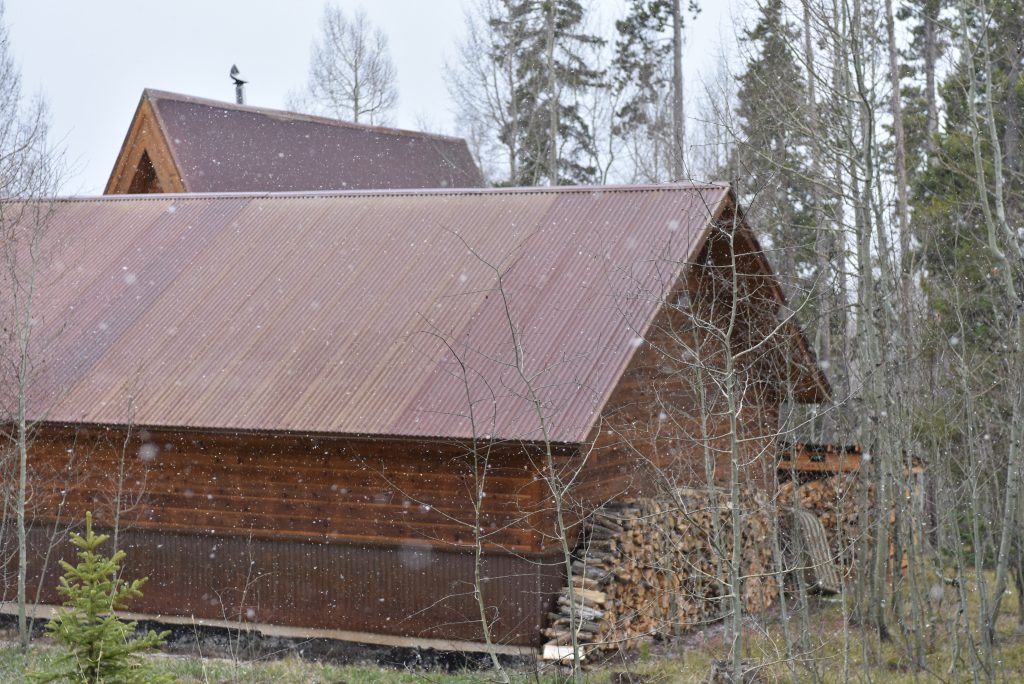
Lipsher spent part of Sunday’s drill listing smaller risks homeowners can overlook. Standing outside a home with a metal roof intentionally designed to better withstand wildfire, Lipsher gestured toward a large woodpile stacked inches from the structure.
“That’s going to catch their house on fire,” Lipsher said. “Even though they tried with the metal roof, it’s totally undermined by the woodpile. That will destroy their home even if there’s no wall of fire there.”
That threat often stems from embers rather than towering flames, Lipsher said.
“Pretty much every neighborhood in Summit County is in what we call the wildland-urban interface,” Lipsher said. “So, they’re all susceptible to embers.”
Those embers — smoldering fragments of carbon-based fuels — can ignite piles of juniper, firewood, pine needles tucked beneath decks or leaves collected in gutters, Lipsher said. Often, the fire catches and sparks small spot fires that can quickly spread to homes.
“Not only are we worried about a potential wall of fire coming through — which is possible up here — but as much as anything else, the embers.”
Anyone can rehearse
Crowded inside the county’s newest fire station following the evacuation drill, many residents asked fire officials how they could better prepare their homes prior to a real evacuation: Should we shut interior doors before leaving? Should we mark our doors to let firefighters know we’ve successfully evacuated? How can neighbors help elderly residents or second-home owners who may be out of town?
One concern raised prior to the event forced organizers to rethink their own emergency planning. A Mesa Cortina resident asked Lipsher what would happen to people without vehicles. Lipsher said he hadn’t fully considered that scenario until he received the question.
Hence, Lipsher reached out to Summit Stage to arrange a bus stop at the intersection of Royal Buffalo Drive and Twenty Grand Drive to collect anyone with transportation needs.
“These are the real, practical things that you don’t always think about until you’re in it,” Lipsher said.
The widespread concern over summer wildfire risk has fueled unusually high turnout at preparedness events hosted by first responding agencies across Summit County.
The Mesa Cortina neighborhood recently earned its FireWise designation, a national recognition that reflects collaborative mitigation efforts typically led by homeowners associations.
“That means they have a community intent and a collaboration that’s going on that we’re really trying to encourage others to replicate,” Lipsher said.
Lipsher said residents in other neighborhoods have reached out asking for help facilitating a similar evacuation drill. While Lipsher said he doesn’t have any more events planned at this time, he encouraged all residents to practice on their own.
“You don’t necessarily need us to do this and time yourself,” Lipsher said.
He encourages residents to consider: “What would you grab if you had 30 minutes to leave your house?”
-
Bill Darling stands up to ask a question at Summit Fire & EMS’s newest station on the north side of Silverthorne, where officials held a debrief for Mesa Cortina residents who participated in the mock fire evacuation.
Allison Moore/Summit Daily News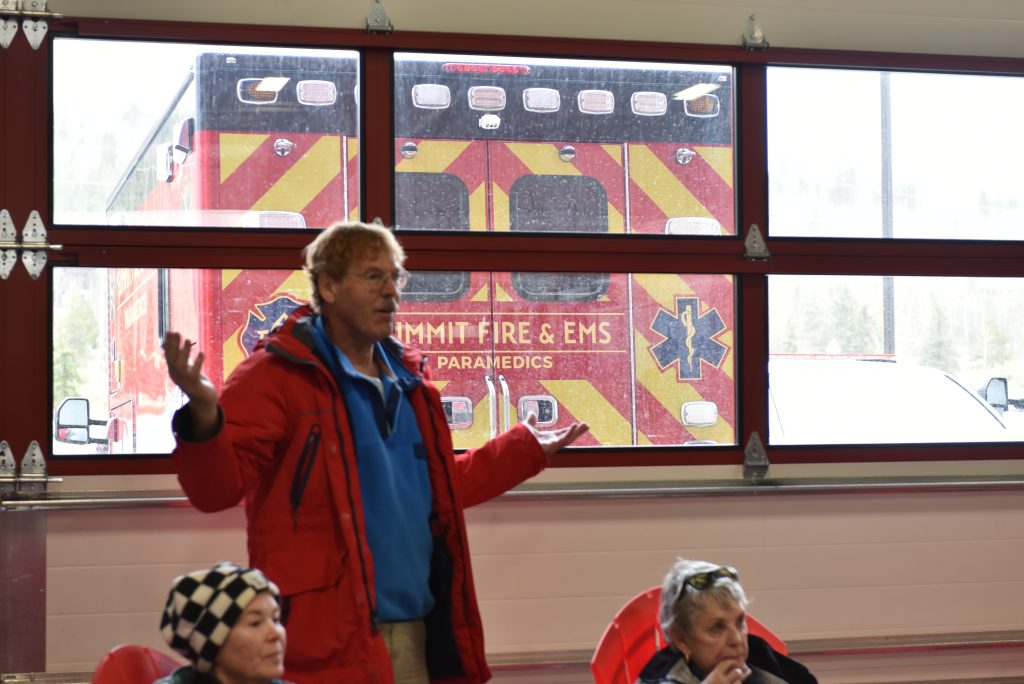
-
Barry Skolnick, a 16-year resident of the Cortina Ridge neighborhood and president of its homeowners association, showed his neatly arranged and labeled “go boxes,” which he’s kept at the ready ever since the Buffalo Mountain fire of June 2018.
Allison Moore/Summit Daily News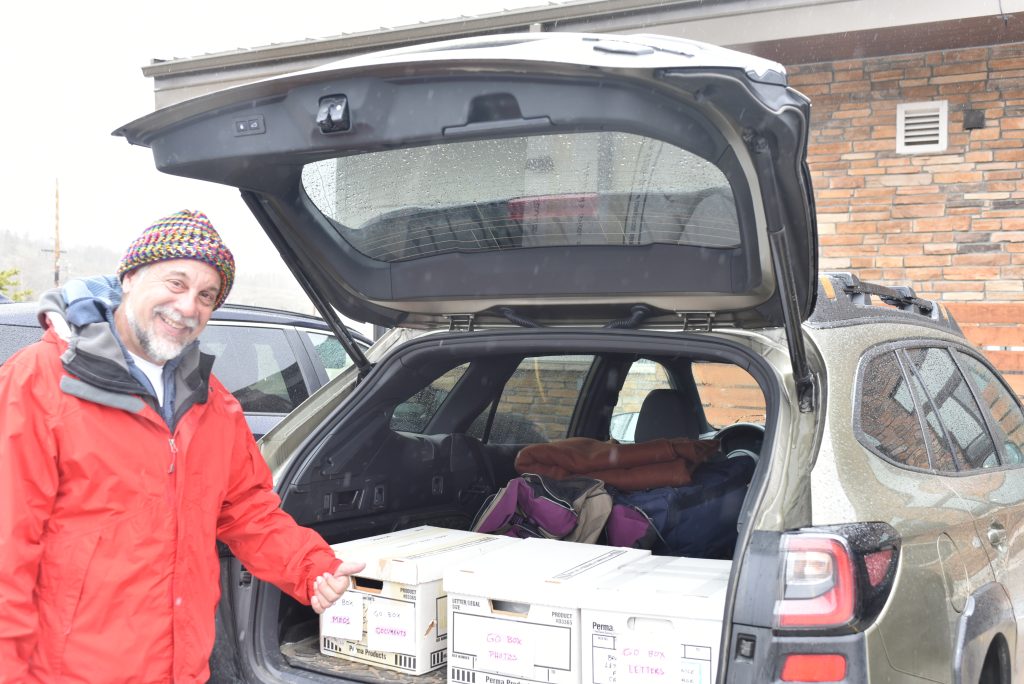
-
Dawn Darling, who purchased a second home in the Mesa Cortina neighborhood with her husband in 2017, smiles inside her car as she exits her driveway during the wildfire evacuation drill on Sunday, April 26.
Allison Moore/Summit Daily News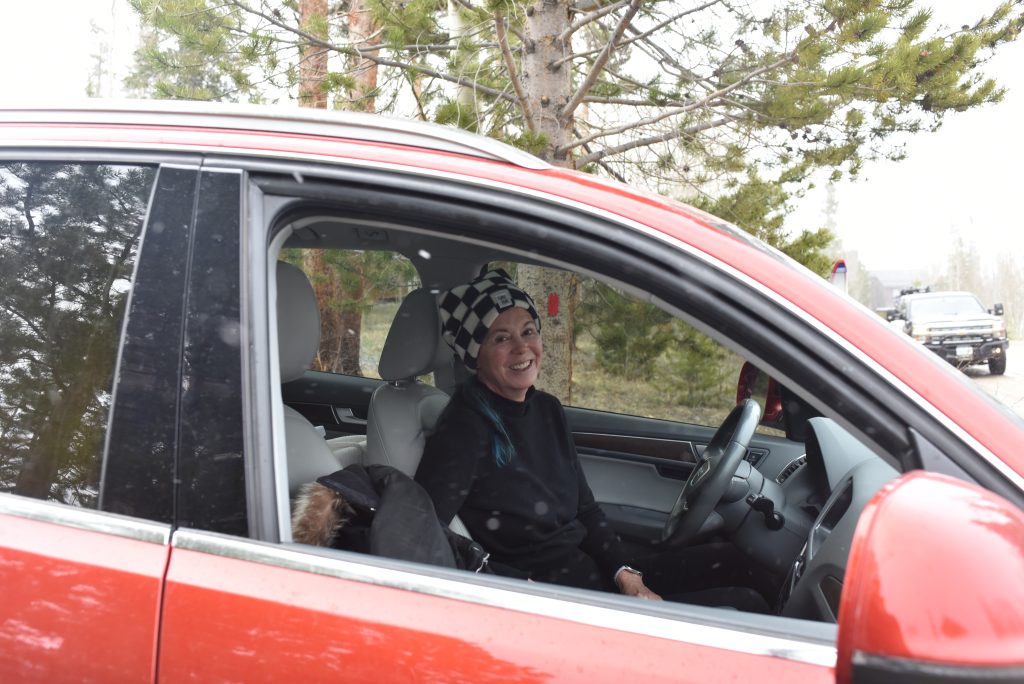
-
-
The Darlings dragged propane tanks from their garage to around 50 feet down their driveway as practice for ensuring the safety of their home in the case of a wildfire.
Allison Moore/Summit Daily News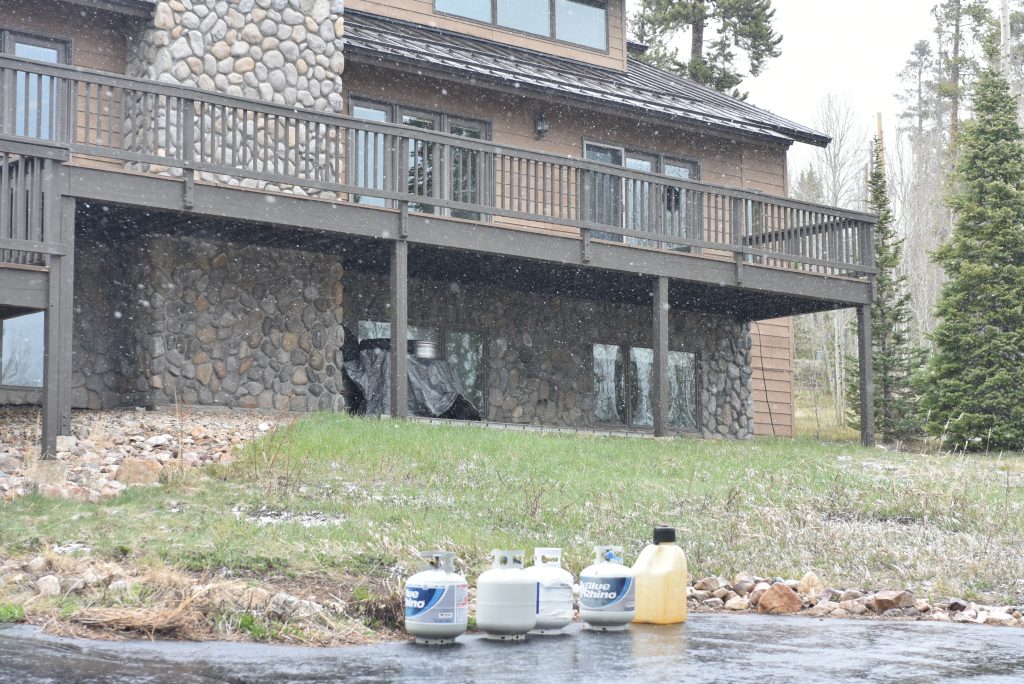
-
Skolnick holds up one of the old family photographs he has stowed away. This picture of Skolnick holding his daughter and his niece when they were babies is among his small collection of irreplaceable items he aims to save in the case of a fire.
Allison Moore/Summit Daily News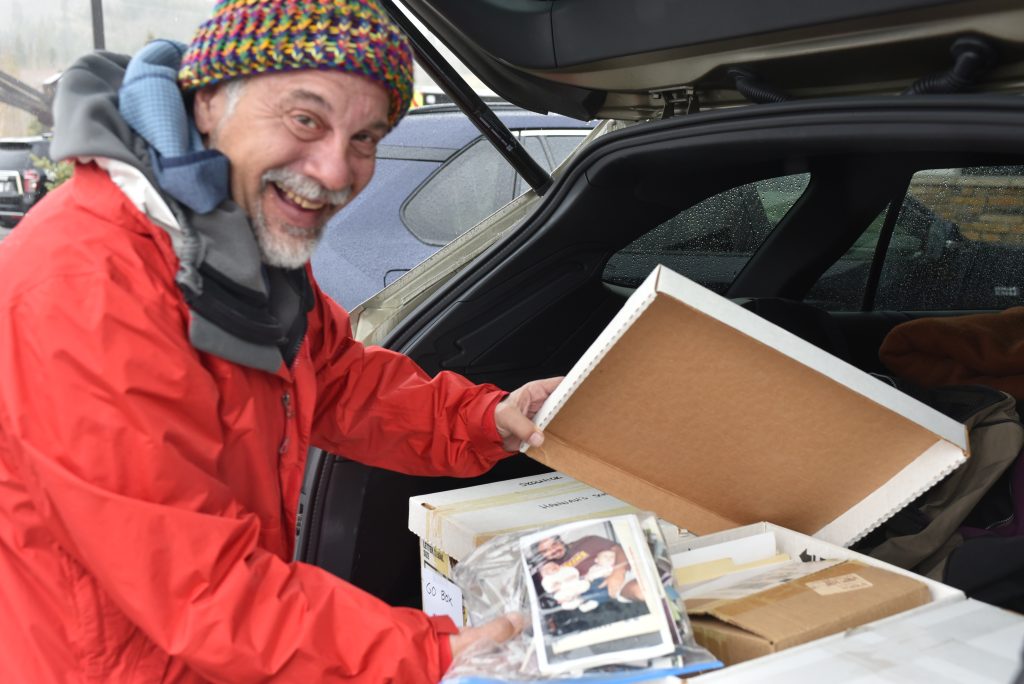
-
Noting the metal roof and siding, Steve Lipsher pointed to this house in the Mesa Cortina neighborhood as one specifically built to withstand wildfires.
Allison Moore/Summit Daily News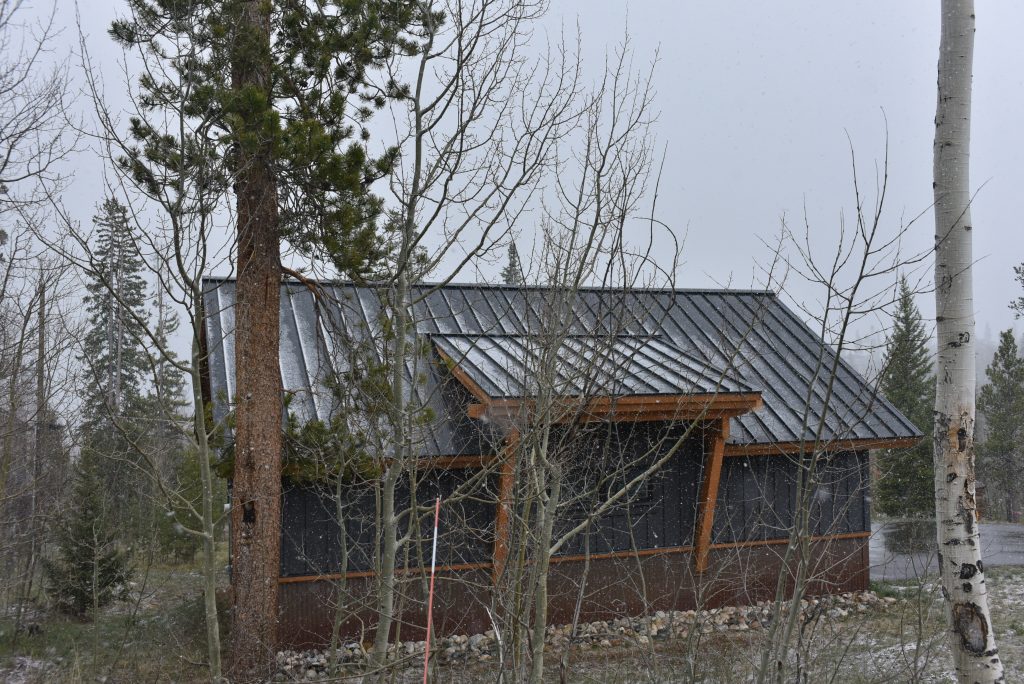






Support Local Journalism
Support Local Journalism
As a Summit Daily News reader, you make our work possible.
Summit Daily is embarking on a multiyear project to digitize its archives going back to 1989 and make them available to the public in partnership with the Colorado Historic Newspapers Collection. The full project is expected to cost about $165,000. All donations made in 2023 will go directly toward this project.
Every contribution, no matter the size, will make a difference.