He’s credited with founding Colorado. The church he created in Breckenridge aims to carry out his life’s mission.
Kit Geary Follow
Kit Geary/ Summit Daily News
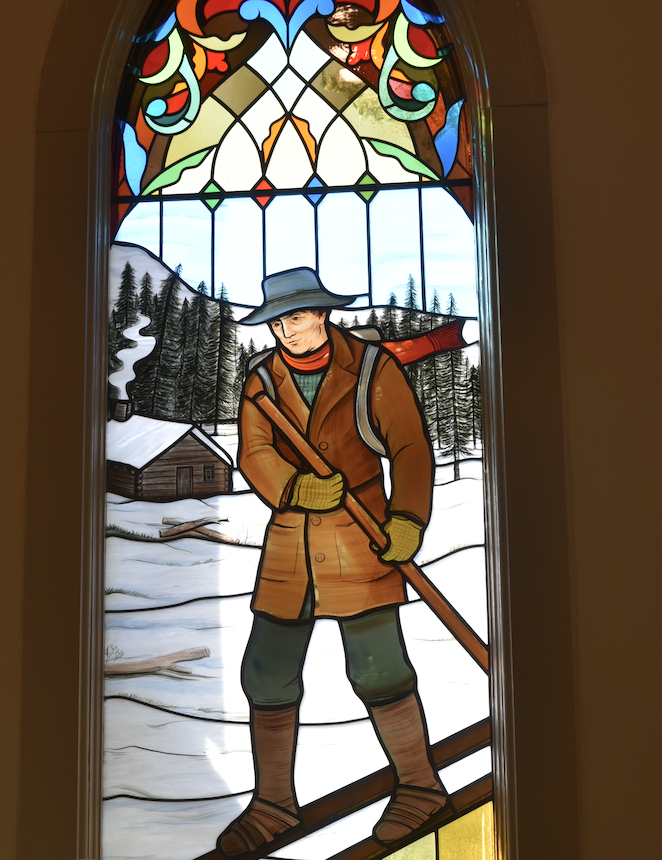
Where Jesus was said to have washed people’s feet, preacher John L. Dyer was said to de-thaw them.
Considered one of 16 founders of Colorado, the farmer-turned-miner-turned-preacher’s legacy is scattered throughout the mountain West, Midwest and Southwest. While Dyer’s been gone for over 120 years, his mission still has a heartbeat in Breckenridge.
Aside from knowing about the tale of the Methodist preacher who made his way mostly on foot from the Midwest to the Rocky Mountains, Pastor Ben Wentworth said he knew the name “Father Dyer” to be associated with a Colorado congregation known for efforts to keep the community around it fed before even setting foot on the church’s campus.
When taking over the reins of the church in 2022, Wentworth found himself in the midst of big plans to expand the congregation’s offerings to the community. It would end up entailing the building’s first renovation since the early 2000s, and a price tag upwards of $4 million. After years of holding church service at a local movie theater due to construction, the church is wrapping up work and is back to holding service in the building.
The renovations made to the church on Wellington Road helped bolster Father Dyer’s outreach efforts related to food services and general community support to serve even more people. The members of the congregation stepped up to put it on their dime, Wentworth said, and they did it to better the community around them.
Seven years and a 2,500-square-foot addition
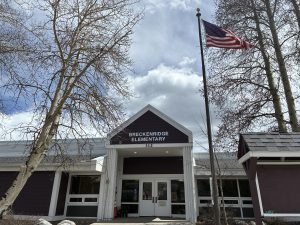
Father Dyer member Mike Tabb said the idea of renovating the church had been brewing among the congregation since 2018. He said the church’s basement in particular became the focus of the conversations because it houses much of the organization’s outreach services. In the basement there is a food pantry, one of only a few in Summit County, a kitchen area for free community dinners and other space with meeting rooms. The church’s members felt if they expanded, they could also expand community outreach.
“This is a church that really tries to reach out into the community, which is why most of us are here,” congregation member Becky Roberts said. “It’s (more than) us just attending church.”
They said expansion could help allow for larger food pantries to offer more and make room for a commercial kitchen to bolster the free community dinner on Sunday nights, an opportunity to get a nutritional meal for locals that need it. They also figured an expansion could create more rooms for community partners to use. Roberts said the church lends their space to organizations like Alcoholics Anonymous to host meetings out of.
Stay connected to Summit County.
Sign up for daily or weekly newsletters at SummitDaily.com/newsletter
Wentworth said the COVID-19 pandemic delivered a spike in construction costs, and parishioners were wary of it hiking up the price tag, which happened. Despite this, he said the congregation came together to still make it come to fruition. In lieu of service at the chapel on Wellington Road, the congregation met at the Eclipse Theatre in downtown Breckenridge for around two years. He desired the church’s congregation to be the “epitome” of “solid-good people,” and that is exemplified by their efforts to expand community outreach at the expense of their own wallets.
Around 2,500 square feet was added to the building. This makes for the second renovation since the building was moved from French Street in 1977.
From a mining claim to a community church
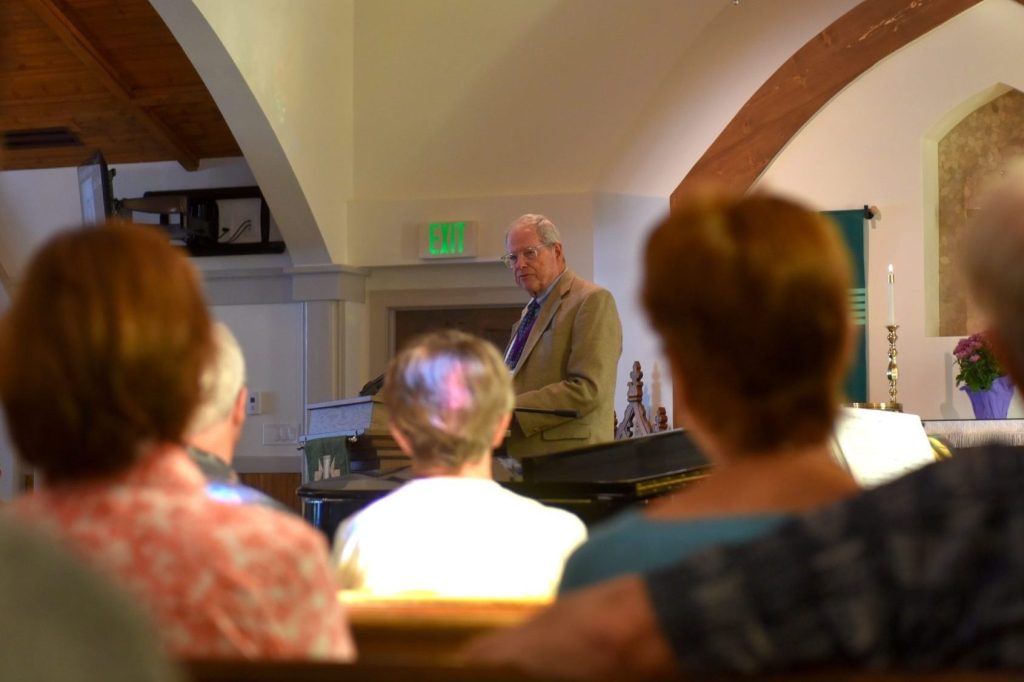
Telling Dyer’s journey to Breckenridge at a July 13 service, congregation member John O’Neil shed light on Dyer’s fight to build the church amid a mining boom.
By the time 1879 came around, Dyer had been preaching in a variety of capacities in a variety of places in Colorado, building his own snowshoes to trudge himself through mountain passes in treacherous conditions to get to various communities to preach or deliver mail, his side gig. He also traveled around a bit and had stints preaching in places like New Mexico.
He first made his way to Summit County around 1859 to fulfill his goal of seeing Pikes Peak, and now he was looking to start a church after years preaching on the move.
At this point some of his children made Colorado their home as well. Just a few years before building the church his son, Elias, fell victim to the Lake County Outrages accompanying the Lake County War, O’Neil said. Elias Dyer, a judge, was handing out warrants to a vigilante group who played a significant role in igniting the conflict and was shot and killed shortly afterward because of it, according to the Leadville Heritage Museum.
“He was shot to death right in the courtroom. The murder was never solved,” O’Neil said. “The loss was a burden, and he agonized over his inability to extend forgiveness to those who had done it.”
Despite approaching 70 years old and still mourning the loss of his son, Dyer put a mining claim on a plot of land in Breckenridge, which would have been in the area now known as French Street, in fall 1879, said O’Neil. He said spring 1879 brought a mining boom, and hence increased interest in the land Dyer claimed months earlier that he was looking to build a church on.
At 68 years old, Dyer was working to build a church from scratch and was fighting off people trying to take the claim he made in fall 1879.
Nonetheless, Dyer finished building the church by hand in a year. On Aug. 20, 1880, the Father Dyer Church held its first service. Dyer then left Summit County for a few years to carry out his work as a preacher elsewhere in Colorado before returning in the mid-1880s.
“People in the Colorado mountains asked him to preach again and again. He added something to their lives they either wanted, needed or both,” O’Neil said, explaining why Dyer made his way back.
Dyer died in 1901. O’Neil said in the weeks leading up to his death the Denver Post would publish updates on his condition because there was statewide interest in how he was doing. Before he died, he used crutches and the last bit of strength he had to climb the stair of the state Capitol to witness the memorial dedicated to 16 founders of Colorado, a list he was included in.



Support Local Journalism
Support Local Journalism
As a Summit Daily News reader, you make our work possible.
Summit Daily is embarking on a multiyear project to digitize its archives going back to 1989 and make them available to the public in partnership with the Colorado Historic Newspapers Collection. The full project is expected to cost about $165,000. All donations made in 2023 will go directly toward this project.
Every contribution, no matter the size, will make a difference.