In-bounds controlled slide on Breckenridge’s Peak 7 highlights importance of snow safety work amid challenging snowpack
Slide occurred on Friday, Jan. 19, leaving a crown that was visible from town

Cody Jones Follow

Sarah McLear/Breckenridge Ski Resort
Although it may seem like the in-bounds terrain at ski areas is completely safe from avalanches, the reality is that ski patrollers put their lives on the line in order to mitigate avalanche risks and ensure a safe experience for guests.
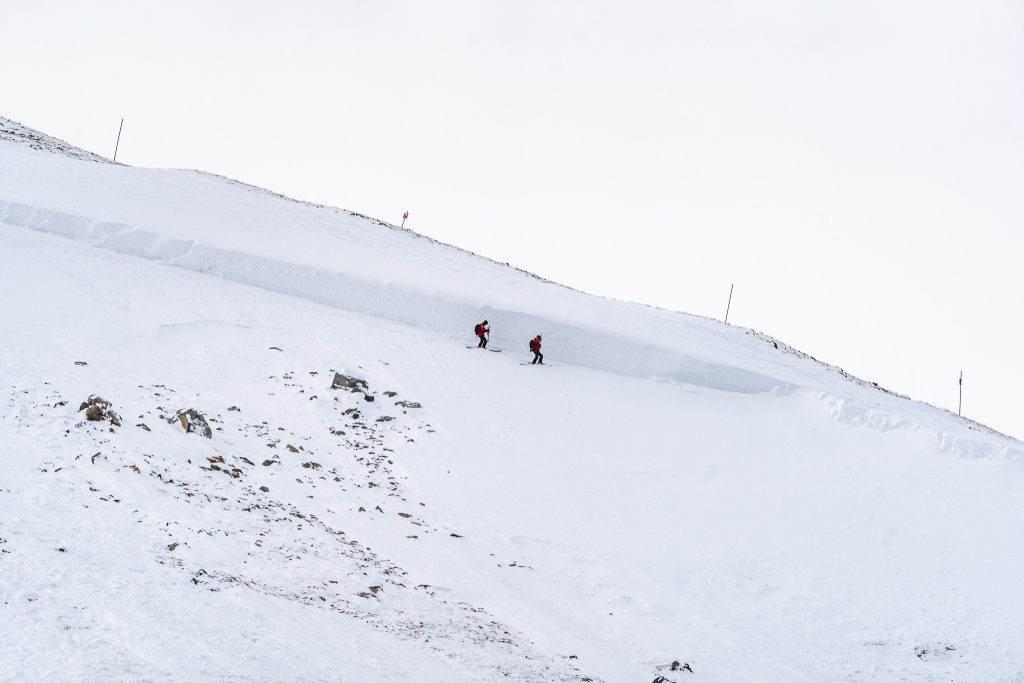
With a challenging snowpack this winter season, Breckenridge Ski Resort’s avalanche mitigation work resulted in a significant ski-patrol-triggered slide on Peak 7 on Friday, Jan. 19. It was triggered using a hand charge that sent snow across most of the avalanche slide zones located under the summit of Peak 7.
Breckenridge ski patrol director Hunter Mortensen believes the avalanche charge was placed in the south summit snowfield or the north summit snowfield before tons of snow slid down the mountain.
“Since we haven’t been able to open the terrain on Peak 7 because of the see-saw effect of the snowpack this year, we had all of the snow that fell here naturally, the snow that was transported here by prevailing winds from the west and when we reached the tipping point is when it all came down,” Mortensen said.
Like most ski-patrol-triggered slides within boundaries, the avalanche on Jan. 19 did not entrap or injure anyone, but the slide did cause damage to one of the platforms used for ski patrol’s avalanche blaster cannons, commonly called an “avalauncher.”
“We had a platform at the bottom for the avalauncher,” Mortensen said. “The debris came down onto that and ran across the platform at the bottom of the bowl. It tipped things over and definitely surprised us a little bit.”
Stay connected to Summit County.
Sign up for daily or weekly newsletters at SummitDaily.com/newsletter
Although the slide was admittedly a little bit bigger than Breckenridge ski patrol was envisioning, the slide itself did not come as a surprise to the teams working on the mountain that morning.
“The good news is that we were prepared for (the slide),” Mortensen said. “That was part of our plan. We had a concern for what was going on in that zone, so we were going after that terrain with a high level of suspicion of instability. Our science, our plan and our history proved us right that we should not trust it and we should not let the public out there.”
With the maximum height of the crown reaching 12 feet, which was visible from downtown Breckenridge for over a week, the slide further demonstrates the importance of daily snow safety work, especially during a challenging snowpack season with infrequent storms and drastic changes in temperature.
“This year is really unique across Colorado, but especially in Summit County — where this crazy feast-or-famine that we are in has created a crazy snowpack,” Mortensen said.
Specifically, Summit County has seen unseasonably warm temperatures and powerful winter storms mixed with high winds, which has created unstable layers across the snowpack, which has already been precarious for the majority of the winter season.
“If you look at all of the Colorado Avalanche Information Center reports, ski area reports, avalanches are flowing in a different way than normal this year,” Mortensen said. “They believe it is because of the weirdness of the temperature swings we have had.”
Every day, Breckenridge ski patrol is faced with the high-stakes job of making sure that all of the known terrain zones in need of mitigation are safe and stable for the public to ski and ride. Ski patrol has these areas mapped across a massive, but colorful, Breckenridge terrain atlas that hangs inside the ski patrol headquarters within the lower level of Vista Haus on Peak 8.
To the disdain of eager skiers and riders, ski patrollers take a conservative approach to opening up more terrain, only dropping ropes when they are feeling confident that the terrain is safe.
“No ski run at Breck or anywhere I can think of is worth getting caught in an avalanche for,” Mortensen said. “For us, our job is that as soon as we put you on it, we feel as good as we possibly can. In a year like this, it means we step way back.”
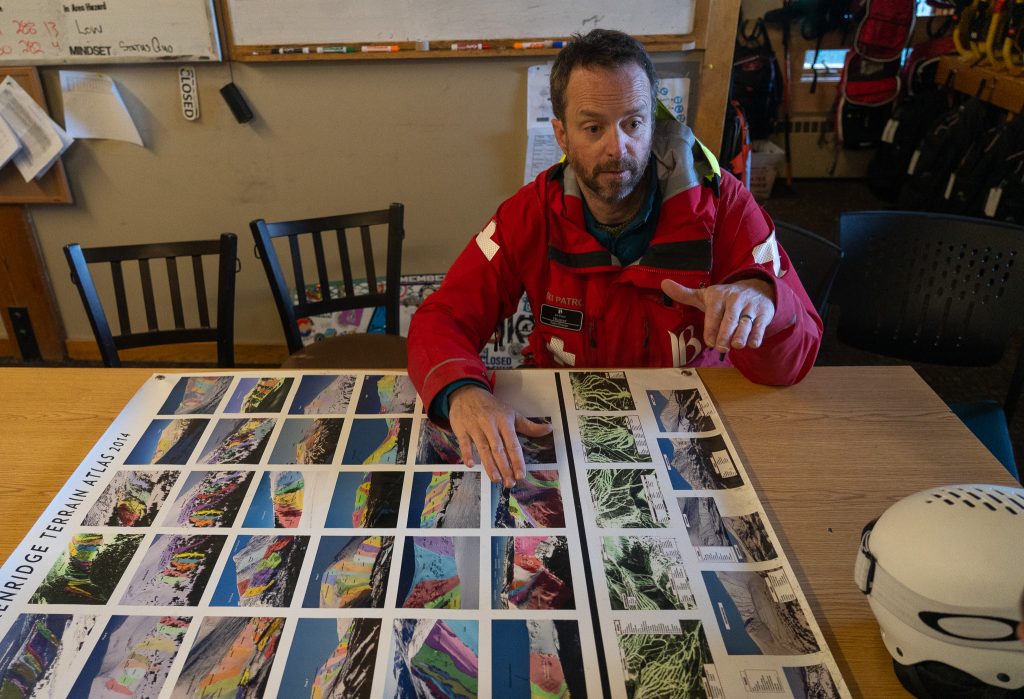
Operating on a series of daily mindset statements to guide the day’s mission, ski patrollers will shift from feeling good about avalanche conditions one day to needing to take a step back to assess the terrain.
After sustaining another period of warmer weather, Breckenridge ski patrol expects to see several areas across the resort that will need extra attention in terms of avalanche mitigation work as a new storm front started to dump several inches of snow across the ski area on Saturday, Feb. 3.
“The big thing for people who are newer to Summit County, the industry or don’t have that snow science background is that 1 inch of snow can change the entire characteristic of a snowpack — in bounds or out of bounds,” Mortensen said. “One inch of snow can be the best day of skiing that you have ever had, but it can also be one of the hardest work days for us and postpone your ski day because of the complexity.”
Ultimately, Breckenridge is not alone in its battle against the snowpack. Other ski patrol teams in and around Summit County are experiencing similar issues across their own terrain.
“We are always talking because this is a bigger picture than just our resort,” Mortensen said. “This is a patroller-safety and also public-safety issue. We take that seriously. It is incumbent on us to have that communication across the resorts and across the ownership level. No one in the industry wants someone to be hurt in an avalanche when they come for a day of skiing.”
Breckenridge ski patrol will be hosting two more avalanche talk series events before the end of the winter season. The next one will take place on Thursday, Feb. 15, and will touch on the Peak 7 slide. The event will last from 6-8 p.m in the The Village at Breckenridge’s Elevation Room. The last talk will take place on April 11.
For more information on avalanches across Colorado or the U.S., visit Avalanche.org.




Support Local Journalism
Support Local Journalism
As a Summit Daily News reader, you make our work possible.
Summit Daily is embarking on a multiyear project to digitize its archives going back to 1989 and make them available to the public in partnership with the Colorado Historic Newspapers Collection. The full project is expected to cost about $165,000. All donations made in 2023 will go directly toward this project.
Every contribution, no matter the size, will make a difference.