ShredShox — the first full-suspension ski system — hits the market
Tested by freeride veterans and Olympians across Colorado, the 3-in-1 suspension setup starts at $1,995
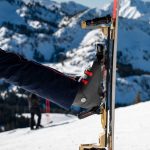
Ben Roof/Special to the Daily
Nine years after its first full-suspension ski prototype was tested at Palisades Tahoe, ShredShox is hitting the market.
“Our plan is to get them underfoot and really launch this new category,” said Jarrod Krisiloff, head of brand. The part-time Vail resident believes the product — designed to enhance performance and reduce impact forces — will be for snowsports what full-suspension was for the mountain bike industry.
“We want this to be a thing that changes Alpine skiing,” he said. “We’re continuing to develop different versions of suspension — including a solution for snowboarding.”
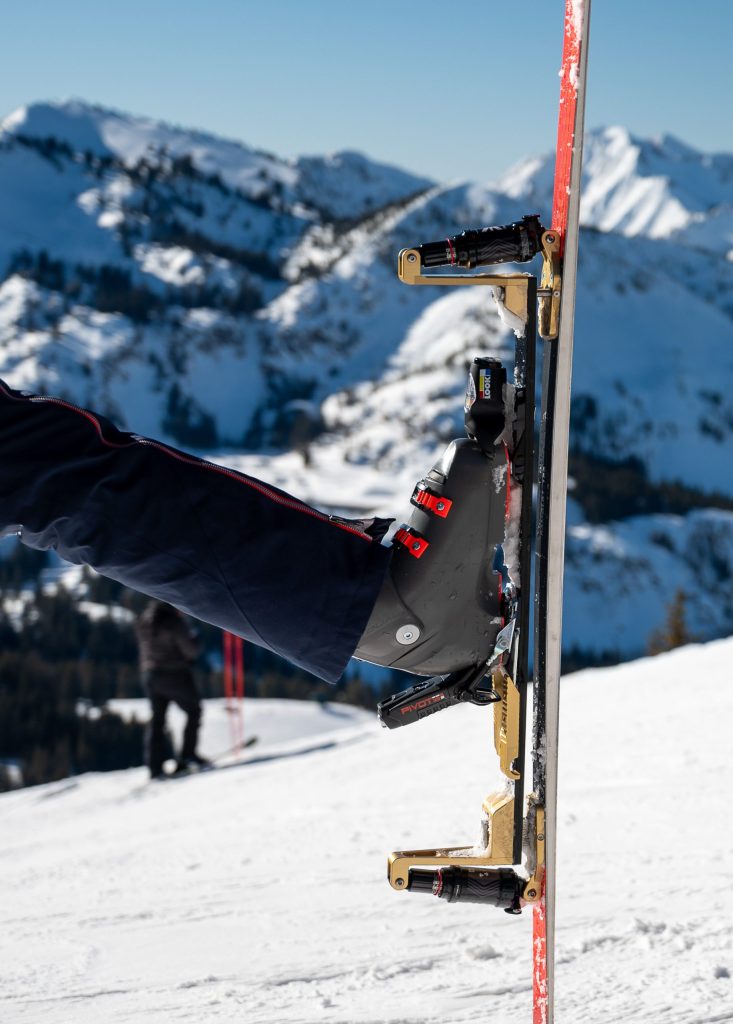
ShredShox’s 3-in-1 system of ski, air-shock platform and bindings comes in 162-cm and 175-cm sizes. The Palisades Black and Tahoe Orange standard editions cost $1,995 while the premium Alps & Meters Blue Line and Klassiker models go for $2,495. Each ski has two separate shocks, which can be tuned to different PSI levels based on rider weight, style and terrain preferences.
“What we gathered from industry and consumer feedback is that we wanted to make this an easy, adaptable solution that was turnkey,” Krisiloff said.
Third-party accelerometer testing showed the ShredShox platform was responsible for a tenfold reduction in peak impact and absorbed up to 90% of forces on hard bumps. In variable conditions like spring slush, crud or ice, the dampening effect also improves grip and control, allowing for confident carving and high-speed stability.
“When we went into this at the front end, we were like, ‘Hey, this is going to be easier on your knees, decrease chatter, give you a cush, stable ride,'” Krisiloff said.
Co-founders Ken Nichols and Nick Foster, both former race car drivers, were inspired to bring motor sports technology to the snow after watching a World Cup ski race several years ago. About 10 months after the brand’s birth at Madera Speedway, the first prototype was tested. When Krisiloff spoke with the Vail Daily in 2024, the group was on its sixth-generation prototype. The last year or two was spent at on-mountain and industry demos and public events like the U.S. Mogul National Championships and Birds of Prey World Cup weekends. Krisiloff also conducted some of ShredShox’s first testing events with non-invested individuals at Loveland Ski Resort.
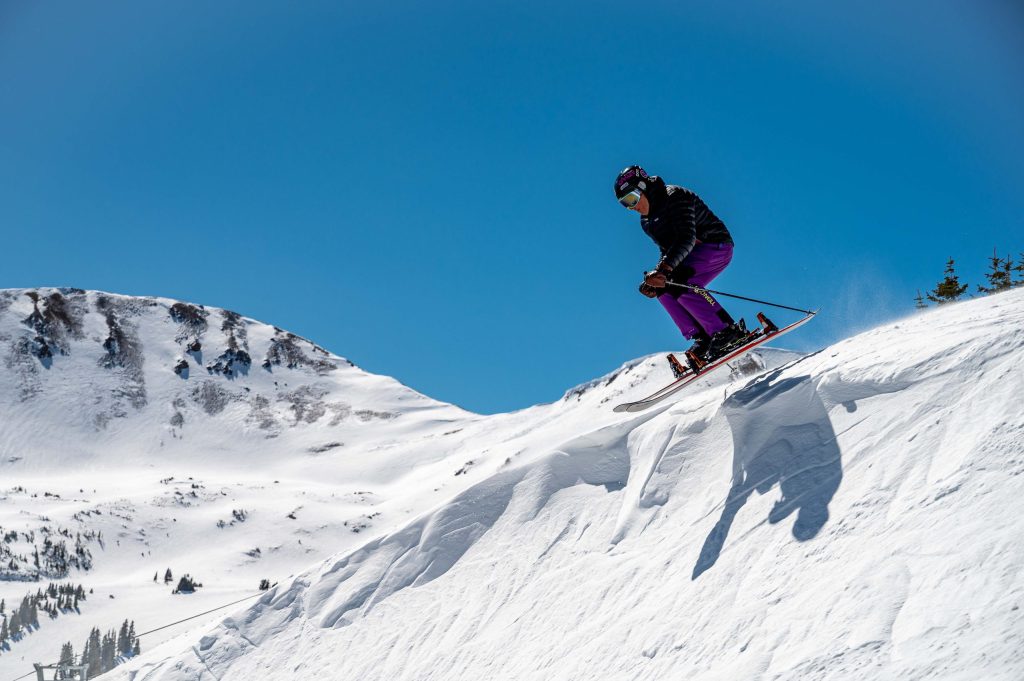
“We walked away with an insane amount of positivity and intrigue in the concepts and belief in the functionality,” he said, noting that the positive consensus was shared among all ages and abilities. “We had a great season following that first event. And we continued to get similar feedback — that ‘Wow, these things really work.'”
But there were a couple of problems, Krisiloff admitted.
“All we really were was the Oreo stuffing between the normal equipment stack — the ski and the binding,” he explained. “So we were marketing a product that you kind of had to assemble all these things. At some point, for consumers, customization — especially for something brand new — is a barrier.”
There was also a pricing issue. The solution: Streamline supply chains and unify a single, full system — ski, platform and binding — for a specifically identified and designed use case. The choice of two lengths was intentional. While skiers normally must sacrifice nimbleness for stability by selecting longer planks, suspension “changes the equation,” as Krisiloff notes in a blog post on the ShredShox website.
“By actively absorbing vibration and terrain impact before it destabilizes the ski and the skier, the ShredShox platform creates stability through terrain management — not simply through added length and stiffness,” he wrote. “That allowed us to build shorter, more playful skis that still hold remarkable composure and confidence at speed.”
“If you ski a 185, you’ll get more stability on a 175 with suspension,” Krisiloff said. That holds true on groomers and moguls, but the sweet spot, he stated, is “hard-packed to shallow pow.” Tommy Branon, a freeride veteran from Winter Park who also coaches with the Bridger Ski Foundation, agrees. Branon connected with the ShredShox team in the fall of 2024 after responding to a social media ad looking for product testers.
“I’ve had a long history of just kind of destroying my ski equipment,” Branon said. “I was like, let me break your product for you — and help you make it better.”
One of his initial tests came at Revelstoke Mountain Resort in British Columbia. While some of his buddies competed in the Freeride World Qualifier, Branon ripped around the world-class bowls, steeps and gullies.
“It was just awful conditions,” Branon said. “And that’s where they tend to shine the most.”
While he admitted ShredShox won’t necessarily thrive in deep powder, Branon loves what the product offers in icy moguls and super chunky stuff.
“They just absolutely make the skiing silent,” he said. “It’s crazy.”
Alice Merryweather is another ShredShox tester. While not an endorsed athlete, the 2018 Olympian received a custom set on her Rossignol Hero daily driver GS ski, Krisiloff said.
“She kind of validated that it worked,” Krisiloff said.
In a review, Merryweather wrote, “I could turn my mind off and make beautiful turns.”
Similar to Krisiloff’s own experience — and the feedback from testers at Loveland — Branon said there is a little bit of a learning curve to the reduced tactile response underfoot.
“It’s like you’re floating, which is really weird for the first couple runs, but once you get used to it, it’s actually a really cool feeling,” he said. “It takes some getting used to because you’re used to feeling those big lumps, but the shocks kind of just keep your skis glued to the ground no matter what. So you still get that feedback, it’s just filtered.”
Branon’s experience mirrored that of Ryan Wernke, a lifelong skier from Utah.
“I was shocked by how much the suspension soaked up — chop, chatter, and all the little issues that usually come with carving hard. It let me dig deeper into my carves and feel far more confident as I released out of each turn,” Wernke wrote in his online review of the product. “Just as important, it gave my knees and lower body a real break from absorbing uneven snow and ice — which, to me, makes it safer than a standard ski.”
Is the smoother, safer ride backed by science? To find out, Krisiloff bolted a motion sensor to the ski and an identical one to the ShredShox platform, then ran tests across seven sessions between December 2024 and January 2025 — from powder days to chop, groomers and bulletproof ice.
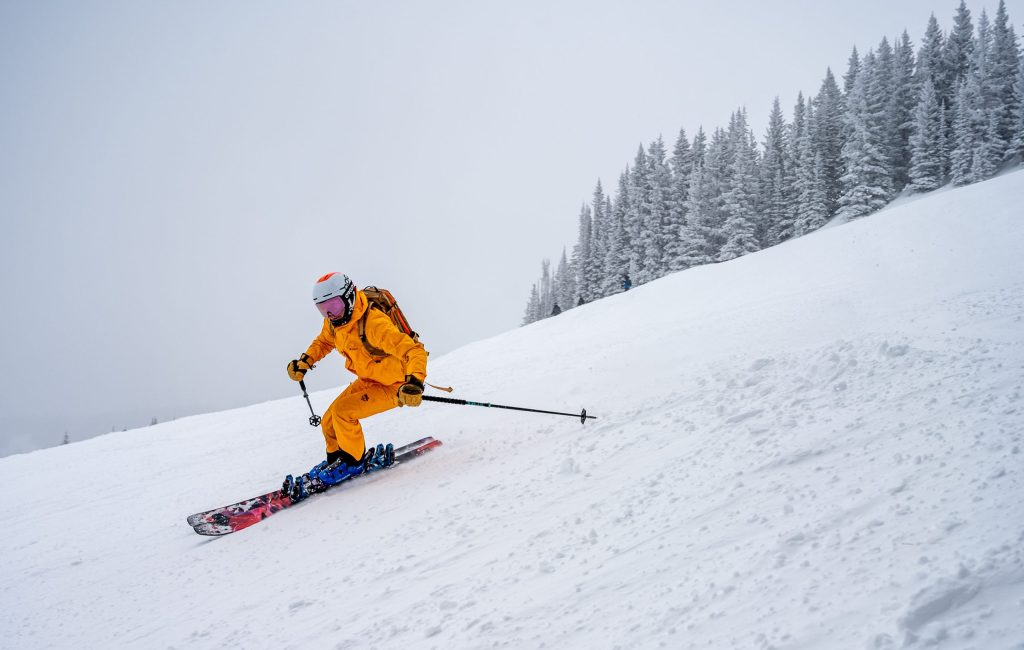
The data showed that it took 1.8 times longer for a ShredShox user to collect the same vibration dose as someone on a regular ski. In other words, nine runs for the fatigue cost of five. And while ShredShox consistently ate up the constant chatter — it cut what reached the boot by a median of 26% across all sessions — the harder hits highlighted its effect even more. There was a 56% decrease in impact with body shocks between 2 to 4 grams, which is considered an “ordinary hit.” Between 4 and 6 grams, that number went up to 66% and rose to 90% with severe body shocks (above 6 grams).
“Those are your ‘oh s—‘ moments,'” Krisiloff said. “Which come with a high likelihood of injury.”
Krisiloff worked with a third-party data engineer to take the data streams and provide context for the differences between the skis’ activity and the platform’s activity. He also looked at how the suspension worked at different lean angles. The median body-shock cut of large single impacts was 93% on a flat landing versus just 62% on a 25-degree edge. But the sustained dampening effect held steady across every angle measured, even above 25 degrees.
“It’s been very interesting to actually put data against the technology in a real-world environment on the mountain,” Krisiloff said. “All this data takes the story a little bit further.”
As a mechanical engineer, Branon said one of his original goals — partially because he’s struggled with gear durability in the past — was to get into ski and binding design.
“I think a lot of companies have kind of become complacent in developing new things,” he said. Clearly, that’s not the case with ShredShox.
“The biggest thing I can say is keep an open mind,” Branon said. “And look forward to the future of what this might bring.”
What’s next?
When Next Level Platforms initially rolled out ShredShox, three individuals were on staff. Currently, everyone involved is on the partnership level, Krisiloff said. But that’s about to change.
Recently, Krisiloff posted a job listing on LinkedIn for ShredShox’s founding general manager and head of sales. Krisiloff said the company is looking for someone who is “entrepreneurial, in the industry, located in one of the right regions for alpine skiing and is looking to launch a category.”
“As five guys that have been bootstrapping this, been developing this, gotten a product completed, kind of spun up a brand and marketing — it’s all been part time for all of us. It’s all been a side hustle,” Krisiloff said. “We’re kind of at a critical point where for this thing to take advantage of all that work and take the next step, it needs someone who is living, breathing, dying on this thing and taking it to the next level.”
Broadly speaking, Branon said ShredShox deserves a spot in his quiver.
“There are days where it’s going to make the day more fun and I think there’s other days where they’re not going to be as fun as a normal ski,” he explained. “And I think as that product evolves, that range may expand, but I think for now, their best use is super hard-packed, bad days, where other skis are just going to be tossed around and working you.”
Krisiloff said at the end of the day, ShredShox is more than just new tech. It’s a whole new category.
“Whether it’s the biggest one? We’ll find out. And that’s not the point,” he added. “Cross-country skiing, all-mountain skis, carving skis, park skis, backcountry skis — this is full suspension. This is different. That’s what we’re really excited about: giving people the experience.”
This story is from VailDaily.com.








Support Local Journalism
Support Local Journalism
As a Summit Daily News reader, you make our work possible.
Summit Daily is embarking on a multiyear project to digitize its archives going back to 1989 and make them available to the public in partnership with the Colorado Historic Newspapers Collection. The full project is expected to cost about $165,000. All donations made in 2023 will go directly toward this project.
Every contribution, no matter the size, will make a difference.