Summit Combined Housing Authority looks ahead to new goals, like security deposit assistance for renters, and more
The authority covered goals from prior years and the upcoming housing needs assessment as well


Ryan Spencer/Summit Daily News
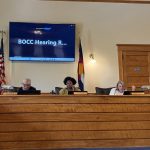
The Summit Combined Housing Authority’s executive director spoke to the Summit Board of County Commissioners on June 23 to recap recent work and preview future projects at the authority.
Executive director Corrie Burr spoke about the authority moving offices, its board’s 2026-27 goals, increases to Summit’s area median income, or AMI, requirements for the next housing needs assessment update, and more.
Burr started with some recent highlights from the authority, including that it moved into new office space in Frisco and has made steps to be the county’s “one-stop shop” for workforce housing. She said a new software system has made it possible for the authority to pull data from its system, and she showed a slide with some highlights. One data point stated that the authority has seen nearly 5,000 lottery entries since June 2024.
“(The lottery), I think, is huge,” Burr said. “It was June of 2024 that we started with a new lottery system and new software, so it really truly has been two years.”
Other 2024-25 goals included streamlining the lottery and application process and creating a database of owners, renters, prospective owners and renters, deed-restricted properties and rental properties. Burr said the authority made great progress on its 2024-25 goals, but that does not mean they will stop working on those things.
The authority’s board identified new goals for 2025-26 at a retreat, Burr said. The first involves addressing the quality of deed-restricted homes at resale, a problem the county housing department is also looking to address. Burr said that people buying deed-restricted homes do not have as much bargaining power as those buying market-rate homes, and sometimes deed-restricted homes have issues ranging from maintenance problems to fire code violations.
“The deed restrictions do say those things need to be in working order, but unfortunately, when we find out about it, or the jurisdiction finds out about it, it’s already under contract, and it’s really difficult to step in legally,” Burr said.
The authority aims to create a program that uses incentives and an inspection process to “get ahead” of the problem and preserve deed-restricted housing inventory, Burr said.
Pogue and commissioner Eric Mamula suggested the authority consider some sort of fund that deed-restricted home owners could use to fund important maintenance projects, as long as they regularly pay into the fund. Burr said the authority has not considered anything like that but is open to any ideas.
The other 2026-27 goals included creating a security deposit program that would provide no-interest loans for rental security deposits to help people get into housing. Burr said the authority views that project as something that could be done quickly and is currently working on it.
Burr said another goal, getting into property management, is in an “exploration and discovery” stage as the authority looks into what role it could play in managing deed-restricted properties. The authority has started working on the next goal, which is to better tell its story. Burr said it has hired a local marketing agency to help tell the story of how 5A tax dollars have benefitted the county since the ballot measure was first passed in 2006.
The last goal, meeting the community’s needs, is something the authority always looks to do, Burr said. Specific focuses in the area include expanding educational offerings, providing more detailed instructions for lottery applications and partnering with local businesses to educate staff on paths to homeownership.
The authority’s funding comes from 5A tax dollars collected by the county and towns, and the total amount the authority receives has been declining year-to-year, Burr said. From 2024-25, the funding decreased 4%, she said, and the trend so far in 2026 shows that from 2025-26, the decrease could be even larger.
Burr showed the most recent Summit County area median income (AMI) chart and a graph of AMI levels over time. She said the county’s AMI has increased by 40% from 2023-2026, a change she called “unprecedented.”
“I don’t know that we know the true effect on that within our community,” Burr said. “I do think we’ll see increases in rent. Obviously, deed restriction is tied to AMI. We’re seeing huge increases in their max resale value.”
Commissioner Tamara Pogue asked if the authority has looked into ways to address AMI issues, and Burr said the board has had discussions about it. One idea would be to change the calculations for affordable rents and mortgage payments, lowering the standard that affordable rent is 30% of income, Burr said.
A 2024 state senate bill added requirements for communities’ housing needs assessments and plans. The Colorado Department of Local Affairs reviewed the Summit County 2023 Housing Needs Assessment and gave the county a list of ways to update the plan to make it compliant with the new state law.
Burr showed a list of five things the state is requiring of the update and one item — market data — that the authority’s board also wants to update. State requirements include addressing accessibility and supportive housing units, identifying areas with high displacement risk, updating data on needs, measuring local resources dedicated to development, and analyzing infrastructure and water supply challenges.
The authority will not have to publish the updated assessment until 2029, Burr said, and has secured a grant from the state department of local affairs for half of the expected $59,000 that the update will cost.










Support Local Journalism
Support Local Journalism
As a Summit Daily News reader, you make our work possible.
Summit Daily is embarking on a multiyear project to digitize its archives going back to 1989 and make them available to the public in partnership with the Colorado Historic Newspapers Collection. The full project is expected to cost about $165,000. All donations made in 2023 will go directly toward this project.
Every contribution, no matter the size, will make a difference.