Summit County firefighters undergo on-the-ground fire training, stress homeowner fire mitigation
Summit Fire and EMS and the Red, White and Blue Fire Protection District practice wildland fire fighting, but say homeowners should take preventative measures

Jessica Sachs/Summit Daily News
Many Summit County residents have had fire preparedness at the top of their minds since the county saw its fire danger ranking creep from moderate to high on Tuesday, June 9. But Summit Fire and EMS and the Red, White and Blue Fire Protection District say that concern didn’t rise for first responders just this week; they stay prepared year-round.
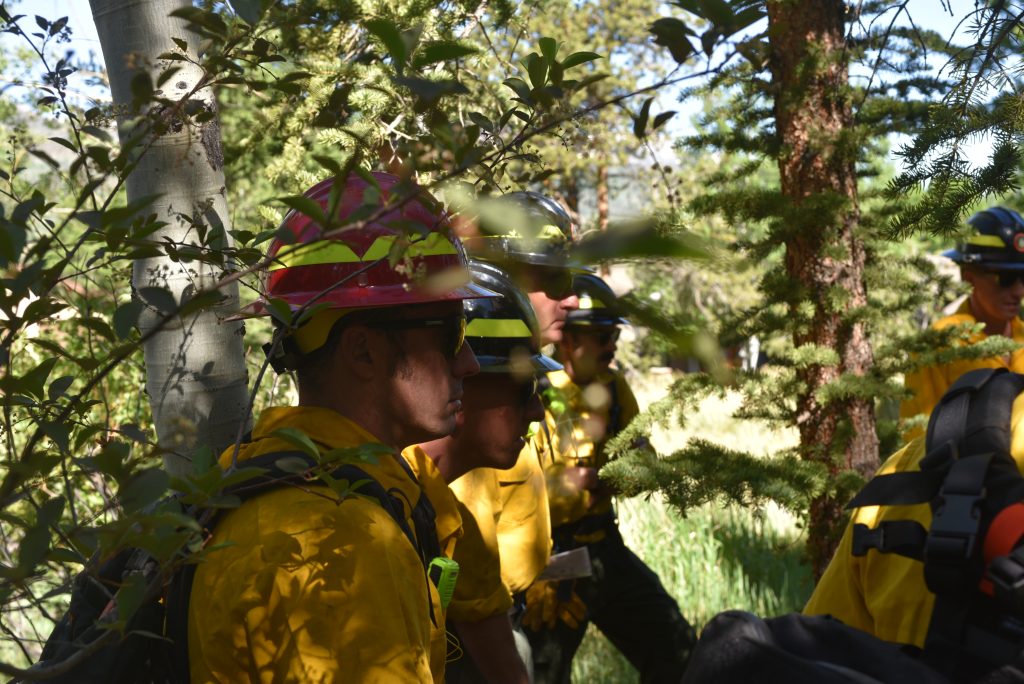
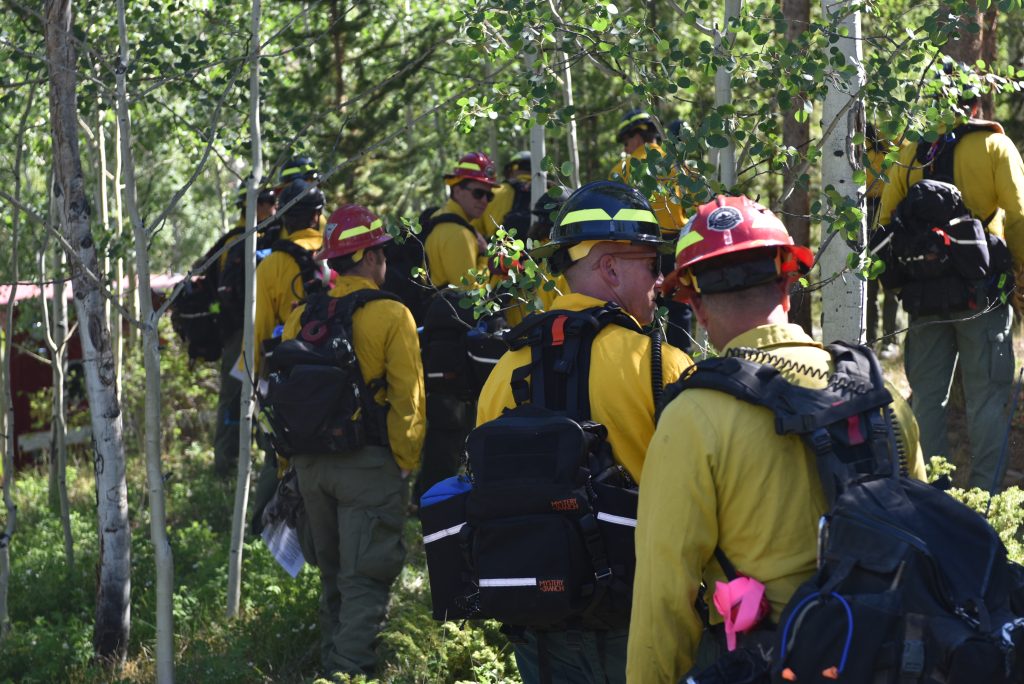
Much of that preparedness starts with the departments’ joint annual on-the-ground wildfire training, which was held this week in Silverthorne’s Hamilton Creek neighborhood —- home to winding roads, thick brush and homes that were evacuated during the 2021 Ptarmigan Fire.
“We always are on high alert,” said Steve Lipsher, a public information officer for Summit Fire. “We are treating this year like we’ve treated every year, which is we’re preparing for it to be the year that we have a threatening wildfire.”
Hamilton Creek recently received certification from Firewise USA, a national program that recognizes proactive wildfire mitigation efforts. The neighborhood boasts a new cistern system and its own committee of resident volunteers — the Woodchucks — who work to reduce wildfire risks.
But Hamilton Creek — like much of Summit County, according to Lipsher — still has room to improve its wildfire preparation.
“Summit County has a gap, for sure,” he said. “I think that almost every home could use some improvement.”
As part of their training, crews performed structure triage on various homes throughout the neighborhood, assessing where weak spots exist and how those would shape their response should a fire threaten the neighborhood.
At each home, firefighters filled out a placard detailing important information, like if there are any pets or people present. The placards also lists risk factors like structure materials, roof style, surrounding tree types and any other notable features, like leaf buildup below a patio, which can act as fuel for a wildfire.
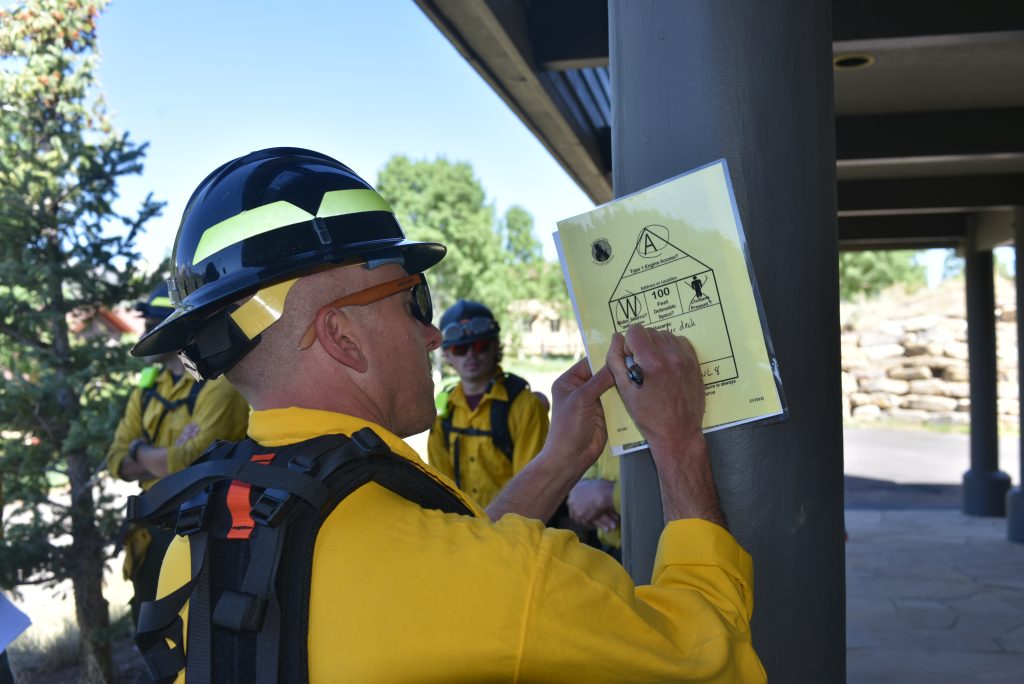
At one stop, Hannah Ohlson, a fuels specialist with Summit Fire, quizzed crews on the structure’s building makeup.
Shouts of “stucco” emerged from the firefighters, who set to work shaping their response plan accordingly.
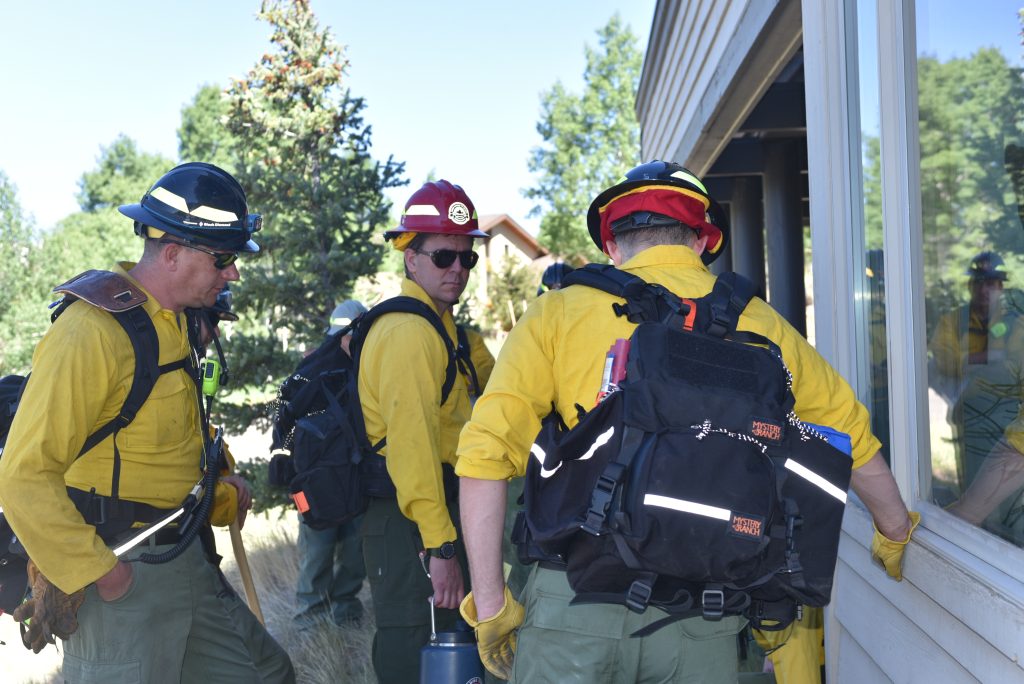
“Ideally, you have a house that our firefighters walk around, they go ‘This place is great, we don’t need to do much,'” Lipsher said. “If we see a home like that, that’s great, because then we can move on and start applying our limited resources and our limited time into defending another home that needs a little more help.”
Lipsher said that much of a home’s fire preparedness actually depends on homeowner behavior before a wildfire hits, rather than first responders after the fact. Behaviors like raking away flammable leaves or moving firewood away from a home can dramatically improve a structure’s chances of survival.
“By the time these firefighters get here and there’s a fire that’s in the area, it’s kind of too late,” Lipsher said.
But creative solutions can help, especially when fighting wildland fires. The crews identified what — potentially unorthodox — features of each home could be used as defense in the event of a fire. Many Hamilton Creek homes have hot tubs, which can be drained and used as a crucial water source.
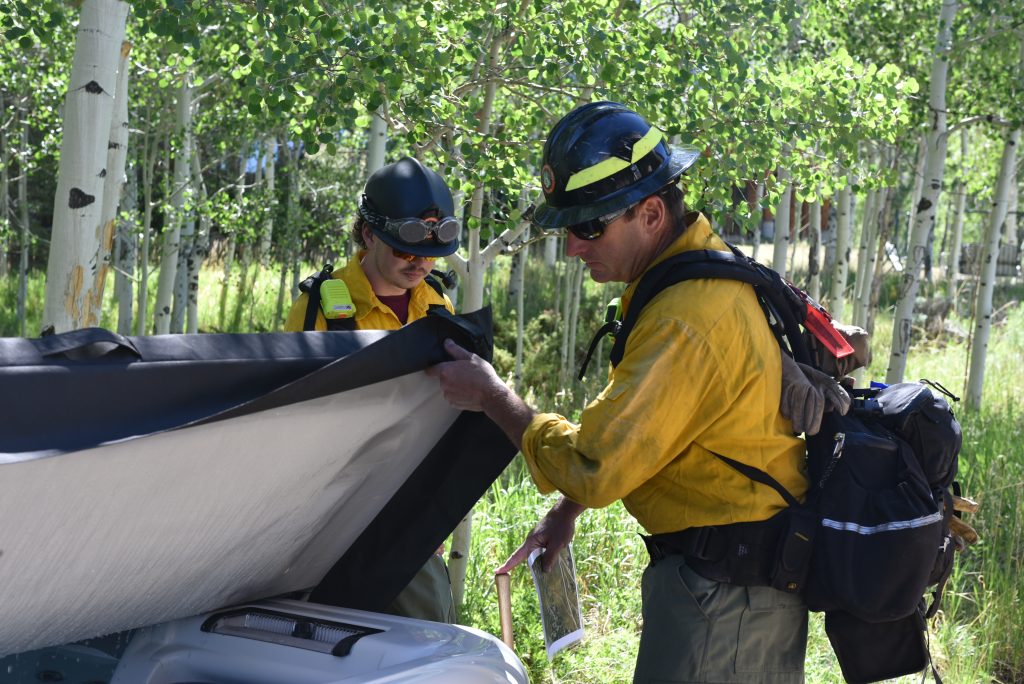
“Wildland’s all outside of the box,” said Derek Goossen, a training, safety and special operations captain with the Red, White and Blue Fire Protection District.
Hamilton Creek, like most of Summit County, is considered the Wildlife-Urban Interface, or a zone in which human infrastructure meets undeveloped wildland. This poses unique challenges for firefighters, who have to focus on both structure protection and putting out a blaze, often with citizens in the way or while traversing crowded roads.
Because of this, the crews focused on working fast and mitigating immediate risks.
“The work that we can do in that initial attack can make all the difference in the world,” Lipsher said.
Along with the triage exercise, crews practiced resource ordering, or determining what resources should be requested from various outside agencies to fight the fire.
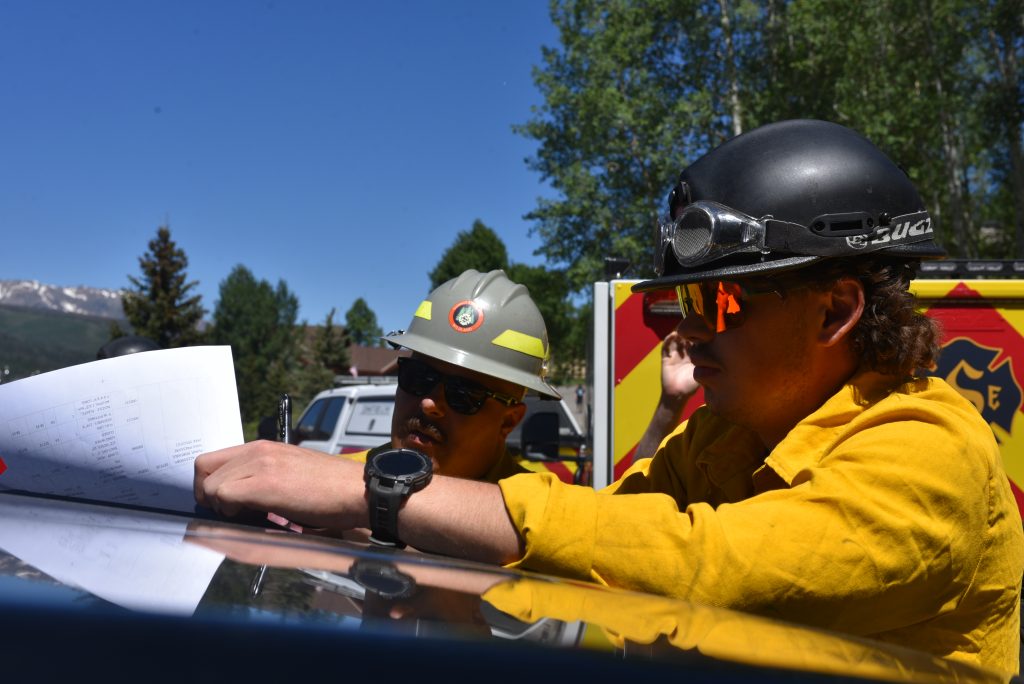
“It’s actually a pretty significant part of fighting wildfires,” Lipsher said.
The firefighters practiced assessing a blaze and ordering accordingly, requesting everything from more manpower to air tanker planes dropping slurry.
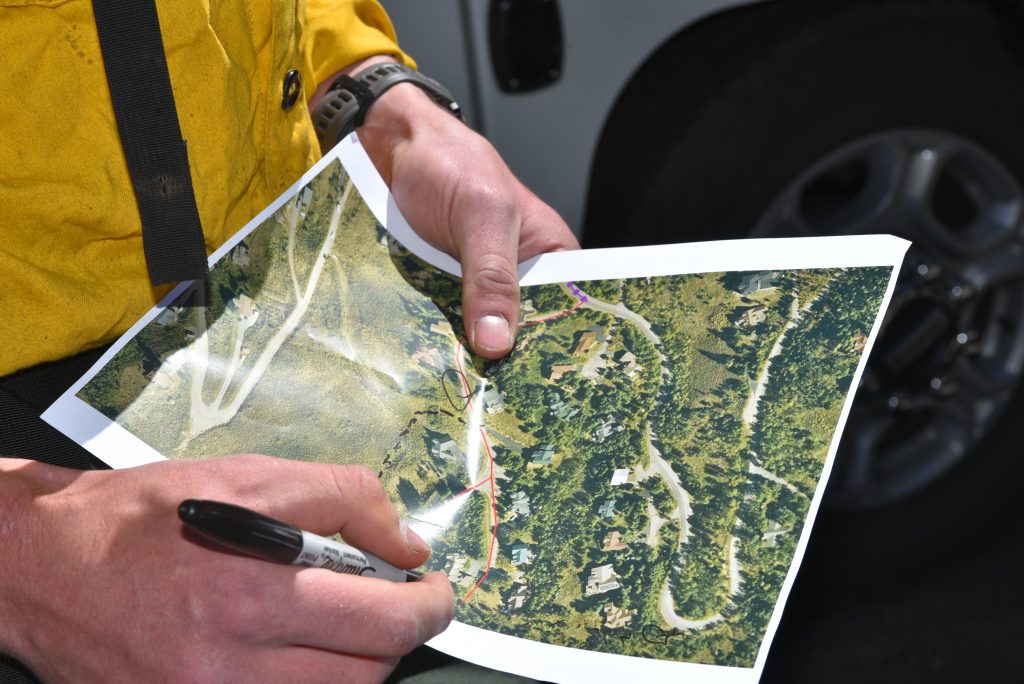
But resource ordering can often be beyond crews control, particularly if there are multiple fires burning at once.
“It sometimes may not be immediate that we get the resources we want because they’re moving them all around the region and all around the country,” Lipsher said. “… You put in the order for what you want and recognize you may not get everything, but you’ll get some help.”
More than resource ordering or triage practice, many of the firefighters’ biggest takeaway was a sense of confidence, should — as Lipsher said they prepare for — Summit County face a major fire this season.
“Just walking through it and thinking about it and visualizing what this whole process is gonna look like, that’s huge for when it actually happens so it doesn’t feel as foreign,” said Eric Tiede, a firefighter with Summit Fire.
-
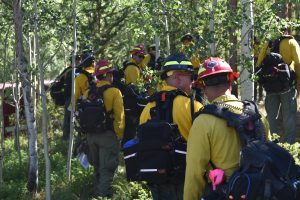
Firefighters from Summit Fire and EMS and the Red, White and Blue Fire Protection District participate in an on-the-ground training in Silverthorne, Colo. on Thursday, June 11, 2026.
Jessica Sachs/Summit Daily news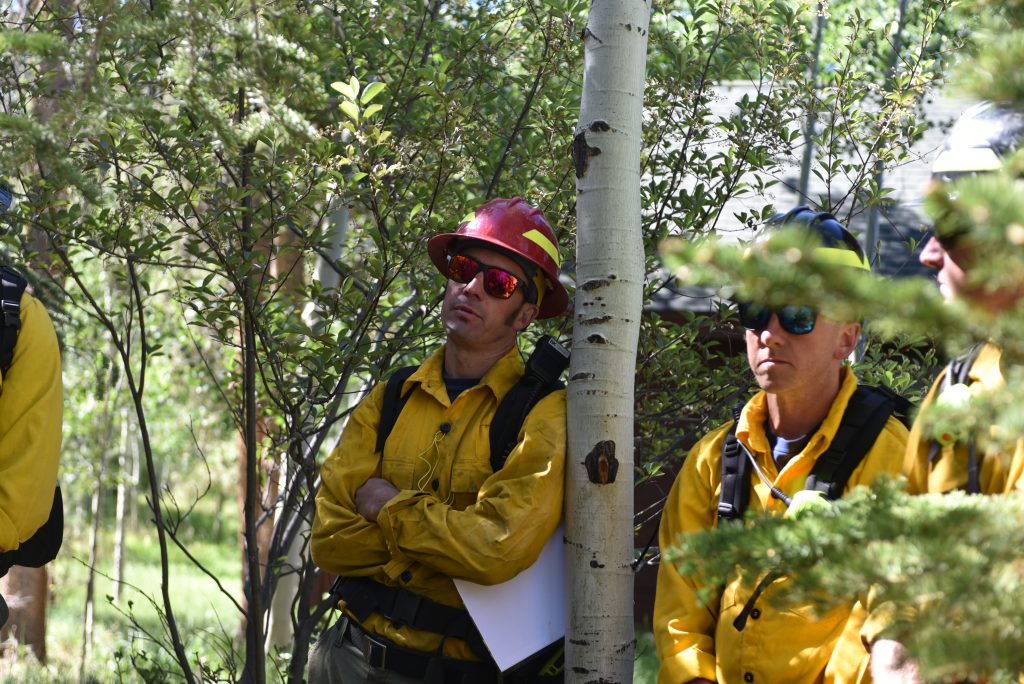
-
Firefighters from Summit Fire and EMS and the Red, White and Blue Fire Protection District participate in an on-the-ground training in Silverthorne, Colo. on Thursday, June 11, 2026.
Jessica Sachs/Summit Daily News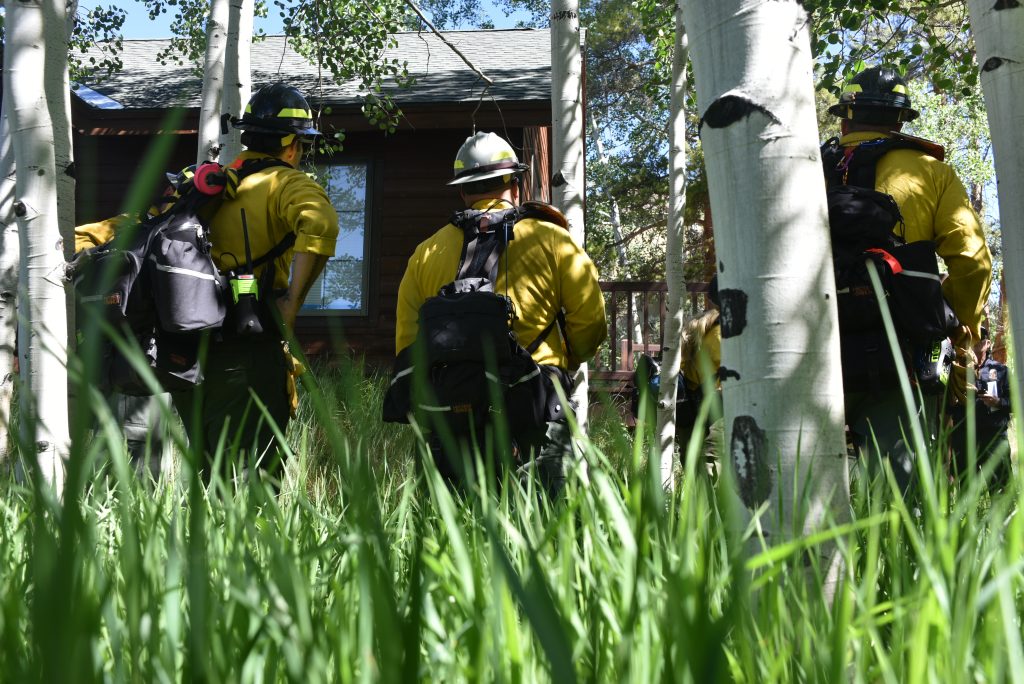
-
A firetruck parked in the Hamilton Creek neighborhood of Silverthorne, Colo. on Thursday, June 11, 2026.
Jessica Sachs/Summit Daily news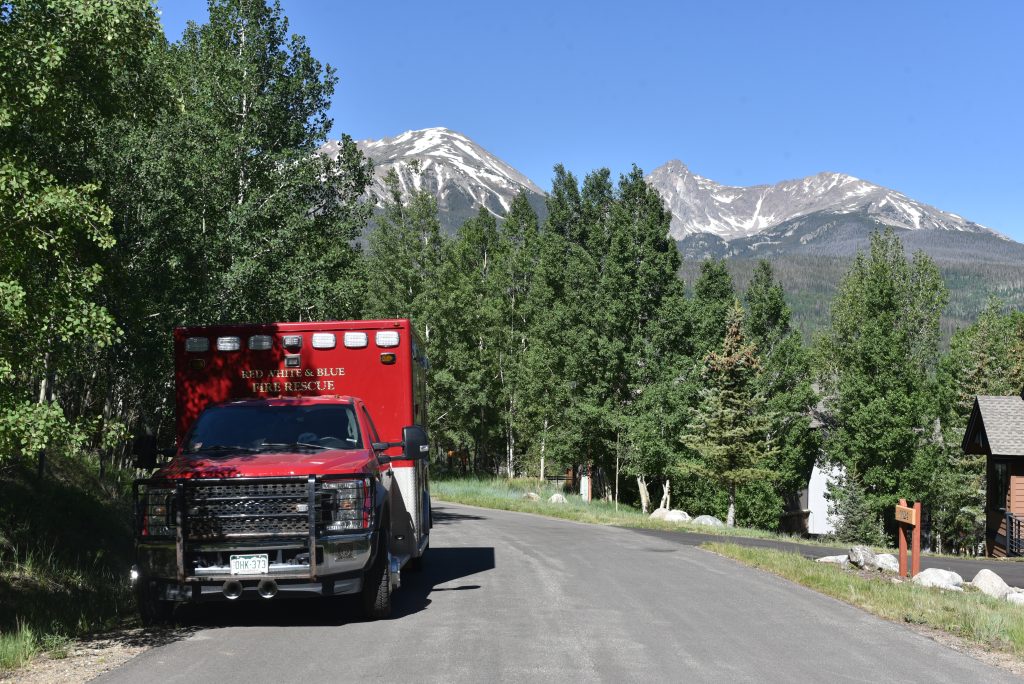
-
-
A firefighters from the Red, White and Blue Fire Protection District participates in an on-the-ground training in Silverthorne, Colo. on Thursday, June 11, 2026.
Jessica Sachs/Summit Daily News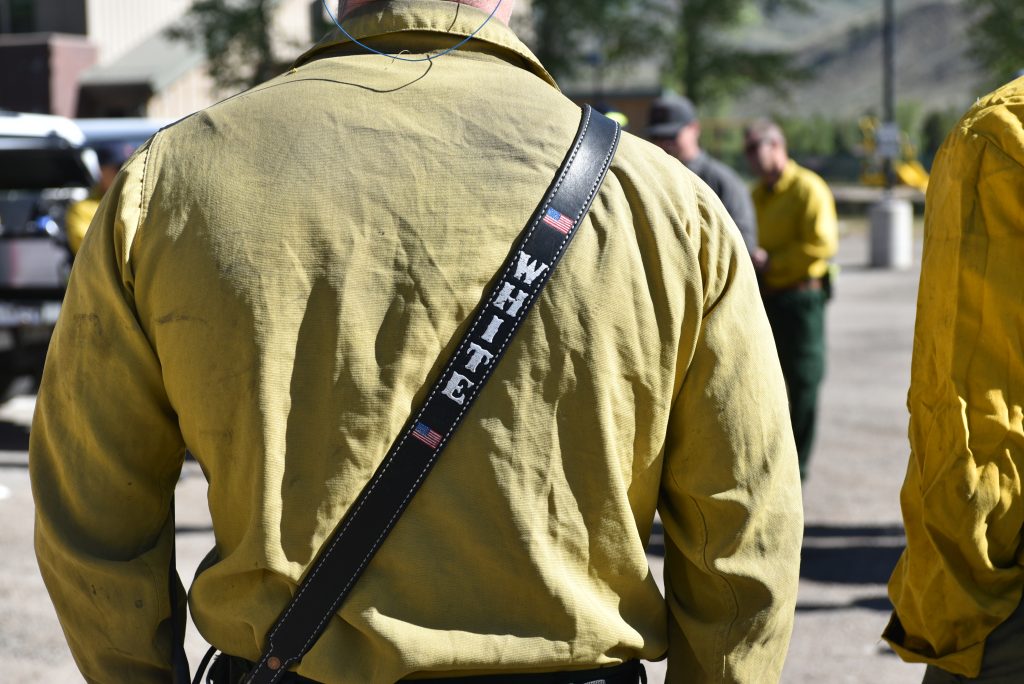
-
Firefighters from Summit Fire and EMS and the Red, White and Blue Fire Protection District participate in an on-the-ground training in Silverthorne, Colo. on Thursday, June 11, 2026.
Jessica Sachs/Summit Daily News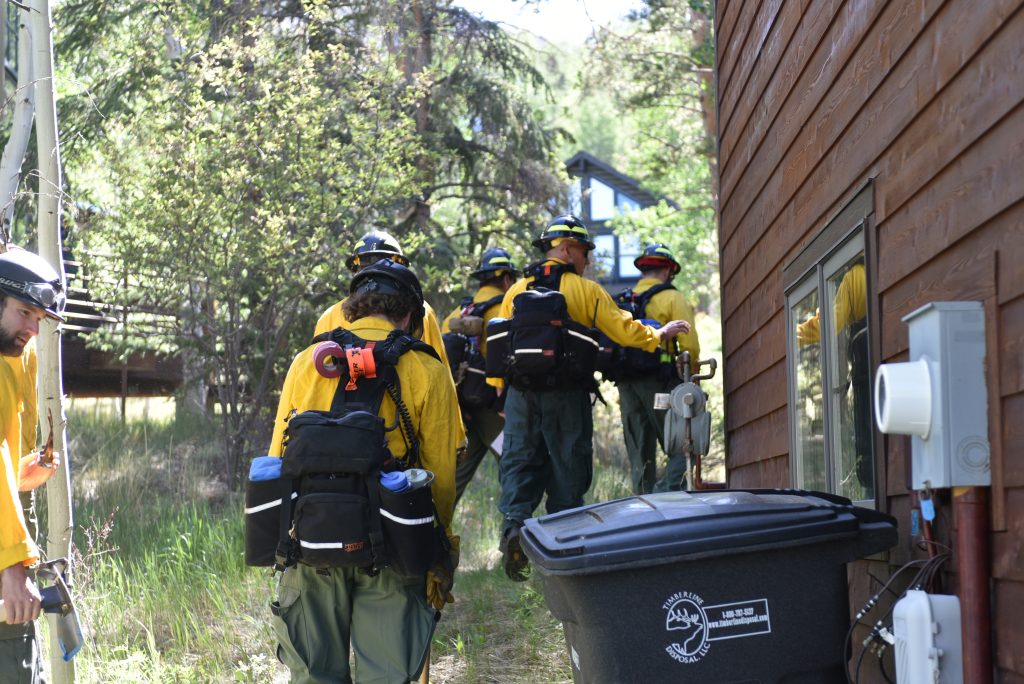
-
Firefighters pack up their equipment after an on-the-ground training in Silverthorne, Colo. on Thursday, June 11, 2026.
Jessica Sachs/Summit Daily News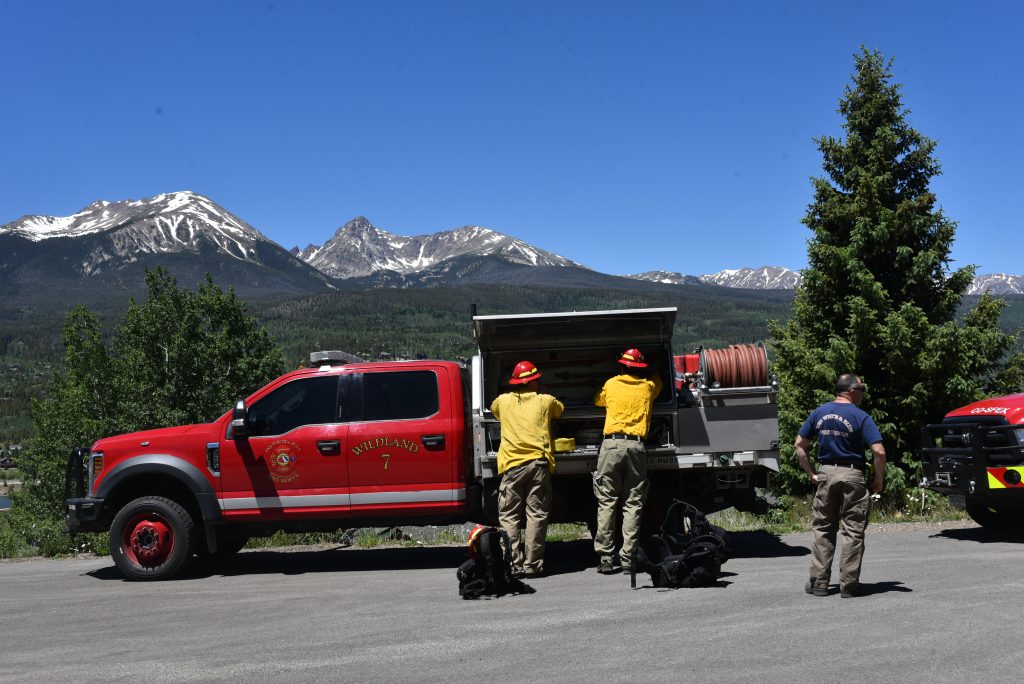









Support Local Journalism
Support Local Journalism
As a Summit Daily News reader, you make our work possible.
Summit Daily is embarking on a multiyear project to digitize its archives going back to 1989 and make them available to the public in partnership with the Colorado Historic Newspapers Collection. The full project is expected to cost about $165,000. All donations made in 2023 will go directly toward this project.
Every contribution, no matter the size, will make a difference.