Commercial vacancy study shows over 12% of Dillon town core business space is unused

Kyle McCabe/Summit Daily News
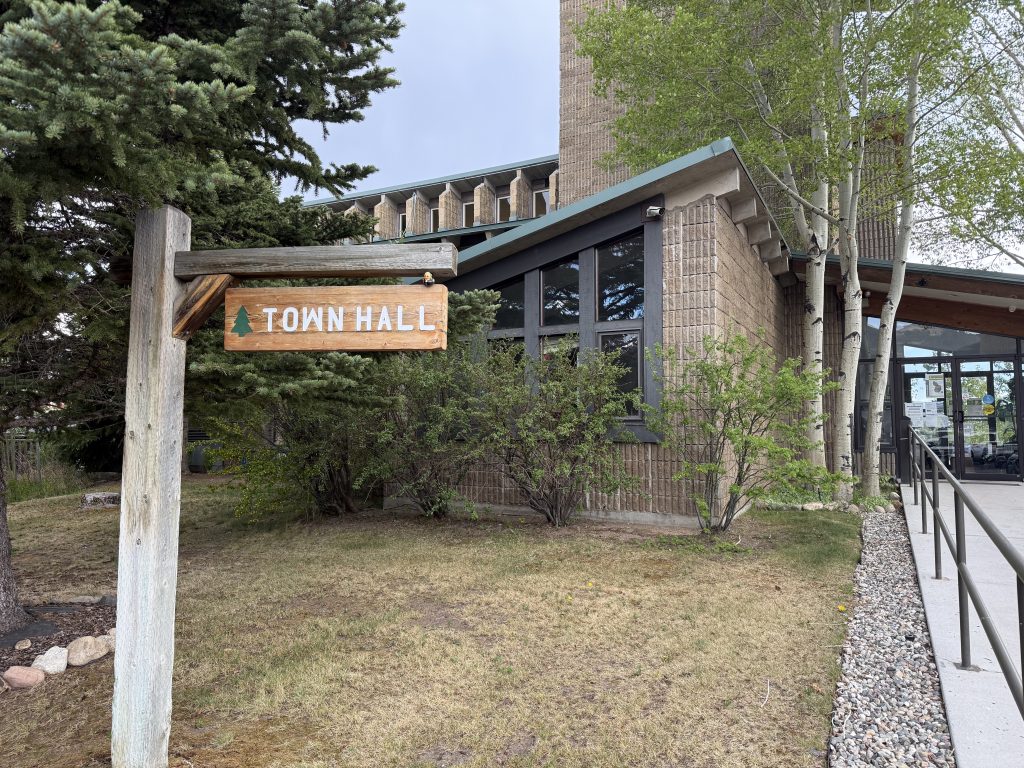
Dillon Town Council members in May asked town staff to conduct an audit of available commercial space in the town, and at the council’s July 7 work session, staff presented the results.
The study broke the town into four commercial areas, including the town core, which has been the focus of redevelopment efforts in recent years. In that area, which is within and around La Bonte Street, Buffalo Street and Lake Dillon Drive, vacancy rate as a percentage of available commercial square footage sits at just over 12%, according to updated figures provided after the meeting.
Jon Blank, a town planner, said the figure did not surprise him because the town core “probably” sees the most turnover of the four areas. The staff memo Blank presented at the meeting stated the vacancy rate was 11%, but he updated the figures after council members provided some feedback.
Mayor Joshua Samuel pointed out that two buildings in the town core that the town recently purchased were not included in the calculations. The buildings, 104 and 105 Village Place, include the former location of Pug Ryan’s Brewery and are currently vacant. Blank added those buildings into the study, counting their square footage as both vacant and leasable space.
Council member Barbara Richard said the owner of 250 Lake Dillon Drive, which is also in the town core, told her the vacancy rate in the building was higher than reported in the study. She also said the La Riva shopping center at 135 Main St. had less vacancy than reported in the study. Blank’s updated version reflects both of those changes.
The area with the highest vacancy rate was Little Beaver Trail, which includes the Super 8 motel as well as one building has one vacant unit with rough square footage to constitute 22% of the leasable square footage in the area. Anemone Trail, an area that includes Christy Sports and Saved by the Wine, has a 4% vacancy rate, with three available units across two of its 11 buildings.
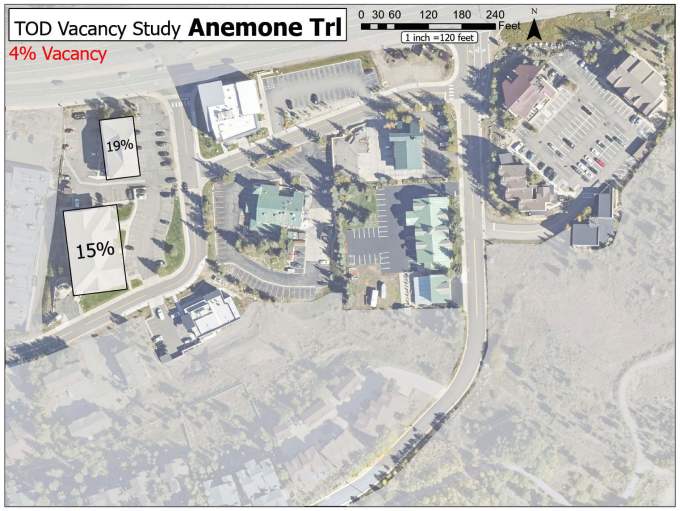
The final area, the Dillon Ridge Marketplace, had the lowest vacancy rate at 1%. Two of its 20 buildings have four total vacant units. Overall, the town’s vacancy rate sits at 6%, with about 52,000 square feet of available space across 26 open units.
The Town Council had requested the audit to inform its efforts to fill vacancies — an effort that includes a business incentive program for which it approved funds in June and what Richard called a “tenant finish” program. She said some tenants had asked her if an application for the latter program was available. Interim town manager Scott O’Brien said the council will likely discuss the tenant finish program at its July 21 meeting, as the town’s lawyers are still reviewing it.
Samuel said it seems like most of the vacant space is office space, not retail or restaurant space. He said the council has heard in the past that commercial space is hard to fill in the town compared to residential space.
“Looking at this kind of tells a different story,” Samuel said. “If you have commercial, it is going to get leased. I think that that’s very good data to look at here, that you shouldn’t be scared or wait to change something to more commercial or restaurant versus being more office-oriented.”
Council member Shannon White asked Blank if staff could compare the vacancy study to the last one it completed. He said the last study was completed in 2025, and although it was not as thorough, staff would look to compare them and look for any trends.









Support Local Journalism
Support Local Journalism
As a Summit Daily News reader, you make our work possible.
Summit Daily is embarking on a multiyear project to digitize its archives going back to 1989 and make them available to the public in partnership with the Colorado Historic Newspapers Collection. The full project is expected to cost about $165,000. All donations made in 2023 will go directly toward this project.
Every contribution, no matter the size, will make a difference.